The scorecard
7.5/10 · Great
- Composition20%
- 7.0
- Recording15%
- 7.5
- Performance30%
- 8.5
- Cohesion15%
- 7.0
- Originality10%
- 6.0
- Replay value10%
- 7.5
Four standards chosen for open harmonic terrain, two Rollins originals that give Hall's chords room to reshape the rhythm.
RCA's engineering captures Hall and Rollins clearly but pushes Cranshaw and Riley into the background, thinning the quartet's interaction.
Rollins plays with the precision he went away to find, Hall responds with harmonic invention on every chorus, and the rhythm section never pushes.
Six tracks, all between five and seven minutes, with consistent tempos and no filler, but the sequencing does nothing to build or release tension.
The guitar-led quartet was new for Rollins but the harmonic language and solo construction belong to 1959, not 1962.
The interplay between Rollins and Hall rewards repeated listens as their trades become clearer; the lack of dynamic range between tracks keeps it from essential.
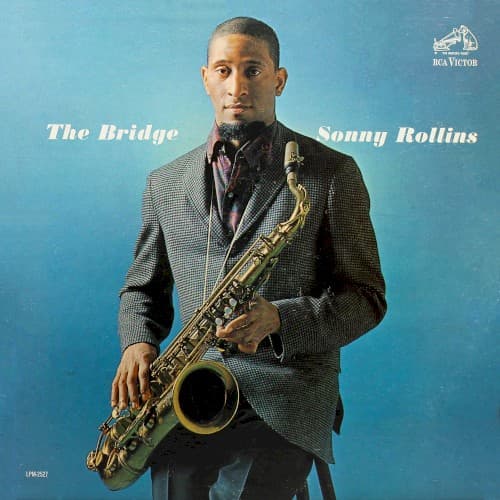
Sonny Rollins The Bridge — The Sabbatical That Changed Nothing
Sonny Rollins spent three years on the Williamsburg Bridge rehearsing in solitude, disappeared at the height of his fame in 1959, and returned in 1962 with an album that sounds like he never left. The Bridge is not a reinvention. It is Rollins playing with the control and evenness he went away to perfect, in a quartet with Jim Hall that replaces the hard-driving rhythm sections of Saxophone Colossus with space and harmonic color. The thesis the album defends is that mastery of the existing language mattered more than the free jazz revolution happening around him. Whether that was the right argument in 1962 is debatable; whether the playing earns it is not.
The stakes were high. Rollins had been the thematic improviser who stretched "Blue Seven" into a single cohesive statement, the saxophonist critics called boundary-pushing. He stepped away just as Ornette Coleman arrived, and by 1962 the terms of the conversation had shifted. The Bridge ignores that shift.
It is a set of standards and two Rollins originals played in a style that would have sounded progressive in 1959 but conservative three years later. The quartet works because Hall's guitar does not try to replace a piano's harmonic density but instead uses chords as suggestions, leaving Rollins to define the center of each piece. Cranshaw and Riley stay behind the beat, never pushing. The result is Rollins playing with more evenness and less volatility than on his 1950s records, which is both the album's achievement and its limitation.
A Quartet Built Around Space, Not Swing
The decision to use guitar instead of piano changes the harmonic possibilities without altering the underlying structures. Hall does not comp in the way a pianist would; he places chords at intervals, often a measure or two apart, and lets Rollins work in the gaps. On "Without a Song" the guitar enters after Rollins states the theme, drops sustained chords under the first solo chorus, then thins to single-note lines that shadow the saxophone without doubling it. The effect is that Rollins has to supply his own harmonic roadmap, which he does by implying the changes in his phrasing even when Hall is silent. It is a chamber approach to what had been a blowing date format, and it works because both players trust the空間.
Rollins's tone is rounder and more controlled than on Saxophone Colossus, his note choices more deliberate. The three years of practice show up as evenness: fewer wild interval leaps, fewer moments where the rhythm section has to catch up, more attention to thematic development within a chorus. On "The Bridge" he builds a solo from a two-note motif, repeats it with harmonic variations across four choruses, and never sounds like he is running out of ideas. It is impressive construction, but it lacks the volatility that made "Blue Seven" feel like a discovery in real time. The precision is the point, but precision at the expense of risk makes long stretches of the album feel airtight rather than alive.
Hall's playing is the album's biggest surprise. His solos use chord melody techniques, harmonizing his own lines as he plays them, and his comping behind Rollins uses dissonances that pull the harmony sideways without breaking it. On "John S." his solo moves through three choruses that treat the blues changes as a suggestion rather than a grid, implying the turnarounds without stating them. The rhythm section is professional and unobtrusive: Cranshaw walks with clarity, Riley plays brushes on half the record and sticks on the rest, and neither one pushes for drama. The result is a rhythm section that supports rather than propels, which works for Hall's harmonic ideas but leaves Rollins without the rhythmic friction that drove his best 1950s performances.
The production is clean and flat. RCA's engineering gives Rollins and Hall equal presence in the mix but pushes Cranshaw and Riley into the background, reducing the rhythm section to a polite pulse. The bass is audible but not felt, the drums are distinct but not physical, and the lack of room ambience makes the quartet sound like four musicians in a studio rather than a band in a space. Compared to the Rudy Van Gelder recordings that captured the full thump of Max Roach or the rattle of Rollins's reed, this is a prettier and less intense record.
An Even Arc With No Peaks
The sequencing does nothing to shape the listening experience. Six tracks, all between five and seven minutes, all at medium tempos, with no building tension and no release. The album opens with a ballad played at a walking tempo that sets the chamber-jazz tone, and ends with a standard played the same way. In between, the only variation is whether Rollins wrote the tune or pulled it from the American songbook. There is no filler—every track is a complete performance—but there is also no sense that the album was sequenced to build or resolve anything.
The two Rollins originals sit in the middle of the record and do not announce themselves. One is a blues with a two-chord vamp in the A section, and the other is a modal piece with a repeating bass figure that gives Rollins room to develop a single idea across five choruses. Both are well-constructed frameworks for improvisation, and both sound like album tracks rather than statements. The ballad treatment in the middle stretch uses space effectively, with Hall's chords entering a full measure behind Rollins's phrases, but it does not carry the emotional weight the tune demands. The result is an album that plays as a single unbroken session, which is accurate to how it was recorded but does not help the listener know where to return.
A Consolidation, Not a Leap
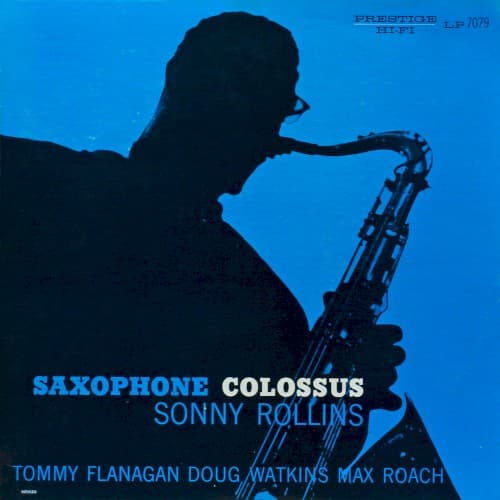
The Bridge is the second-best album Rollins had made to this point, behind Saxophone Colossus and ahead of the uneven records he cut in the late 1950s. It is not close. Saxophone Colossus had "Blue Seven" and "Moritat," two of the defining performances of thematic improvisation in the decade. The Bridge has six well-played tracks that refine what Rollins already knew how to do.
The gap matters because the three-year sabbatical raised expectations of a breakthrough, and what arrived was a sideways step: a new band, a quieter approach, and no new ideas about what a solo could be. For listeners who wanted Rollins to respond to Ornette Coleman or push past his own thematic methods, this record offered nothing. For listeners who wanted to hear Rollins play with more control and a harmonic partner who thought in color rather than density, it delivered exactly that.
The album is for Rollins fans who value precision and interplay over rhythmic intensity, and for anyone interested in how a guitar-led quartet can rework standard material without turning it into background music. Skip it if you need the volatility of the 1950s Village Vanguard recordings or the thematic ambition of Saxophone Colossus. The production has aged poorly—the thin rhythm section and flat engineering sound dated next to the Van Gelder classics—but the interplay between Rollins and Hall holds up because both players are listening at a high level. Start with "The Bridge" and "John S." to hear the quartet at its most spacious, then move to "Without a Song" for the cleanest example of how Hall's comping reshapes a standard. If those tracks work, the album is worth owning. If they sound like a step backward, trust that instinct and go back to Saxophone Colossus.
The best next step is Jim Hall's own records from the early 1960s, particularly his work with Bill Evans, to hear what the guitarist did when he had full harmonic control. For more Rollins, go forward to Our Man in Jazz (1962) to hear him engage with the avant-garde he avoided here, or backward to A Night at the Village Vanguard (1957) to hear what the sabbatical replaced. The Bridge is a well-executed holding pattern, a saxophonist proving he still had the skills he left with, which was an answer to a question nobody asked.
Track by track
Track Listing
Without a Song
SolidRollins states the theme in even, measured phrases, stretching the melody across the changes without ornamentation, then builds a solo that treats the standard's chord progression as a given rather than a problem to solve. Hall enters halfway through the first chorus with sustained chords that suggest the harmony without filling it in, and the interplay becomes a conversation about space: Rollins leaves gaps, Hall places chords in some of them, and Cranshaw walks through the silence. The result is a ballad played at a walking tempo that never rushes and never drags, which is an achievement of ensemble discipline but not a compelling performance. Hall's solo uses chord melody techniques to harmonize his own lines, and Riley's brushwork stays so far in the background that the drums are felt more than heard. It is a strong opener in that it establishes the quartet's aesthetic, but it does not make a case for why that aesthetic was worth three years of preparation.
Where Are You
SolidThe standard is played as a mid-tempo ballad with Rollins phrasing behind the beat and Hall comping with chords that pull the harmony sideways. Rollins's tone is warm and controlled, his note choices spell out the changes clearly, and his solo develops a descending motif across three choruses without repeating himself. Hall's solo is the more adventurous performance: he uses dissonant chord voicings that imply the standard's changes without stating them, and his single-note lines treat the melody as a starting point rather than a constraint. The rhythm section is professional and unobtrusive, which is the problem—Cranshaw and Riley provide a steady foundation but no friction, no push, no reason for Rollins or Hall to take a risk. The track is well-played and forgettable, a demonstration of skill that does not add up to a statement.
John S.
StandoutThe blues is built on a two-chord vamp in the A section and a standard turnaround in the B, giving Rollins and Hall a simple framework that both players use intelligently. Rollins's solo starts with a two-note riff, develops it across the first chorus by varying the rhythm, then abandons it in the second chorus for longer lines that spell out the changes. Hall's solo is the track's best moment: three choruses of chord melody playing that treat the blues progression as a suggestion, implying the turnarounds without stating them and using dissonances that pull the harmony sideways. Cranshaw walks with clarity and Riley plays sticks, but the rhythm section is mixed so far back that the blues never gets the rhythmic drive the form demands. The track works as a vehicle for Hall's harmonic ideas and as proof that Rollins could still construct a thematic solo, but it does not work as a blues—it is too polite, too even, too airtight. The precision is impressive; the lack of grit is a missed opportunity.
The Bridge
StandoutThe title track is a modal piece with a repeating two-note bass figure and a melody that sits on top of a single chord, giving Rollins five minutes to develop a single idea without the constraints of chord changes. He uses the space to build a solo from a three-note motif, repeating it with rhythmic and intervallic variations across four choruses, and the construction is airtight—every phrase connects to the last, every chorus grows from the previous one, and the solo never loses its thread. It is thematic improvisation of the kind Rollins had pioneered on "Blue Seven," but without the volatility: the motif develops logically rather than unpredictably, and the solo feels like a demonstration of technique rather than a discovery. Hall's comping is sparse, Cranshaw's bass figure anchors the piece without varying, and Riley's drumming stays in the background. The result is a well-constructed solo over a static vamp, which is an accurate description of the album as a whole. Start here if you want to hear Rollins at his most controlled and thematic.
God Bless the Child
WeakThe Billie Holiday standard is played as a ballad with H.T. Saunders on drums instead of Riley, and the change in personnel does not alter the quartet's aesthetic. Rollins phrases the melody with space between each line, Hall's chords enter a full measure behind Rollins's phrases, and the rhythm section plays so quietly that the track feels like a duo with occasional bass and drum accents. Rollins's solo is melodic and restrained, his tone warm, his note choices clean, but the performance does not carry the emotional weight the lyric demands—it is a respectful reading of a standard, not an interpretation that finds something new in the material. Hall's solo is harmonically inventive, using chord voicings that pull the standard's changes in unexpected directions, but the lack of dynamic contrast between the theme statement and the solo makes the track feel flat. It is the album's weakest performance, not because the playing is poor but because the arrangement does not serve the tune.
You Do Something to Me
SolidThe Cole Porter standard closes the album with the same mid-tempo, even-keeled approach that opened it. Rollins states the theme cleanly, Hall comps with chords that suggest the harmony, and the rhythm section walks through the changes without drama. Rollins's solo is well-constructed but predictable, Hall's solo uses chord melody techniques that are impressive on a technical level but do not add up to a memorable statement, and the track ends with a return to the theme that feels like a formality rather than a resolution. It is a professional performance that does nothing to distinguish itself from the five tracks that preceded it, which is the problem with the album's sequencing: by the time the listener reaches track six, the quartet's aesthetic has been established and repeated, and there is no reason to keep listening. The track is solid, forgettable, and a fitting end to a record that values precision over risk.