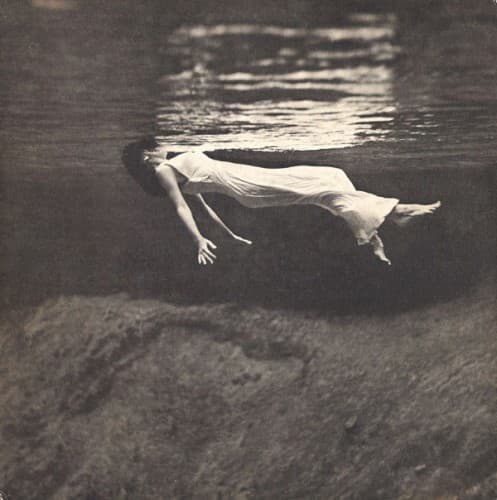
The scorecard
8.1/10 · Great
- Composition20%
- 8.5
- Recording15%
- 7.5
- Performance30%
- 9.0
- Cohesion15%
- 7.0
- Originality10%
- 7.5
- Replay value10%
- 8.0
The material—standards like 'My Funny Valentine' and John Lewis's 'Skating in Central Park'—gives Evans and Hall strong harmonic frameworks that reward their conversational approach without sacrificing melodic clarity.
The recording captures the separation between piano and guitar cleanly, with enough room to hear each line, though the intimacy occasionally exposes a clinical distance that dulls the dynamic range.
Evans and Hall share an uncanny sense of when to lead and when to accompany, trading roles within a phrase and matching each other's rhythmic displacements without ever stepping on a line.
The pacing is uniform—five slow-to-mid-tempo pieces and one uptempo opener—and while the shared vocabulary holds the set together, the lack of contrast makes the second half feel longer than it is.
The guitar-piano duo format was not new in 1962, but the chamber-music counterpoint and the willingness to leave space between the instruments was rare enough to set the record apart from the chattier bop duos of the era.
The interplay reveals new details on repeat listens—a reharmonization, a delayed resolution, a line that finishes the other player's thought—though the overall mood does not shift enough to make every track essential every time.
Bill Evans Undercurrent — The First Record After Silence
Bill Evans returned to leading a session in the spring of 1962 with a record that sounds nothing like the one he lost. The trio with Scott LaFaro had been built on rhythmic invention and a three-way conversation that made the bass as important as the piano; Undercurrent is a duet with guitarist Jim Hall in which the two players finish each other's sentences over a rhythm section that does not exist. The format is a solution to grief—Evans could not replace LaFaro, so he made a record that did not try—but it is also a test of whether two chordal instruments can occupy the same harmonic space without crowding each other out. The answer is yes, when both players have the discipline to leave space and the ear to know which chord to drop.
The thesis here is chamber music disguised as jazz standards. Evans and Hall play mostly ballads and mid-tempo pieces, and they treat each melody as a theme to be stated, varied and dissolved into counterpoint. The one uptempo track is the opener, a brisk take on "My Funny Valentine" that was actually the last piece recorded at the session, and it sets a misleading precedent: the rest of the album is slow, ruminative and built on gradations of touch rather than speed. The risk of the format is monotony—six tracks of two instruments playing quietly can flatten into background music—and Undercurrent does not entirely avoid that risk. The second half drags because the dynamics and the tempos do not shift enough to make the second ballad feel different from the third. But when the interplay works, it is among the most articulate duo playing in jazz, and the record proved that Evans could lead a session again without pretending the past year had not happened.
Two Instruments, One Harmonic Mind
The problem with piano and guitar together is that both instruments can play chords, and if both players voice the same harmony with different inversions or substitutions, the result is mud. Evans and Hall avoid this by treating the duo as a conversation in which only one player voices the harmony at a time while the other plays a line. On "Darn That Dream" Evans states the melody in block chords while Hall plays a counter-melody in single notes; then Hall takes the theme and Evans answers with a line that shadows the harmony without doubling it. The result is a texture that sounds fuller than it is because each note is doing two jobs—melodic and harmonic—and the space between the instruments lets the listener hear both.
The improvisations are built on small moves: a chord voiced a half-step higher than expected, a phrase that resolves a beat late, a line that starts in one player's hands and finishes in the other's. On "Skating in Central Park"—a John Lewis composition that both players had recorded on the Odds Against Tomorrow soundtrack—the two musicians pass a melodic idea back and forth, each adding a variation before handing it off, until the theme has been stretched into a new shape. The touch is light throughout; Evans uses the sustain pedal sparingly and Hall plays with a clean tone that avoids reverb or distortion. The performance is closer to classical chamber music than to the locked-hands bop piano that Evans had played earlier in his career with Miles Davis, and the restraint is the point.
The one weakness is the lack of a rhythm section. Without bass and drums to mark time and provide a foundation, Evans and Hall have to generate their own momentum, and on the slower pieces—"Dream Gypsy," "I Hear a Rhapsody"—the pulse becomes so elastic that the music floats rather than swings. This is intentional, and for listeners who value intimacy and harmonic subtlety over rhythmic drive it is a feature, not a flaw. But it does mean that the album works best as a late-night listen rather than as a record to put on for energy. The one uptempo track, "My Funny Valentine," proves that both players could swing hard when they chose to, but the choice here was to play mostly slow and to let the harmony do the work.
An Album That Breathes, Then Holds Its Breath Too Long
The sequencing is deliberate: one fast track to open, then five slower pieces that explore different moods within a narrow dynamic range. The problem is that the moods are not different enough. The opener sets up an expectation of variety that the rest of the album does not fulfill; after the first track, every piece is a ballad or a waltz played at a similar tempo with a similar touch.
The flow works for the first stretch—the brisk opener, the mid-tempo second track, the slower third piece—but by the time the listener reaches the middle section of side two, the pacing has flattened into a single mood. The album is short, just over thirty minutes on the original LP, but it feels longer because the back half does not shift gears.
The problem is not the performances, which remain focused and articulate throughout, but the lack of contrast. A second uptempo track, or a piece with more rhythmic bite, would have broken up the slow-motion glide and given the ballads more room to breathe. As it stands, the album is front-loaded: the first half has the variety, and the second half is an extended coda.
The interplay on the closing run is as strong as anything on the record, but it arrives after three similar tracks and the listener has to work to stay engaged. The album earns its length, barely, because the playing is good enough to reward close attention, but it does not make that attention easy.
The First Step Back, Not the Destination
Undercurrent is not the best Bill Evans album—that distinction belongs to the trio records with LaFaro or the later work with Eddie Gomez—but it is the most important transitional record in his catalog. It proved that Evans could lead a session again after LaFaro's death, and it established the guitar-piano duo as a format that could sustain an album without a rhythm section. The interplay with Hall is as good as Evans's playing gets in a duo setting, and the harmonic intelligence on display here is rare in any era. But the album is also a stopgap, a way station between the trio Evans lost and the trio he would build again. The pacing is too uniform, the tempos too similar, and the second half drags because the material does not shift enough to justify the extended focus.
This is an album for listeners who value chamber-music intimacy and harmonic subtlety over rhythmic drive. If you want Evans at his most interactive and inventive, start with the trio records. If you want to hear how he rebuilt his sound after the worst year of his career, start here. The tracks to play first are "My Funny Valentine" for the swing and "Darn That Dream" for the interplay. After this, hear Interplay from later in 1962 for Evans with a rhythm section again, or the 1966 follow-up with Hall, Intermodulation, to hear how the duo format evolved when both players had more confidence in it. Undercurrent is a quiet album that rewards patience, but it is not the record Evans was trying to make; it is the record he had to make to get back to the piano.
Track by track
Track Listing
My Funny Valentine
StandoutThe only uptempo piece on the album, and the last one recorded at the session, which suggests that Evans and Hall needed the slower material to warm up before they could swing together. The arrangement flips the standard ballad treatment and plays the Rodgers melody as a brisk line with harmonic motion underneath. Evans states the theme in the right hand while the left hand walks a bass line, and Hall answers with a counter-melody that outlines the changes without doubling the piano. The interplay is looser than on the ballads—both players take more rhythmic liberties and the tempo stretches and contracts—but the pulse never disappears. The track proves that the duo could generate momentum without a drummer, but it also proves that Evans and Hall chose not to. The rest of the album is slower, and deliberately so.
I Hear a Rhapsody
StandoutA mid-tempo standard that lets both players stretch the melody without losing the form. Hall states the theme with a clean, unhurried tone and Evans shadows the line with chords voiced in the middle register. The improvisation is built on call-and-response: Hall plays a phrase, Evans answers with a reharmonization, and the two trade ideas until the theme returns. The harmonic movement is subtle—neither player ventures far from the changes—but the touch and the phrasing give the performance a conversational ease that keeps the listener engaged. A solid track that does its job without announcing itself.
Dream Gypsy
SolidThe slowest and most fragile performance on the album, built on space and silence as much as on the notes played. Evans plays the melody in single notes with long pauses between phrases, and Hall fills the gaps with quiet counter-melodies that answer rather than accompany. The pulse is so elastic that the piece barely swings; it floats, and the harmonic movement is glacial. This is either the most poignant track on the record or the most inert, depending on whether the listener hears patience or stasis. The playing is exquisite—every note is placed with care—but the piece demands more attention than it gives back, and it marks the point where the album's pacing starts to sag.
Romain
SolidJim Hall's composition, previously recorded by the Modern Jazz Quartet, and the most harmonically adventurous piece on the album. The theme is a waltz with a descending bass line that Hall plays in octaves while Evans voices the chords above. The improvisation explores the harmonic implications of the bass line, with both players reharmonizing the melody in ways that push against the tonic without leaving it behind. The interplay is strong—Hall and Evans trade roles fluidly, and the conversation never stalls—but the track suffers from its placement after three slow pieces. By this point in the album the listener is ready for a shift in dynamics or tempo, and "Romain" offers neither. It is a well-played performance of a strong composition, but it arrives too late to break the album's slow-motion glide.
Skating in Central Park
SolidA John Lewis composition from the Odds Against Tomorrow soundtrack, which both Evans and Hall had played on in 1959. The familiarity shows: the two musicians pass the melody back and forth with an ease that suggests they had worked out the arrangement in rehearsal, or perhaps remembered it from the earlier session. The theme is a loping waltz with a chromatically descending line that both players use as a foundation for counterpoint. Evans plays the melody in the right hand and Hall answers with a line that mirrors the harmonic rhythm without doubling the notes. The performance is graceful and articulate, but it does not add much to the Lewis original, and it feels like a missed opportunity to introduce a new composition or to revisit a standard with a different treatment.
Darn That Dream
StandoutThe closer, and one of the strongest performances on the album. Evans states the melody in block chords with a rubato feel, and Hall plays a counter-melody in single notes that weaves around the harmony. The two players take turns leading and accompanying, and the transitions are so smooth that it is not always clear who is playing which role. The improvisation is built on small harmonic shifts—a chord voiced a half-step higher, a resolution delayed by a beat—and the cumulative effect is a performance that sounds both familiar and fresh. The playing is as good as anything on the record, but the track arrives after three similar ballads and the listener has to work to stay engaged. A stronger sequencing choice would have placed this earlier, or would have preceded it with an uptempo track to reset the dynamics.