The scorecard
9.3/10 · Essential
- Composition20%
- 9.5
- Recording15%
- 9.0
- Performance30%
- 9.5
- Cohesion15%
- 9.0
- Originality10%
- 9.0
- Replay value10%
- 9.5
Six compositions that share a harmonic language without repeating a shape, each built around intervals that open space for invention rather than close it.
Rudy Van Gelder's engineering places the horns in clear stereo separation while keeping the rhythm section warm and present, the piano audible inside Elvin Jones's wash.
Shorter and Hubbard play with controlled intensity that never forces, while Hancock, Carter and Jones create shifting foundations that respond to every phrase.
Forty-two minutes without filler, sequenced so that the two darkest pieces open each side and the album ends on a gentle resolution.
Establishes a compositional approach based on wide intervals and ambiguous harmony that dozens of players would spend decades learning from.
The writing reveals new angles on each listen and the improvisations have enough air in them to stay interesting across decades.
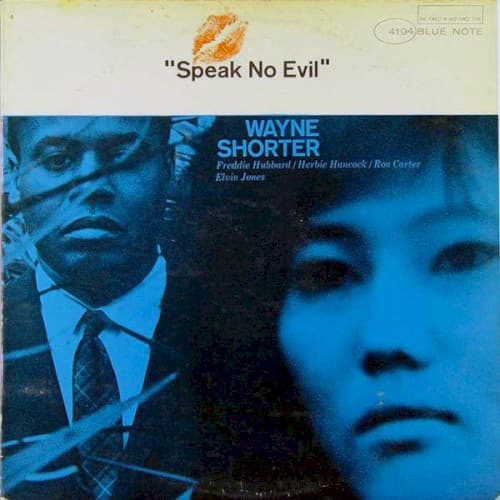
Wayne Shorter Speak No Evil — The Album That Taught Jazz to Write in Questions
Speak No Evil proves that the best way to open up improvisation is to build compositions around uncertainty rather than resolve it. Wayne Shorter wrote six pieces in 1964 that share a harmonic language without repeating a shape, each one constructed from wide intervals and progressions that move sideways instead of forward. The result is an album where the written material gives the players something genuinely difficult to do: find resolutions that Shorter deliberately left out. Where hard bop tunes tend to close around their changes, these stay open, and the improvisations throughout reflect that openness.
Recorded in December 1964 during Shorter's first year in the Miles Davis quintet, Speak No Evil pulls together a band that could handle the ambiguity. Freddie Hubbard plays trumpet on five of the six tracks, Herbie Hancock is on piano, Ron Carter on bass, and Elvin Jones on drums. The rhythm section had worked together in different configurations, but this session catches them responding to Shorter's specific demands: keep the pulse clear but let the harmony float. The album was released in June 1966 on Blue Note, by which point Shorter had become the primary composer in the Davis band. This record explains why: he had figured out how to write frameworks that required real decisions from the soloists, and those decisions make the improvisations worth hearing more than once.
Composition That Demands Rather Than Directs
Shorter builds these six pieces around intervals that destabilize more than they anchor. The title track opens with a four-note figure that moves by fourths and tritones, a shape that refuses to settle into a key center. That ambiguity runs through all six compositions, which use chord progressions that slide between tonal areas without declaring one. The writing asks the soloists to navigate changes that move in unexpected directions, and both Shorter and Hubbard respond with lines that explore the cracks rather than paper them over. On "Witch Hunt," the theme is a minor melody that keeps shifting its harmonic ground, and the solos follow that logic, testing different resolutions before moving on.
The rhythm section does essential work here. Herbie Hancock comps with chords that support the harmony without locking it down, leaving space for Carter to imply alternate roots. Elvin Jones plays with the rolling intensity he brought to the John Coltrane quartet, but he adjusts it for Shorter's compositions, which need momentum without the overwhelming force. The result is a group sound where every player is listening and adjusting in real time. On "Fee-Fi-Fo-Fum," Jones drives the tempo with a heavy swing, but he leaves gaps where the horns can phrase against the beat. Carter's bass lines anchor the harmonic movement without spelling it out, and Hancock voices his chords so that the solos can lean into dissonance when the melody suggests it.
Rudy Van Gelder's engineering captures the band with clarity and warmth. The horns are separated in the stereo image, Shorter on one side and Hubbard on the other, but the balance keeps them both present without favoring one. The piano is audible inside the drums, the bass has body, and the overall sound puts you in the room without making it feel like a clinical document. The recording serves the music by getting out of its way.
The weakness is that two of the six tracks land softer than the others. "Dance Cadaverous" has a strong theme, but the solos take longer to find their shape, and the piece runs over six minutes without earning all of it. "Wild Flower" is a gentle closer, but after the intensity of the title track and "Infant Eyes," it feels like an anticlimax rather than a resolution. The album would have been tighter at thirty-six minutes.
How the Album Builds Toward the Center and Then Lets Go
The sequencing places the two darkest compositions at the start of each side, so the album opens with tension twice and then works its way toward release. The opening stretch sets the tone with minor themes and relentless pulse, and the second track lightens the mood without losing intensity. The first side ends on a slower piece that introduces space, though it does not quite justify its length.
The second side follows the same arc but reaches a higher peak. "Speak No Evil" is the album's centerpiece, eight minutes of composition and improvisation where every element locks in. Shorter's solo builds logically from the theme, Hubbard answers with lines that push into the upper register without forcing, and Hancock, Carter and Jones create a foundation that shifts under the horns without losing the groove. The next track is the only ballad and the only piece without Hubbard, a solo feature for Shorter that lets him play a lyrical melody without the usual tenor saxophone vibrato. The album ends on "Wild Flower," a mid-tempo piece that offers resolution, though it lacks the weight of what precedes it. The pacing through the first five tracks is deliberate and effective; the sixth feels like an afterthought.
Why This Album Became a Textbook Without Sounding Like One
Speak No Evil is the clearest statement of the compositional approach Shorter would refine for the next five decades. It ranks as one of the essential Blue Note titles because it demonstrated that modal jazz could be more than vamps and scales: if you built the harmony with enough ambiguity, the solos had to make real choices. Ben Ratliff called it a foundation for everyone playing jazz born after the 1950s, and the claim holds. The influence is audible in any session where the composer writes changes that imply more than one resolution and expects the soloists to figure it out.
This album is for listeners who want to hear composition and improvisation working together rather than taking turns. If you are more interested in blowing sessions where the solos are the point and the heads are just entrances, start elsewhere. The writing here demands attention, and the improvisations respond to it rather than override it. Start with the title track and "Witch Hunt," which show what Shorter's frameworks make possible. If those work, "Infant Eyes" offers a different angle on the same ideas in ballad form.
The album has aged without losing relevance. Shorter's harmonic language influenced everyone from Gonzalo Rubalcaba to Ambrose Akinmusire, and the specific combination of precision and openness in the rhythm section still sounds like a model for how a band should respond to this kind of writing. For next steps, hear "Night Dreamer," Shorter's first Blue Note album as a leader, which has similar compositions with a slightly different band, or Miles Davis's "E.S.P.," recorded seven months after this session, which shows where Shorter took these ideas in a group setting. Speak No Evil proves that the best jazz composition does not tell the soloists what to play; it makes them decide what they need to say.
Track by track
Track Listing
Witch Hunt
StandoutThe opening track establishes the album's harmonic language with a minor theme built on fourths and tritones that refuse to resolve. Shorter wrote a melody that moves through tonal areas without declaring one, and the solos navigate that ambiguity. Shorter's tenor solo builds from short phrases into longer lines, testing resolutions before abandoning them. Hubbard follows with a solo that explores the upper register, his tone bright but not aggressive. Elvin Jones drives the rhythm with a rolling pulse that keeps the intensity high without overwhelming the horns, and Ron Carter's bass lines anchor the harmonic movement without spelling out every change. Herbie Hancock comps with chords that support the solos without locking them into predictable paths. The piece runs over eight minutes and earns all of it, setting the standard for the rest of the album. The theme's wide intervals and the rhythm section's flexibility give the soloists room to make real choices, and they take it.
Fee-Fi-Fo-Fum
StandoutA hard-swinging piece with a bluesy theme and a more straightforward harmonic structure than the opener, though Shorter's writing still leaves space for invention. Hubbard plays with controlled intensity, his lines punching through the rhythm section without forcing. Shorter's solo uses the blues foundation to build phrases that move sideways rather than straight through the changes. Jones swings hard and keeps the tempo driving, while Carter and Hancock provide a solid foundation that lets the horns take chances. The piece is the most accessible on the album, with enough blues feeling to sound grounded but enough harmonic ambiguity to stay interesting. At under six minutes, it does not overstay.
Dance Cadaverous
SolidA slower, darker piece with a theme that moves through minor tonalities and a rhythm that leans into space rather than momentum. The composition has a strong melody, but the solos take longer to find their shape than on the surrounding tracks. Shorter plays with restraint, exploring the lower register of the tenor, and Hubbard responds with lines that test the harmonic boundaries without quite breaking through. The rhythm section keeps the pulse steady, but the piece sags in the middle, running over six and a half minutes without justifying the length. The theme is compelling enough to open a solo, but the improvisations do not develop ideas so much as restate them. It is the weakest track on the album, though the weakness is relative: the composition is still more interesting than most hard bop filler.
Speak No Evil
StandoutThe album's centerpiece and its most fully realized track, an eight-minute piece where composition and improvisation lock in at every level. The theme is a four-note figure that moves by fourths and tritones, creating harmonic ambiguity that the soloists resolve in different ways. Shorter's solo builds logically from the melody, using space to let phrases breathe before extending them into longer lines. Hubbard answers with a solo that pushes into the upper register, his tone clear and his phrasing confident. The rhythm section does crucial work here: Hancock comps with chords that shift the harmonic ground under the solos, Carter's bass lines imply alternate roots, and Jones drives the groove with intensity that never overwhelms. The piece demonstrates what Shorter's compositional approach makes possible: improvisations that respond to the written material rather than ignore it. Every element serves the whole, and the track justifies its length by developing ideas rather than repeating them.
Infant Eyes
StandoutThe only ballad and the only track without Freddie Hubbard, a feature for Shorter's tenor that lets him play a lyrical melody without the usual saxophone vibrato. The composition is gentle and harmonically open, built around a simple theme that Shorter develops with restraint. His solo explores the melody's implications without pushing into the kind of intensity that defines the rest of the album. Hancock, Carter and Jones provide a delicate foundation, the piano voicing chords that support the melody without filling every gap, the bass walking softly, the drums brushing rather than driving. The piece offers a different angle on Shorter's writing, showing that his harmonic language works in ballad form as well as in the more intense compositions. It is a necessary contrast after the weight of the title track, and Shorter plays it with enough feeling to make it more than just a change of pace.
Wild Flower
SolidA mid-tempo closer with a lyrical theme and a more straightforward harmonic structure than the album's darker pieces. The composition is pleasant, but after the intensity of "Speak No Evil" and the intimacy of "Infant Eyes," it feels like an anticlimax. Shorter and Hubbard play with ease, their solos exploring the melody without urgency, and the rhythm section provides a steady foundation. The piece does not build toward anything, and at over six minutes it runs longer than its ideas justify. It serves as a gentle resolution, but the album would have been stronger ending on "Infant Eyes" or cutting this track to four minutes. The writing is competent, the playing is solid, but the track lacks the weight of what precedes it.