The scorecard
9.0/10 · Essential
- Composition20%
- 9.5
- Recording15%
- 9.0
- Performance30%
- 9.0
- Cohesion15%
- 8.5
- Originality10%
- 8.5
- Replay value10%
- 9.0
Modal frameworks on the title track and Dolphin Dance give the quintet open structures that generate improvisation without boxing it in, while The Eye of the Hurricane builds tension through a repeating pedal that never feels static.
Rudy Van Gelder captures the space between the instruments, letting Ron Carter's bass and Tony Williams' cymbals define the room while Freddie Hubbard's trumpet sits forward without crowding George Coleman's tenor.
The rhythm section interaction sets the standard for post-bop interplay: Williams and Carter respond to the soloists in real time, pushing Hancock's comping into new harmonic areas while Coleman and Hubbard build solos that stretch the themes.
Five tracks, 42 minutes, with no filler: the oceanic concept governs the use of space and tempo across the sequence, and the longest piece earns its length by building through multiple solo cycles.
The modal language comes from the Miles Davis quintet these players had just left, but the compositional approach and the nautical concept mark new territory for Hancock as a bandleader at 24.
The themes return in the imagination after one listen, the solos reveal new details on repeat, and the record holds its place in the repertoire six decades later as three of its tracks became standards.
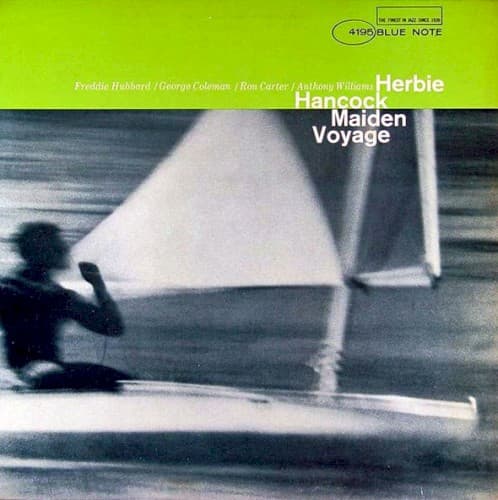
Herbie Hancock Maiden Voyage — Modal Jazz With Room to Breathe
Maiden Voyage is the argument for giving a rhythm section space and seeing what happens. Recorded in one session in March 1965, it is Herbie Hancock's clearest answer to the question modal jazz had been asking since Kind of Blue: how do you write frameworks that invite improvisation without turning into blowing contests over static chords. The album works because Hancock writes themes with melodic substance and harmonic direction, then trusts a rhythm section that includes Freddie Hubbard and Ron Carter to make the space generative rather than empty. The title track floats on suspended fourths and a mid-tempo swing that never rushes, giving Freddie Hubbard and George Coleman room to build solos that stretch the theme without losing it. The Eye of the Hurricane anchors itself to a pedal tone that should feel repetitive but instead creates tension as the horns layer lines over the top. Dolphin Dance, written after Count Basie's Shiny Stockings, moves through harmonic areas without locking into a single mode, so the improvisers have to listen and respond rather than coast.
The stakes in 1965 were Hancock's position as a bandleader. He had been the pianist in the Miles Davis quintet, as had Coleman, Carter and Williams. This was his fifth Blue Note album as a leader and the one where the writing and the concept came together. The oceanic theme is not a gimmick: the track titles point to marine biology and the sea, but the music earns the metaphor through the way the band uses negative space, through Williams' cymbal washes and Carter's long tones, through the way the solos surface and dive. The concept gives the session a shape, and the shape makes it cohere as an album rather than a collection of takes. It received the Grammy Hall of Fame Award in 1999, and three of its five tracks are now jazz standards, which says more about the writing than any metaphor.
Frameworks That Invite Rather Than Dictate
The compositional strategy is to build themes with enough harmonic movement to give the soloists a path, then get out of the way. Maiden Voyage suspends the harmony on fourths, a sound that had been explored by McCoy Tyner but here serves a different function: instead of creating a single modal field, Hancock moves between tonal centers, so the theme has a sense of travel. The melody is simple enough to remember after one listen, which makes the return to the head satisfying rather than perfunctory. The Eye of the Hurricane takes the opposite approach, anchoring the entire piece to a pedal tone and letting the horns build layers over the top. The risk is stasis, but Williams and Carter prevent it by shifting the rhythmic feel underneath, so the pedal becomes a foundation rather than a trap. Dolphin Dance has the most traditional harmonic structure of the five tracks, moving through changes that give the improvisers clear signposts, but the melody itself is elusive, with phrases that start in unexpected places and resolve in ways that keep the ear engaged.
The band is four-fifths of the Miles Davis quintet that recorded E.S.P. the same year, with George Coleman in the tenor chair before Wayne Shorter replaced him. Coleman's playing here is less aggressive than his work with Davis, more patient, with a tone that sits between the lyricism of Stan Getz and the harder edge of Joe Henderson. Freddie Hubbard on trumpet brings a brightness and a rhythmic precision that contrasts with Coleman's long lines, and the two horns never compete for the same space. Hancock's comping is the engine of the session: he responds to the soloists with harmonic suggestions rather than fixed voicings, pushing them into new areas without dictating the direction.
Carter's bass is melodic and present in the mix, often playing counter-lines rather than just walking, which makes the rhythm section feel like a trio within the quintet. Williams, at 19, plays with a maturity that redefines the drummer's role: his cymbal work creates texture, his snare accents punctuate rather than interrupt, and his interaction with Carter is a conversation rather than a time-keeping exercise.
Rudy Van Gelder recorded the session at his Englewood Cliffs studio, and the sound is one of the album's strengths. The room has air, the bass is warm without being boomy, and the horns are distinct without being isolated. The balance is such that you can hear Williams' brushes on The Eye of the Hurricane and Carter's fingers on the strings during Dolphin Dance, which gives the recording an intimacy that many hard bop sessions lack.
The weaknesses are few. Little One, at nearly nine minutes, is the least developed composition on the album, with a melody that does not give the soloists much to work with, and the track sags in the middle. Survival of the Fittest, the longest piece at just over ten minutes, has a theme that feels more like a sketch than a finished idea, and while the solos are strong, the composition itself does not justify the length. These are not fatal flaws, but they keep the album from being flawless.
A Sequence Built on Restraint and Release
The album is 42 minutes across five tracks, and the pacing is deliberate. The opening track sets the harmonic language for what follows with the strongest theme. The second position shifts the energy down and creates a meditative space that makes the faster tempos on the second half feel earned.
The third track, despite its weaker composition, serves as a bridge between the two sides of the original LP, and its length gives the listener a break from the intensity of the first stretch. The fourth position is the only misstep in sequencing: it is the longest track and the least compelling composition, and placing it after the intermission makes the second half feel backloaded. The closing run delivers the most lyrical theme and the warmest harmonic language, which gives the session a satisfying resolution.
The album does not overstay its welcome, and none of the tracks feel like alternate takes or filler. The length of each piece is proportional to the strength of its composition: the first and last tracks are both over nine minutes and earn every minute, while the third, at nearly nine, does not. The flow between tracks is smooth, with no abrupt shifts in mood or tempo, and the oceanic concept holds the sequence together without feeling forced. The lack of short interludes or transitional pieces means the album moves at a steady pace, which works in its favor.
Where It Stands and Who Should Start Here
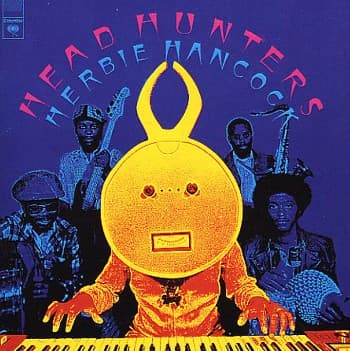
Maiden Voyage ranks as Hancock's most cohesive acoustic album and the purest expression of his writing for a quintet. It sits below Head Hunters in overall rating because the funk record redefined a genre and reached a wider audience, but this is the better album for listeners who want to hear Hancock in a post-bop context. The title track, Dolphin Dance and The Eye of the Hurricane became standards because they are the rare compositions that reward both the player and the listener: they are open enough to invite interpretation but strong enough to hold their shape. The album has aged better than most hard bop records from the same period because the concept gives it a unifying idea and the rhythm section interaction still sounds modern.
This is essential for anyone who wants to understand post-bop or Hancock's development as a composer. It is also the best entry point for listeners who find free jazz too abstract and hard bop too rigid, because the modal approach here creates space without losing structure. The weaknesses are confined to two tracks, and even those tracks have strong solos. Start with the title track, then Dolphin Dance, then The Eye of the Hurricane.
If those three do not convince you, the rest will not change your mind. For the next step, hear Empyrean Isles from 1964, which is more rhythmically adventurous, or E.S.P. by the Miles Davis quintet, which takes the same personnel in a more abstract direction. Maiden Voyage is the clearest statement of a specific idea: modal jazz played by a band that trusts each other enough to leave room.
Track by track
Track Listing
Maiden Voyage
StandoutThe title track is the album's thesis and its best composition. The theme suspends the harmony on stacked fourths, creating a floating quality that matches the nautical concept, and the melody moves between tonal centers with enough direction to guide the soloists without dictating their choices. Hancock wrote it for a television commercial, but the composition transcends its origin. Freddie Hubbard's solo builds in intensity over three choruses, starting with the melody and gradually moving into harmonic extensions, and his sense of space makes every note count. George Coleman follows with a tenor solo that contrasts Hubbard's brightness with a darker tone and longer phrases, exploring the upper register without losing the theme. Hancock's solo is restrained, using the modal framework to imply harmonic movement rather than stating it directly, and his touch is light enough to let the rhythm section breathe. Carter and Williams are as present as the soloists, responding to every phrase and shifting the rhythmic feel underneath. The track is seven and a half minutes and never sags. It became a jazz standard because the theme is memorable, the structure is open, and the solos are models of how to improvise over modal changes.
The Eye of the Hurricane
StandoutThe composition anchors itself to a repeating pedal tone, which should create stasis but instead generates tension as the horns layer lines over the top. The melody is sparse, almost a riff, and the harmonic movement comes from the way the soloists imply changes against the pedal. Williams' cymbal work is the key: his washes create texture and define the space, making the piece feel open rather than stuck. Hubbard's solo is built on short phrases that circle the pedal, never settling into a predictable pattern, and Coleman's response is more linear, using long tones that contrast with the rhythmic activity underneath. Hancock's comping is minimal, often just a chord or two per chorus, which gives the rhythm section room to interact. The track is just over six minutes, and the concept holds for the entire length. It works as a meditation and as a contrast to the faster tempos that surround it.
Little One
WeakThe weakest composition on the album. The melody is pleasant but does not give the soloists much to work with, and the harmonic structure is more conventional than the other four tracks. At nearly nine minutes, the track feels longer than its ideas warrant, and the middle section sags as the solos circle without building. Coleman plays with more aggression here, trying to inject energy into a theme that does not support it, and Hubbard's solo is solid but unmemorable. Hancock's comping is more active than on the other tracks, which suggests he is trying to compensate for the lack of compositional substance. Carter and Williams keep the rhythm section engaged, but even their interaction cannot lift a theme that needed another draft. A different version was recorded by the Miles Davis quintet for E.S.P., and that arrangement does not improve the material. The track is not bad, but it is filler next to the other four.
Survival of the Fittest
SolidThe longest track at just over ten minutes, with a theme that feels more like a sketch than a finished composition. The melody is built on a repeated figure that does not develop, and the harmonic structure is loose enough that the soloists have to create their own direction. Hubbard's solo is strong, moving through several ideas and building in intensity, but the lack of a clear framework makes it feel disconnected from the theme. Coleman's solo is more exploratory, pushing into the upper register and using longer phrases, but again the composition does not support the improvisation. Hancock's solo is the most interesting part of the track, with harmonic movement that suggests what the theme could have been, and his interaction with Carter and Williams creates moments of real interplay. The track earns some of its length through the quality of the solos, but the composition itself does not justify ten minutes. It is the weakest link in the sequence and should have been edited down or replaced.
Dolphin Dance
StandoutThe most lyrical composition on the album and the closest to a traditional jazz ballad. Hancock cites Count Basie's Shiny Stockings as the inspiration, and the influence is audible in the melody's warmth and the harmonic progression's clarity. The changes move through several tonal centers, giving the soloists clear signposts without locking them into a single mode. The melody itself is elusive, with phrases that start in unexpected places and resolve in ways that keep the ear engaged. Hubbard's solo is the most melodic of the session, staying close to the theme and building slowly, and Coleman's response is equally lyrical, with a tone that is softer here than on the earlier tracks. Hancock's solo is a masterclass in touch and timing, with voicings that imply the harmonic movement without stating it directly, and his interaction with Carter is a duet within the larger piece. Williams plays with brushes for most of the track, creating a lighter texture that matches the ballad feel. At just over nine minutes, the track earns its length through the strength of the composition and the quality of the solos. It became a standard because it rewards both the player and the listener, with a melody that is memorable and a structure that invites interpretation. The track closes the album on a high note and leaves the listener wanting more.