The Alto Saxophonist Who Shattered Jazz Convention
When Ornette Coleman walked into the Five Spot Café in November 1959, he brought a vision that would fracture jazz into before and after. The Texas-born alto saxophonist arrived in New York with a white plastic saxophone, a quartet without a piano, and a sound that made bebop seem antiquated overnight. His debut at the Five Spot became the most controversial engagement in modern jazz history—some musicians walked out in disgust, others recognized they were witnessing a seismic shift in creative possibility.
Coleman's approach dismantled the harmonic foundation that had governed jazz since the swing era. Where bebop had complicated chord changes, Coleman dispensed with them entirely. His compositions provided melodic frameworks rather than harmonic roadmaps, allowing improvisers to follow emotional and melodic logic instead of prescribed progressions. The result sounded chaotic to ears trained on conventional jazz architecture, but Coleman heard liberation—a return to the blues-soaked spontaneity that academic jazz had systematized away.
Born in Fort Worth in 1930, Coleman came up through rhythm and blues bands where his unconventional phrasing got him fired repeatedly. Audiences in Louisiana once beat him for the way he played. Yet that outsider status became his strength. Unencumbered by formal training, Coleman developed an entirely personal saxophone vocabulary—raw, vocal, emotionally direct. By the time he recorded his landmark album in 1959, he had already spent years refining a vision that would earn him a Pulitzer Prize decades later and reshape the entire trajectory of creative music.
Harmolodics and the Sound of Collective Freedom
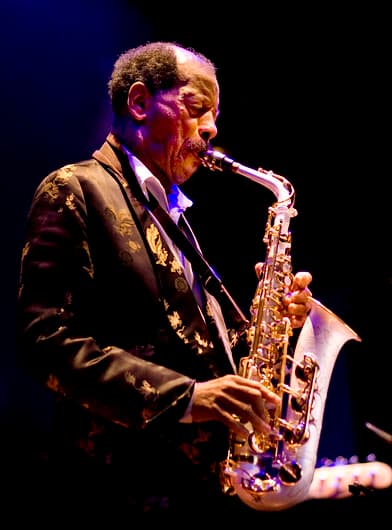
Coleman's alto saxophone tone sliced through jazz conventions with a piercing, almost singing quality that polarized listeners from the first note. He favored a bright, vocalized sound that could shift from keening cries to bluesy moans within a single phrase, prioritizing emotional expression over technical polish. His phrasing ignored bar lines and harmonic resolutions, creating melodic lines that breathed according to their own internal logic rather than the tyranny of chord changes.
The revolutionary core of Coleman's approach was what he eventually termed "harmolodics"—a musical philosophy where harmony, melody, and rhythm held equal improvisational weight. In practice, this meant his quartet operated without a piano or guitar to dictate harmonic movement. The bass, typically assigned to outlining chord progressions, gained melodic freedom. Drummer Billy Higgins and later Ed Blackwell provided rhythmic propulsion without strict timekeeping. Each musician listened and responded in real time, creating collective improvisations that sounded simultaneously loose and cohesive.
Coleman's compositions themselves reflected this philosophy. Tunes like "Lonely Woman" and "Ramblin'" presented memorable melodies—often based in blues feeling despite their harmonic ambiguity—that served as departure points rather than structures to navigate. Soloists weren't bound to predetermined changes, allowing them to follow melodic ideas wherever intuition led. The music maintained swing and blues roots even as it abandoned the harmonic scaffolding bebop had erected. Critics initially heard chaos, but Coleman heard organized freedom—musicians conversing rather than soloing over predetermined backgrounds.
From Fort Worth Outcast to Pulitzer Prize Winner
Coleman's path to revolutionary status began in the unlikely environment of Texas rhythm and blues. Playing tenor saxophone in dance bands and honky-tonks during the late 1940s, his harmonic experiments got him dismissed from multiple groups. The physical beating he received from an angry audience in Baton Rouge after a particularly unconventional performance became a defining moment—proof that his vision existed so far outside mainstream expectations that it provoked violence. He switched to alto saxophone and relocated to Los Angeles in 1950, spending the next several years working day jobs while developing his concepts in near-total obscurity.
Los Angeles proved crucial to Coleman's development. He found kindred spirits in trumpeter Don Cherry, bassist Charlie Haden, and drummer Billy Higgins—musicians willing to abandon harmonic conventions and explore collective improvisation. Bassist Red Mitchell introduced Coleman to pianist Paul Bley, leading to Coleman's first significant recordings in 1958. But the real breakthrough came when Contemporary Records producer Lester Koenig recorded Something Else!!!! and Tomorrow Is the Question! These albums, recorded in 1958-59, captured a quartet sound that sounded like nothing else in jazz—melodic, swinging, bluesy, yet harmonically free.
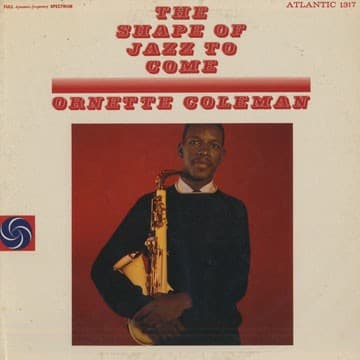
The explosion occurred with The Shape of Jazz to Come in 1959. Recorded in May and released in October, the album title announced Coleman's ambitions without apology. The music delivered on that promise—"Lonely Woman" became an instant classic, its mournful melody and elastic rhythm section creating a new template for jazz composition. The subsequent Five Spot residency turned Coleman into the most discussed musician in jazz. Leonard Bernstein praised him, Miles Davis dismissed him as "all screwed up inside," Charles Mingus defended his emotional honesty while questioning his technique. The controversy only amplified Coleman's impact.
Coleman's early 1960s output consolidated his position as free jazz's defining voice. Free Jazz: A Collective Improvisation (1960) featured a double quartet improvising simultaneously—a radical experiment that gave the entire movement its name. Ornette! and This Is Our Music refined the quartet concept, while The Art of the Improvisers showcased his growing compositional sophistication. Then, characteristically, Coleman withdrew from public performance between 1962 and 1965 to teach himself trumpet and violin, instruments on which his untutored approach would push even further into uncharted territory.
The late 1960s and 1970s saw Coleman expand his vision. He composed a orchestral work, Skies of America, that applied harmolodic principles to symphonic writing. He formed Prime Time in the mid-1970s, an electric band featuring two guitars, two drummers, and electric bass that fused free jazz with funk grooves—"free funk" or "harmolodic funk" that anticipated no wave and influenced punk-jazz fusions decades later. Albums like Dancing in Your Head confused jazz purists who expected Coleman to remain in acoustic territory, but the music demonstrated harmolodics could function in any context.
The recognition Coleman had fought for arrived gradually but definitively. A Guggenheim Fellowship in 1967, a MacArthur "Genius Grant" in 1994, and finally a Pulitzer Prize in 2007 for his album Sound Grammar validated his lifelong pursuit. By his death in 2015, the saxophonist who had been beaten for his playing and dismissed as a charlatan stood as one of jazz's most influential figures, his harmolodic concepts absorbed into the DNA of creative music worldwide.
The Blueprint for Every Jazz Revolution That Followed
Coleman's influence operates at multiple levels—immediate stylistic impact, philosophical shift in how jazz musicians approach improvisation, and cultural permission to reject established rules in favor of personal vision. The entire free jazz movement emerged directly from his late-1950s breakthroughs. Musicians like Albert Ayler, Archie Shepp, and Pharoah Sanders built on the harmonic freedom Coleman pioneered, though often with more aggressive sonorities. Even John Coltrane, already established when Coleman arrived, absorbed harmolodic concepts into his own journey toward freedom.
Beyond free jazz specifically, Coleman's example gave generations of musicians permission to trust intuition over tradition. The loft jazz scene of 1970s New York, the European free improvisation movement, the downtown Manhattan experimentalists of the 1980s—all operated in creative space Coleman opened. His harmolodic theory, though often misunderstood, provided a conceptual framework for musicians seeking alternatives to standard jazz harmony without abandoning melody and swing. Pat Metheny's collaboration with Coleman on Song X demonstrated harmolodics could bridge generations and aesthetics.
Coleman's cultural significance extends beyond musical innovation. As an African American artist who insisted on complete creative autonomy, who started his own record label (Artists House) and controlled his publishing, Coleman modeled self-determination that influenced hip-hop's independent ethos decades later. His refusal to compromise vision despite industry pressure, critical dismissal, and physical threats established him as a prototype for the uncompromising artist—someone who redefined success on their own terms and lived long enough to receive institutional validation without softening their approach. The plastic saxophone that initially seemed like a gimmick became a symbol: Coleman would use whatever tools expressed his vision, tradition and convention be damned.