The Saxophone Colossus: Sonny Rollins' Command of the Tenor
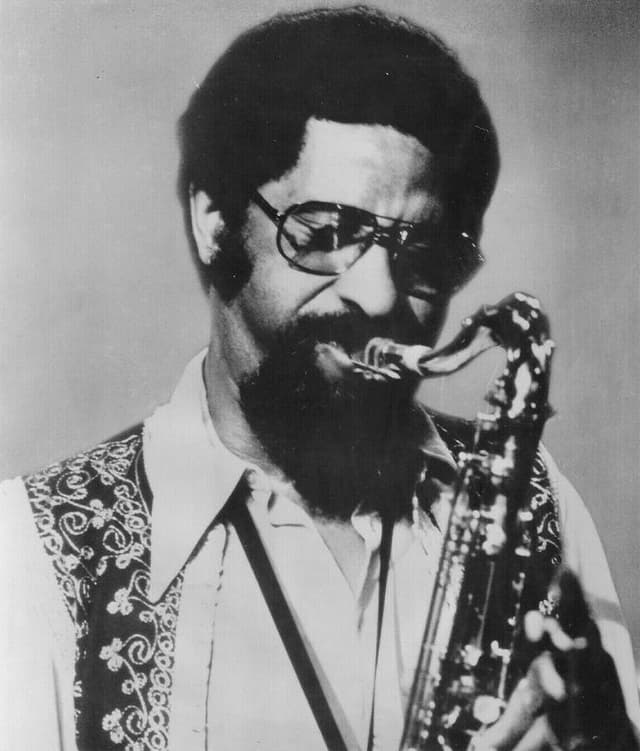
Sonny Rollins emerged from Harlem's Sugar Hill neighborhood in the early 1950s with a tenor saxophone sound so commanding it could carry an entire performance without accompaniment. Born Theodore Walter Rollins in 1930, he developed alongside bebop's architects yet never settled into their formulas. His approach to improvisation treated melodies as malleable frameworks rather than sacred texts, dismantling standards and reassembling them with an architectural logic that felt spontaneous and calculated simultaneously.
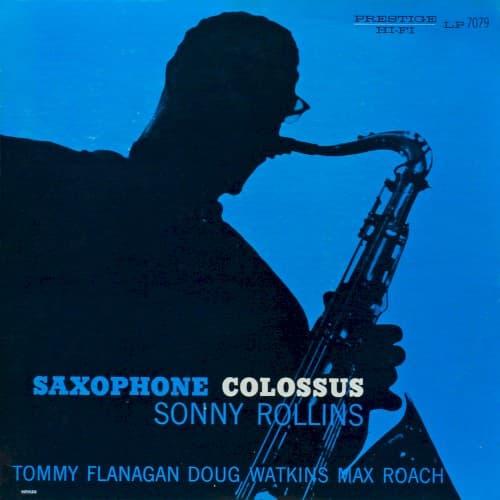
By the mid-1950s, Rollins had already established himself through sideman work with Miles Davis, Thelonious Monk, and the Clifford Brown-Max Roach Quintet. His 1956 recording Saxophone Colossus captured him at a creative peak, demonstrating how a tenor player could sustain listener attention through thematic development rather than harmonic acrobatics alone. The album's centerpiece, "St. Thomas," built its momentum from a Caribbean melody his mother sang, proving Rollins could integrate folk sources into jazz architecture without dilution.
What distinguishes Rollins from his contemporaries is his willingness to disappear. Multiple sabbaticals from performing—most famously his three-year retreat starting in 1959, when he practiced on the Williamsburg Bridge to avoid disturbing neighbors—reveal an artist more interested in mastery than visibility. These periods of withdrawal and return created a career arc defined by reinvention rather than steady accumulation, making each comeback a genuine musical event rather than a nostalgia exercise.
Intervallic Logic and Motivic Development on Tenor Saxophone
Rollins plays tenor saxophone as if he's solving puzzles in real time. Where John Coltrane pursued vertical density through harmonic stacking, Rollins works horizontally, extracting maximum variation from minimal melodic cells. He'll latch onto a three-note fragment and rotate it through different rhythmic contexts, stretching and compressing the phrase until it reveals structural possibilities invisible in the original statement. This motivic approach creates improvisations that feel like conversations with themselves, each chorus responding to what came before.
His tone sits somewhere between Ben Webster's bruised warmth and Coleman Hawkins' muscular authority—thick in the lower register without becoming muddy, penetrating in the altissimo range without shrillness. Rollins uses space as a compositional element, inserting silence where other players might fill gaps with ornamental runs. These strategic pauses let his rhythmic ideas land with greater impact, turning his solos into studies in tension and release rather than continuous streams of notes.
The calypso and Caribbean influences that surface throughout his work aren't exotic garnishes but integral to his rhythmic conception. His time feel shifts fluidly between swing's triplet pulse and Caribbean rhythms' duple subdivisions, creating grooves that sit slightly askew from standard bebop propulsion. Drummers working with Rollins must balance supporting his rhythmic explorations while maintaining forward momentum, a challenge that explains why his best recordings feature rhythm sections willing to follow his unpredictable phrasing rather than locking into static patterns.
From Bebop Apprenticeship to Solo Architectural Statements
Rollins' professional trajectory began at seventeen when he started recording with Babs Gonzales in 1947, quickly moving into sessions with Bud Powell and Fats Navarro. His early work showed technical command but hadn't yet developed the structural vision that would define his mature style. A heroin addiction derailed his momentum in the early 1950s, leading to incarceration at Rikers Island. This interruption, while devastating personally, may have contributed to the focused intensity he brought to his post-rehabilitation recordings.
The period from 1954 to 1958 represents Rollins at his most prolific and innovative. Working with Max Roach's quintet alongside Clifford Brown, he developed the rhythmic confidence that allowed him to lead his own sessions. Saxophone Colossus in 1956 announced his arrival as a conceptual leader, followed by Way Out West (1957), which paired him with just bass and drums—a stripped-down format that exposed every choice he made. The album's cover, showing Rollins in full cowboy regalia in the Mojave Desert, captured his willingness to embrace unlikely juxtapositions.
His first sabbatical from 1959 to 1961 came at the height of his commercial and critical success. Rather than capitalize on Saxophone Colossus' acclaim, Rollins retreated to study, practice, and reconsider his direction. The Williamsburg Bridge sessions became jazz lore—a virtuoso practicing outdoors at all hours, treating a traffic-heavy span as his private conservatory. He returned in 1962 with The Bridge, an album that acknowledged his absence while demonstrating expanded harmonic vocabulary influenced by Ornette Coleman's free jazz experiments.
The 1960s saw Rollins engaging with avant-garde approaches without abandoning tonal centers entirely. Albums like Our Man in Jazz (1962) and East Broadway Run Down (1966) pushed into freer territory, featuring extended improvisations that tested his thematic development methods against less structured formats. His 1968 retirement—lasting until 1971—reflected frustration with jazz's commercial decline and the industry's increasing focus on rock fusion. When he returned again, he incorporated electric instruments and funk rhythms, documents like Horn Culture (1973) and The Cutting Edge (1974) showing an artist refusing to become a museum piece.
Later decades found Rollins balancing respect for his legacy with continued exploration. His concert recordings from the 1980s onward reveal a player more interested in spontaneous risk than perfected studio takes. Albums became less frequent while live performances remained the primary vehicle for his creativity, each show offering different improvisational routes through familiar material. By the 2000s, health issues slowed his activity, but recordings like Sonny, Please (2006) demonstrated that his intervallic imagination remained sharp even as physical stamina diminished.
Architectural Improvisation and the Unaccompanied Saxophone Tradition
Rollins established that a tenor saxophonist could hold an audience's attention without rhythmic or harmonic support, legitimizing the solo saxophone recital as a viable jazz format. His completely unaccompanied performances—particularly at New York's Museum of Modern Art in 1985—proved that motivic development and timbral variation could sustain interest across extended durations. This approach influenced generations of saxophonists who understood improvisation as compositional thinking rather than virtuosic display.
His influence extends beyond direct stylistic imitation into conceptual territory. Players as different as Joe Lovano, Joshua Redman, and Branford Marsalis cite Rollins' structural logic as foundational to their own approaches. His willingness to step away from performing at career peaks gave permission for artists to prioritize growth over marketplace presence, modeling a relationship to creativity that values depth over consistency. The sabbatical as artistic strategy—now common among jazz musicians seeking renewal—traces directly to Rollins' example.
Rollins occupies a unique position in jazz history as the bridge between bebop's harmonic innovations and post-bop's structural freedom. Where Charlie Parker and Dizzy Gillespie established new chord-scale relationships, and John Coltrane pursued modal and spiritual dimensions, Rollins demonstrated how motivic development could generate compelling improvisation without requiring either harmonic complexity or modal stasis. His recordings remain essential texts for understanding how thematic transformation can drive jazz narrative, proving that the most sophisticated improvisations often emerge from the simplest materials subjected to rigorous imagination.