The scorecard
6.9/10 · Good
- Composition20%
- 6.5
- Recording15%
- 8.0
- Performance30%
- 7.5
- Cohesion15%
- 5.5
- Originality10%
- 7.0
- Replay value10%
- 6.0
The core songs have strong frameworks—"Show You the Way" and "Inferno" give real space for ideas—but filler tracks like "Day & Night" and "I Am Crazy" are sketches that add nothing.
Louis Cole's engineering catches the synth shimmer and bass punch with remarkable clarity, from the Nintendo glow of "Jameel's Space Ride" to the underwater depth of "Lava Lamp".
The bass playing is virtuosic and the vocal phrasing is genuinely weird, but the interplay never develops—most tracks are one-take solos over programmed beats rather than band conversations.
Twenty-three tracks in under an hour means constant interruptions; the "Inferno" through "3AM" sequence builds momentum the rest of the album refuses to sustain.
Blending yacht rock sincerity with internet absurdism and six-string bass fusion was new in 2017, even if the jazz-funk vocabulary underneath it was not.
The best songs survive repeated listens, but the constant interruptions and mood whiplash make the full album a chore to sit through more than once.
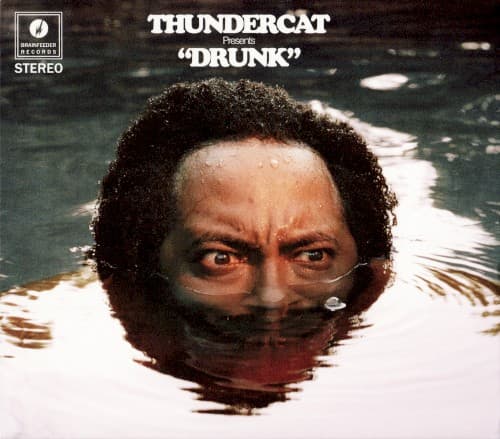
Thundercat Drunk — Twenty-Three Songs Looking for an Album
Drunk is a virtuoso bass player who made a joke record and then kept the punchlines in. The album runs twenty-three tracks in fifty-two minutes, meaning the average song lasts two minutes and sixteen seconds, which is not long enough to develop an idea but exactly long enough to announce one and move on. The result is an hour that feels like flipping channels: yacht rock with Kenny Loggins and Michael McDonald, a Kendrick Lamar duet over drum machines, Nintendo synthwave, slow-jam R&B with Wiz Khalifa, and interludes about cats. Some of it is striking and some of it is filler, but all of it interrupts everything else.
The thesis here is that this format is the point, a deliberate attempt to mirror the fractured attention and chemical escapism the lyrics describe. The problem is that the format works against the music. When Thundercat locks into a groove—"Lava Lamp", "Inferno", the second half of "Show You the Way"—the playing is compelling enough to warrant development, but the sequencing cuts away before the song can breathe. The comedy tracks and thirty-eight-second interludes are not sketches; they are full tracks with full production that take up space an actual album would have used for deeper exploration. The result is a record that sounds expensive and feels unfinished, a set of demos masquerading as a statement.
How the Six-String Bass Became a Hook Machine
The album's central instrument is Thundercat's six-string bass, played through effects that give it the sustain and harmonic range of a guitar without losing the low-end weight. The technique is clean and the note choices are melodically interesting—"Uh Uh" is two minutes of walking bass and synth chords that land halfway between Jaco Pastorius and a video game soundtrack, and "Lava Lamp" builds a slow-motion R&B progression over a bass line that functions as both root and lead. The playing is virtuosic in the sense that it does things most bassists cannot do, but it is also somewhat static: Thundercat tends to lock into a pattern and ride it rather than develop it, which works when the song is three minutes and feels thin when the song is longer.
Louis Cole handled the engineering and much of the production, and the sound is clean to the point of sterility. The synths shimmer and the bass punches through with standout clarity, but there is no room, no bleed, no sense of musicians in a space together. This is bedroom fusion: programmed drums, layered synths, and bass overdubs that sound like they were recorded direct. The clarity serves the compositions—"Jameel's Space Ride" needs that Nintendo glow to work—but it also flattens the record. When live drums do appear, as on "Walk on By", they sit in the same airless mix as everything else, which makes the album feel more like a beat tape than a band record.
The guest appearances range from inspired to inexplicable. Michael McDonald and Kenny Loggins on "Show You the Way" are used sincerely, not as kitsch—their harmonies in the second half are genuinely pretty, and the song earns its soft-rock sentiment. Kendrick Lamar on "Walk on By" delivers a verse about surveillance and paranoia that fits the mood but does not change the song's direction. Wiz Khalifa on "Drink Dat" coasts through sixteen bars that could have been recorded in one take. Pharrell on "The Turn Down" sings about environmental collapse over a groove that never decides whether it wants to be urgent or sarcastic. None of the features feel necessary, which is a problem when half the album's running time goes to songs with guests.
The weaknesses are structural. The comedy songs—"Captain Stupido", "A Fan's Mail (Tron Song Suite II)"—are not brief asides; they are full productions that eat up time the album does not have. The sequencing is scattershot: "Jethro" builds a disco-funk idea for ninety-four seconds and then stops; "Day & Night" is thirty-seven seconds of nothing; "I Am Crazy" is twenty-five seconds of a voice asking "Am I going crazy?" and then nothing. Thundercat described "Inferno", "I Am Crazy", and "3AM" as a single composition, and listening to them consecutively that becomes clear—but the album interrupts that sequence with "Drink Dat", which breaks the momentum completely.
Why Twenty-Three Tracks Kill the Arc
The album has no arc because it refuses to commit to one. It opens with a thirty-eight-second announcement about getting drunk and going down a rabbit hole, then pivots to a comedy song about being an idiot, then pivots to a jazz-funk instrumental. The first three tracks establish no throughline except chaos. By the time the record reaches its best moment in the first stretch, the momentum has been interrupted six times.
The back half attempts something more serious. One sustained sequence in the latter portion runs four tracks that build from paranoid funk to a genuine emotional admission, and for six and a half minutes the record sounds like it has something to say. Then the mood resets, followed by a track that introduces political themes the rest of the album ignored, followed by a closer that tries for a somber note but feels unearned because the album spent forty-five minutes refusing to take itself seriously.
The pacing never settles. The longest stretch without an interlude or a comedy bit is four tracks, which is not long enough to establish a mood or develop an idea. The album plays like a playlist, not a sequence—individual songs work in isolation, but the whole is less than the sum because the transitions actively work against continuity. At fifty-two minutes, the length is not egregious by genre standards, but the constant interruptions make it feel longer than records that run seventy.
Where It Ranks and Who It Is For
Drunk works best as a demonstrate for Thundercat's bass playing and worst as an album. The highlights—"Show You the Way", "Lava Lamp", "Inferno", "Them Changes"—are strong enough to justify a listen, and the production is clean enough that the individual tracks function as singles. The problem is that listening to the full record means sitting through ten minutes of comedy bits, twenty-five-second interludes, and underwritten features that add nothing. Without other Thundercat albums rated on the site yet, it is hard to say where this ranks in his catalog, but the format suggests a songwriter who had more ideas than songs and decided to include everything rather than curate.
The audience for this is bass players, fans of the Brainfeeder roster, and listeners who want jazz fusion filtered through internet absurdism. If you are coming from Kendrick Lamar or Kamasi Washington expecting developed compositions, this will disappoint—most of the tracks are sketches. If you are coming from the Flying Lotus or Thundercat's session work with other artists, the sound will be familiar and the brevity will make sense within that context. The album has aged as a time capsule of mid-2010s Los Angeles jazz-adjacent production, which is both its appeal and its limitation.
Start with "Show You the Way", "Lava Lamp", and "Them Changes". If those three work for you, try "Inferno" and "Walk on By". Skip the interludes entirely. If you want to hear Thundercat in a band context where the bass playing gets room to interact with other musicians, look for his work on Kamasi Washington's The Epic or Kendrick Lamar's To Pimp a Butterfly. If you want another record that blends fusion chops with short songs and absurdist humor, try Vulfpeck's Thrill of the Arts or Snarky Puppy's shorter releases, though neither leans as hard into the comedy.
Track by track
Track Listing
Rabbot Ho
SolidThirty-eight seconds establishing the alcohol-and-escapism theme with a vocal loop and synth wash. Functions as an intro but gets a full track number, which inflates the tracklist.
Captain Stupido
WeakComedy song about being an idiot, sung over a funk groove that never develops. The joke does not land and the track eats up time the album does not have.
Uh Uh
StandoutThe first actual song: two minutes of walking bass over synth chords, clean and melodically interesting. The groove sits halfway between Jaco Pastorius and a video game soundtrack, and the bass playing is intricate enough to hold attention. Ends abruptly when it could have kept going.
Bus in These Streets
SolidSynth-funk meditation on phone addiction, musically unremarkable. The lyric about disconnecting from digital technology is stated plainly and the track moves on without developing the idea.
A Fan’s Mail (Tron Song Suite II)
WeakComedy song about wanting to be a cat instead of a celebrity, featuring a chorus of layered meows. The production is full and the bass line is competent, but the joke is thin and the song overstays its two-and-a-half-minute runtime.
Lava Lamp
StandoutThe first track that earns its length. A slow-motion R&B ballad built on a bass line that functions as both root and lead, with Thundercat's vocal floating over sustained synth chords. The playing is patient and the harmonic progression moves through several ideas without rushing. Thundercat described it as a song about love and loss, and the mood supports that—melancholy without melodrama. One of the album's strongest moments.
Jethro
SolidNinety-four seconds of disco-inflected funk with synth stabs and a tight bass groove. Thundercat called it a song about death, but the music does not support that reading—it sounds like a sketch that got abandoned before it could become a full idea.
Day & Night
WeakThirty-seven seconds of nothing: a vocal fragment over synth pads. Not an interlude, a full track.
Show You the Way
StandoutThe album's best song by a significant margin. Michael McDonald and Kenny Loggins appear not as kitsch but as sincere collaborators, and their harmonies in the second half are genuinely pretty. The yacht-rock influence is deliberate and earned—the chord changes are smooth without being soft, and Thundercat's bass anchors the song without overwhelming it. The first two minutes meander, but once the harmonies enter the song locks into a groove that justifies the soft-rock sentimentality. Thundercat described it as a song about emotional escape and invitation, and the warmth in the vocal arrangement supports that. This is the track to start with.
Walk On By
SolidKendrick Lamar duet over drum machines and synth bass. The production is sparse and the groove is minimal, which gives Lamar room to work, but the song never develops beyond its initial idea. Lamar's verse about surveillance and paranoia fits the mood, but Thundercat's bass playing is less prominent here than anywhere else on the record, and the track feels like a feature opportunity rather than a composition.
Blackkk
SolidTwo-minute funk instrumental with a strutting bass line and horn stabs. The groove is solid and the playing is clean, but the track does not go anywhere.
Tokyo
SolidSynth-pop song about anime and Japanese culture, with Dragon Ball Z references in the lyrics. The production has a deliberate Nintendo aesthetic—bright, synthetic, and melodically simple. Musically slight but thematically consistent with the album's nerd-culture fixations.
Jameel’s Space Ride
SolidNamed after Thundercat's brother, built on a synthy beat with lyrics about police brutality. The Nintendo-style production clashes with the subject matter in a way that reads as intentional but does not quite work. Sixty-nine seconds.
Friend Zone
StandoutThree-minute funk track about romantic rejection, with Diablo and Mortal Kombat references. The bass groove is tighter than most of the album and the song has a clear hook, but the video game name-drops feel like filler in the lyric. One of the more complete songs in the middle stretch.
Them Changes
StandoutOriginally released on a 2015 EP, this is the album's most straightforward track: a bass-driven funk song built on a sampled beat from the Isley Brothers' "Footsteps in the Dark". The groove is immediate, the vocal melody is sticky, and the bass playing is clean without showing off. The song has been a live staple and it works here as a reset after the album's scatter. One of the three essential tracks.
Where I’m Going
SolidTwo-minute midtempo track that does not commit to a direction. The bass line is competent and the vocal is subdued, but the song feels like a demo.
Drink Dat
SolidSlow jam with Wiz Khalifa exploring the futility of drinking and smoking as escape. The concept is promising and Thundercat's description of the track—the drinker and the smoker personified—suggests something more substantial than what landed on the record. Khalifa's verse coasts through sixteen bars without adding much, and the song drags at three and a half minutes. Musically unremarkable.
Inferno
StandoutThe longest track at four minutes, and the start of the album's only sustained sequence. A paranoid funk groove with sustained synth bass and Thundercat's vocal layered over rising tension. The playing is patient and the mood is genuinely anxious—this is the first track since "Lava Lamp" that sounds like it has room to develop. The bass work here is some of the album's most intricate, with Thundercat moving between melodic runs and rhythmic anchoring. Leads directly into the next two tracks.
I Am Crazy
SolidTwenty-five seconds of Thundercat asking "Am I going crazy?" over sparse synths. Works as a bridge between "Inferno" and "3AM" but interrupts the momentum when heard in the album sequence with "Drink Dat" inserted before it.
3AM
StandoutSeventy-five seconds of vulnerable vocal over minimal production. Thundercat described this as the emotional core of the "Inferno" / "I Am Crazy" / "3AM" suite, and listening consecutively that becomes clear—the stripped-down arrangement and direct lyric about emotional exhaustion land as the payoff to "Inferno"'s build. Brief but effective.
Drunk
SolidTitle track, a minute and forty-two seconds of wobbly synth-funk that sounds intentionally disoriented. The bass playing mimics drunken stumbling and the vocal is slurred. Thematically consistent but musically slight.
The Turn Down
SolidPharrell feature about environmental collapse and political futility. The production is clean and the groove is understated, but the song never decides whether it wants to be serious or sarcastic. Thundercat called it the "everything is terrible" song, both serious and joking, and that ambivalence keeps it from landing. Pharrell's vocal is competent but uninspired.
DUI
SolidFinal track, two minutes attempting to close the album on a somber note with the lyric "one more glass to go / where this ends, we'll never know." The sentiment is appropriate but the execution is thin—the track feels like an afterthought rather than a resolution. Ends abruptly.
Hi
SolidJapanese bonus track featuring Mac Miller. A brief, pleasant funk interlude with Miller's vocal over a mid-tempo groove. Does not add anything essential but does not detract.