The scorecard
9.1/10 · Essential
- Composition20%
- 10.0
- Recording15%
- 8.0
- Performance30%
- 9.5
- Cohesion15%
- 7.5
- Originality10%
- 10.0
- Replay value10%
- 9.0
The Giant Steps chord progression established a harmonic template that jazz musicians still use as a practice piece sixty years later, and Naima introduced a compositional lyricism that would define Coltrane's ballad work for the rest of his career.
Tom Dowd's engineering captures the tenor and rhythm section cleanly, with good separation and presence, though the room sound is relatively dry and offers little sense of the space the quartet occupied.
Coltrane's sheets-of-sound runs on the title track and Countdown demonstrate a level of technical command and harmonic thinking that few saxophonists of 1959 could match, while Tommy Flanagan's struggles with the chord changes audibly document the difficulty of the material.
The seven core tracks form a strong album, but the five alternate takes on later reissues repeat material without adding new insight, padding the runtime to nearly an hour without earning it.
The Coltrane changes rewrote the harmonic rules for modern jazz improvisation, a leap forward in complexity that forced every subsequent saxophonist to reckon with what Coltrane had made possible.
The harmonic puzzles remain fascinating on repeated listens, revealing new details in Coltrane's solo construction, though the less successful tracks like Spiral and the alternate takes wear thin over time.
John Coltrane Giant Steps — The Chord Progression That Broke Bebop
Giant Steps is the sound of John Coltrane leaving the jazz tradition in the middle of a solo and returning with a new harmonic blueprint that the rest of the music is still learning to use. Recorded in May 1959, two weeks after the final session for Miles Davis's Kind of Blue, it answers modal jazz's open spaces with a different kind of freedom: not fewer chords but more of them, moving in thirds instead of fourths, creating key centers that shift faster than most improvisers could track. The title track became a rite of passage, a piece so harmonically dense that getting through it cleanly remains a benchmark for serious players. The album established Coltrane as a composer and bandleader in his own right, not just Davis's tenor, and it did so with a thesis: that bebop's harmonic language still had room to grow, that you could make the changes harder and find something new in the effort.
The claim the album makes is not subtle. The Giant Steps chord progression moves through three key centers a major third apart, each held just long enough for two chords before the next shift, creating a cycle that repeats every four bars. Jazz musicians had been using ii-V-I cadences and turnarounds for decades; Coltrane stacked them in a pattern that required a different way of hearing harmony. Bebop players thought in scales over chord tones; Coltrane's changes forced you to think in arpeggios, because there was no single scale that fit the whole sequence. The result was a new kind of melodic phrasing, dense runs of eighth and sixteenth notes that became known as sheets of sound, a term that described both the speed of Coltrane's lines and the way they poured over bar lines without pause. The writing on this album is not all at that level of invention — several tracks are more conventional hard bop themes — but the ones that matter redefined what a jazz composition could ask of a soloist.
How the Changes Work and What They Cost
The compositions divide into three categories: the harmonic studies, the ballad, and the hard bop workouts. Giant Steps and Countdown are the studies, pieces built around the third-related chord movement that became known as Coltrane changes. The title track is a sixteen-bar form that cycles through B, G, and E-flat major, each key center established by a ii-V-I. Countdown is even more compressed, a twenty-bar contrafact on Eddie Vinson's Tune Up that substitutes Coltrane changes for the original's simpler ii-Vs.
Both tracks are fast tempos with minimal thematic material; the point is the chord progression, and Coltrane solos through it with an authority that makes the difficulty audible. Tommy Flanagan, one of the best pianists in New York in 1959, sounds lost. His comping is tentative, his solo on Giant Steps choppy and searching, because the changes move faster than his ears can process. That struggle is part of the record's argument: Coltrane had written something that the tradition's existing vocabulary could not yet handle.
Naima is the album's ballad and its most durable composition, a thirty-two-bar form with a static harmonic foundation that allows Coltrane to build long, singing lines over a single chord. The melody is simple, almost hymn-like, and Coltrane's improvisation stays close to it, adding small variations and extensions rather than sheets-of-sound density. The track was recorded separately in December with Wynton Kelly, Paul Chambers and Jimmy Cobb, the rhythm section from the Miles Davis Quintet, and the later session gave Coltrane a more sympathetic backing. Kelly's comping is richer and more responsive than Flanagan's on the earlier dates, and the looser tempo lets the piece breathe.
Naima became a jazz standard, covered more often than anything else on the album except the title track, and it pointed toward the lyrical side of Coltrane's writing that would develop more fully on later albums.
The hard bop tracks — Cousin Mary, Spiral, Syeeda's Song Flute, and Mr. P.C. — are well-constructed blues and rhythm changes variations, but they do not break new ground. Cousin Mary is a twelve-bar blues with a catchy, pentatonic head; Mr. P.C. is a faster blues that gives Coltrane room to stretch. Both are solid vehicles for improvisation, played with energy and swing, but they could have been written by any number of competent hard bop composers in 1959.
Spiral is the weakest piece on the album, a thirty-two-bar form with a wandering melody and a harmonic scheme that does not commit to either the Coltrane-change complexity or the directness of the blues. The track drags at nearly six minutes, and neither Coltrane's nor Flanagan's solos generate much forward motion. Syeeda's Song Flute, named for Coltrane's stepdaughter, is more successful, a bright, uptempo theme with a flute-like quality in the melody, but it is still a functional hard bop tune, not a compositional statement. The album's strength is not consistency; it is the presence of two or three pieces that changed what jazz harmony could do, surrounded by competent but less ambitious material.
The engineering is clean but unadorned. Tom Dowd and Phil Iehle recorded the quartet with good separation between instruments, each player occupying a clear position in the stereo field. Coltrane's tenor has presence and body, the midrange full without excessive brightness, and the rhythm section sits back just enough to give the solos room. But the room sound is dry, with little natural reverb or sense of acoustic space, which gives the album a slightly clinical quality.
The precision serves the harmonic studies, where clarity matters more than warmth, but it leaves the ballad and blues tracks feeling a bit austere. The production does not get in the way, but it does not add atmosphere either.
The Arc of the Original Seven and the Problem of the Alternates
The original 1960 release was seven tracks, sequenced to open with the harmonic challenges and close with the most accessible material. The opening statement is the piece that announces the album's thesis in the first four bars. A blues and another harmonic study follow, creating a pattern of contrast. The fourth track sags, a slower piece that does not earn its length, and then the energy picks back up.
The flip side of the LP opened with the ballad that provides the album's emotional center, and closed with the fastest and most straightforward blowing tune. The sequencing is deliberate: hard to easy, complex to direct, with the ballad placed at the start of side two where it could reset the mood.
The five alternate takes added in later reissues do not improve the album; they document the process without adding new information. The March 1959 sessions with Cedar Walton and Lex Humphries produced alternate versions that Coltrane rejected, and the performances make clear why. Walton's comping is even less secure than Flanagan's, and the rhythm section does not lock in. The alternate takes from the May sessions are cleaner, but they repeat the same solos and arrangements without meaningful variation.
Completists will want them; most listeners will not need to hear Coltrane work through the same material twice in a row. The reissue padding stretches the album to over an hour, and the pacing that worked across seven tracks collapses under the added weight.
Where It Stands and What to Hear Next
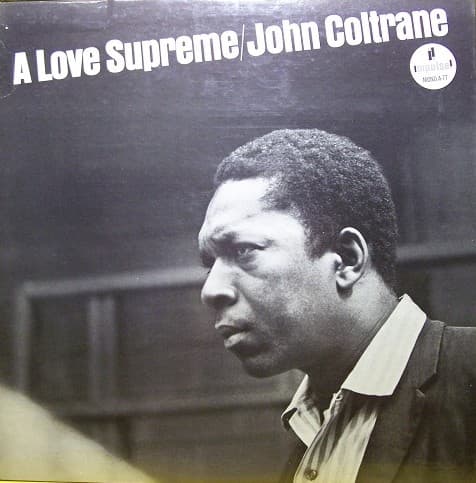
Giant Steps ranks second in Coltrane's catalog, behind only A Love Supreme, and the gap between them is significant. A Love Supreme is a unified spiritual statement, four movements that build to a single climax; Giant Steps is a collection of studies and sketches, brilliant in places but uneven. The harmonic writing on the title track and Countdown influenced every saxophonist who came after, from Michael Brecker to Chris Potter to contemporary players still using the changes as a practice template. The chord progression became a standard, a piece that advanced jazz students learn to navigate as proof they can handle modern harmony. Naima entered the repertoire as one of the great jazz ballads, recorded hundreds of times by pianists, guitarists and horn players. Those three tracks alone justify the album's reputation.
But the rest of the material does not reach that level. The hard bop tunes are functional, the alternate takes are inessential, and the production is competent but not distinguished. The album works best as a document of a specific moment: Coltrane in 1959, leaving the Miles Davis Quintet, figuring out what his own music would sound like, and solving harmonic problems that no one had thought to ask. It is essential for understanding where modern jazz improvisation came from, less essential as a front-to-back listen. Players will study it; casual listeners will find A Love Supreme more rewarding.
Start with the title track to hear the thesis, then Naima to hear the other side of Coltrane's writing. If those two work, add Countdown and Mr. P.C. Skip the alternate takes unless you are interested in the workshop process. For the next step, hear A Love Supreme to understand where this harmonic thinking led when Coltrane applied it to a unified concept, or go back to Coltrane's work on Kind of Blue to hear him in a modal context, playing over fewer changes instead of more. Giant Steps is a landmark, but it is not a finished statement. It is the sound of a saxophonist who had learned everything the tradition could teach him and was starting to write his own textbook.
Track by track
Track Listing
Giant Steps
StandoutThe title track is the thesis in under five minutes: a sixteen-bar form that cycles through three key centers a major third apart, played at a tempo fast enough that most improvisers cannot process the changes in real time. The melody is sparse, just enough to outline the chord progression, and then Coltrane launches into a solo that demonstrates what sheets of sound means. He runs arpeggios through each key center, connecting them with chromatic approach tones and scalar fragments, the lines pouring out in steady sixteenth notes with almost no space between phrases. Tommy Flanagan's piano solo is the other story: hesitant comping, a solo that starts and stops, searching for the right notes and not always finding them. The contrast documents the difficulty. Art Taylor and Paul Chambers lock into a solid swing feel, but they cannot help Flanagan navigate changes he has not internalized. The track became a practice piece because it is a problem to solve, and in 1959 only Coltrane had solved it.
Cousin Mary
StandoutA twelve-bar blues with a bright, pentatonic head named for Coltrane's younger cousin. The melody is catchy and the groove is relaxed, a contrast to the harmonic density of the opener. Coltrane's solo is fluid and swinging, built on blues vocabulary rather than the arpeggio runs of Giant Steps. Flanagan sounds more comfortable here, comping with confidence and taking a solo that fits the form. The track is well-executed hard bop, but it does not push boundaries. It serves as a palate cleanser after the title track and sets up the second harmonic study.
Countdown
StandoutA contrafact on Tune Up that substitutes Coltrane changes for the original ii-V progressions, compressing the harmonic motion into twenty bars. The tempo is even faster than Giant Steps, and the melody is minimal, just a launching point for the solos. Coltrane's improvisation is dense and assured, navigating the key changes with the same arpeggiated runs, while Flanagan again struggles. The piece is shorter and less fully developed than the title track, more of a sketch than a composition, but it demonstrates that the harmonic concept works over different forms. It has been recorded less often than Giant Steps, but it appears in the same practice books.
Spiral
WeakThe weakest piece on the album, a thirty-two-bar form with a wandering melody and a harmonic scheme that splits the difference between conventional changes and Coltrane's third-related movement without committing to either. The theme meanders, the rhythm section plods, and neither Coltrane's nor Flanagan's solos generate momentum. At nearly six minutes, the track sags in the middle of the sequence, a reminder that not every experiment on these sessions succeeded. Coltrane would leave this one off the live repertoire.
Syeeda's Song Flute
StandoutNamed for Coltrane's stepdaughter, a bright uptempo theme with a flute-like quality in the melody. The tune is built over rhythm changes, played with energy and swing, and Coltrane's solo is relaxed and melodic, less concerned with harmonic complexity than with phrasing and development. Flanagan takes a strong solo here, his best on the album, and the rhythm section pushes the tempo without rushing. The track is solid hard bop, well-constructed and enjoyable, but it does not break new ground. It functions as a strong closer for the first side of the original LP.
Naima
StandoutThe ballad that became Coltrane's most covered composition, a thirty-two-bar form with a static harmonic base and a simple, hymn-like melody. Recorded separately in December with the Miles Davis rhythm section, the track has a warmth and ease that the May sessions lack. Wynton Kelly's piano comping is rich and responsive, anticipating Coltrane's phrases and supporting them with chord voicings that add color without cluttering the space. Coltrane's solo stays close to the melody, adding small variations and extensions, building long singing lines that unfold over single chords. The piece pointed toward the lyrical, spiritual side of his writing that would develop more fully on later albums. Jimmy Cobb's brushwork is delicate and Kelly's touch is sensitive, giving the track a relaxed feel that contrasts with the intensity of the May sessions. The composition works because it does the opposite of Giant Steps: instead of packing in more harmonic motion, it strips the changes down to let the melody breathe.
Mr. P.C.
StandoutA fast twelve-bar blues named for bassist Paul Chambers, the most straightforward blowing tune on the album. The head is a simple riff, and the solos are built on blues language, swing feel and energy rather than harmonic innovation. Coltrane stretches out for several choruses, playing with rhythmic displacement and building tension through repetition and variation. Flanagan's solo is confident, his comping swings hard, and Chambers and Taylor drive the rhythm with a locked-in groove. The track is a showcase for the quartet as a working unit, less a compositional statement than a vehicle for improvisation. It works as a closer for the original LP, ending the album on an uptempo, accessible note after the introspection of Naima.
Giant Steps (alternate take)
SolidAn earlier attempt at the title track from the March sessions with Cedar Walton and Lex Humphries. Walton's comping is even more tentative than Flanagan's, and the rhythm section does not lock in. Coltrane's solo is strong but the backing is shaky, and the take documents why Coltrane went back into the studio two months later with a different band. For completists only.
Naima (alternate take)
SolidAnother version from the rejected March sessions. The performance is slower and less assured than the December master, and the rhythm section sounds uncertain. The take adds nothing to the released version and makes clear why Coltrane chose to re-record the piece with the Davis rhythm section.
Cousin Mary (alternate take)
SolidA second take from the May 5 session, nearly identical to the master. The solos follow the same structure, the arrangement is unchanged, and the performance is slightly less polished. No reason to return to this after hearing the issued version.
Countdown (alternate take)
SolidA longer version from the May 4 session, stretching to over four minutes with an extended Coltrane solo. The extra length does not add new ideas, just more choruses, and the piece works better in its concise master-take form. Flanagan's solo remains tentative, and the take confirms that Coltrane made the right editing choice.
Syeeda's Song Flute (alternate take)
SolidAnother near-duplicate from May 5, with minor differences in the solos but the same overall feel. The master take is tighter and better paced; this one is archival filler that only specialists will need to compare.