The scorecard
7.0/10 · Good
- Composition20%
- 7.5
- Recording15%
- 7.0
- Performance30%
- 7.0
- Cohesion15%
- 6.5
- Originality10%
- 7.0
- Replay value10%
- 6.5
The compositions balance structured ensemble writing with open terrain for improvisation, particularly on the opener and Gibraltar, though the shorter pieces feel more like sketches than finished frameworks.
Ron Malo captures the band's layered textures cleanly, the percussion sits forward without crowding the horns, and Zawinul's synthesizers occupy their own space in the mix without bleeding into the rhythm section.
Shorter plays with restraint that sometimes crosses into detachment, the rhythm section handles the African-inflected grooves competently, and Pastorius announces himself on two tracks but the ensemble interplay lacks the telepathy the band would find later.
The album commits to its world fusion concept across all seven tracks but the sequencing creates an uneven arc, with the strongest material front-loaded and the second side sagging under lighter pieces before recovering on Herandnu.
The fusion of electric jazz with African and Caribbean rhythms was not Weather Report's invention but Black Market synthesizes these influences into a distinct sound that pulls away from the rock-jazz fusion dominating 1976.
The title track and Gibraltar reward repeated listens as their arrangements reveal new details, but the middleweight tracks offer diminishing returns once their grooves are familiar.
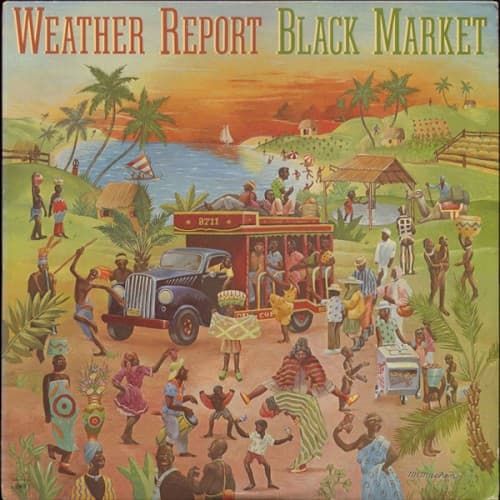
Weather Report Black Market — The Album Before the Storm
Black Market is the album where Weather Report found a groove vocabulary sophisticated enough to carry extended compositions but had not yet assembled the band to make those compositions matter on every track. The opening title cut demonstrates what the record can do: a 6-minute piece built on interlocking percussion and a hypnotic bass pattern that creates space for Shorter's tenor to carve melodic lines without stating a conventional theme. Zawinul's synthesizers add orchestral color rather than solos. The composition earns its length because the framework generates tension that the improvisation releases.
That balance of written structure and open improvisation, with rhythm as the organizing principle rather than harmonic progression, is what the album argues for. The problem is that only half the tracks make the argument.
The context matters because Weather Report in 1976 was between lineups. Alphonso Johnson played bass on five of seven tracks during sessions in late 1975 and early 1976. Jaco Pastorius appears on two, including his own composition. The back cover shows Pastorius, Chester Thompson and Alex Acuña standing with Zawinul and Shorter as if they were the working band, which they would become, but this is a transitional record with session players filling chairs.
That shows in the playing. The rhythm section executes the parts cleanly but the interplay never catches fire the way it would a year later on Heavy Weather. Shorter, who had been pulling back from the aggressive soprano work of earlier Weather Report albums, plays here with a restraint that sometimes sounds like disinterest.
The album's virtues are in Zawinul's writing and arranging: the way he uses electric keyboards and synthesizers to thicken the ensemble sound, the African and Caribbean rhythmic frameworks he adapts without imitating, and the sequencing of textures across a side of vinyl. Its weaknesses are in the playing and the inconsistency of the material.
Synthesizers as Section Players
Zawinul's keyboard work defines the album's sound. He plays Rhodes electric piano, Yamaha acoustic grand, two ARP 2600 synthesizers and an Oberheim Polyphonic, often layering them within a single track. The synthesizers function as orchestration rather than lead instruments: they add bass reinforcement, held chords that create harmonic beds, and textural accents that mark transitions. On the title track the ARP provides a low drone that anchors the rhythm, while the Rhodes states the melodic fragments that serve as thematic material.
On Gibraltar the synthesizers add sustained tones behind Shorter's tenor lines, filling the space that a horn section might occupy in a big band arrangement. This is not the synthesizer-as-guitar approach that fusion bands were using to chase rock audiences. Zawinul treats the instruments as tools for expanding the ensemble's timbral range, and Ron Malo's engineering keeps each layer distinct in the mix.
The African influence surfaces primarily in the rhythm section's approach rather than in direct quotation. The title track and Cannon Ball layer congas and hand percussion over drum kit patterns that subdivide the beat differently than straight fusion or funk. Alex Acuña and Don Alias play interlocking parts that create a dense rhythmic fabric, and the compositions use vamps and ostinatos as structural devices rather than chord progressions. This shifts the improvisation away from bebop-derived soloing over changes and toward melodic invention over static or slowly shifting rhythmic cells.
It works when the bass player and drummer lock into the groove and leave it alone, as Chester Thompson does on the opener. It sags when the rhythm section treats the vamp as background rather than as the composition's spine.
Shorter's playing is the album's unresolved tension. His tone on soprano and tenor remains distinctive, and his melodic sense is intact, but he rarely commits to a phrase with the intensity that made his work on the earlier Weather Report albums and his Blue Note records essential. On Cannon Ball, the tribute to Julian Cannonball Adderley, Shorter's soprano states a simple melodic figure and then explores variations, but the solo never builds to a climax. On Gibraltar his tenor work is more engaged, trading phrases with Zawinul's keyboards over the eight-minute span, but even there the sense is of a player holding something back.
Whether that is an aesthetic choice or a sign of disconnection from the material is hard to separate from the result.
The rhythm section's split between Johnson and Pastorius creates an audible seam. Johnson, who had been with the band for two albums, plays solid electric bass on the majority of the tracks but his lines are supportive rather than assertive. Pastorius appears on Cannon Ball and Barbary Coast, and the difference is immediate. His fretless tone is rounder and more vocal than Johnson's, and his phrasing treats the bass as a lead instrument.
On Barbary Coast, his own composition, the bass line is the primary melodic material, with the keyboards and percussion arranged around it. That track previews the direction Weather Report would take once Pastorius became the full-time bassist, and it makes the rest of the album sound tentative by comparison.
An Album That Peaks Early and Recovers Late
The sequencing places the strongest material at the front and the end, with the middle sagging under pieces that feel like sketches rather than finished compositions. The opening stretch earns its position because it establishes the album's rhythmic and textural vocabulary in six minutes that justify their length. The first side closer is the longest track and the most developed, with enough variation in the arrangement to sustain interest across eight minutes. Those two pieces, totaling nearly fifteen minutes, make the case for what Weather Report was reaching toward.
The second side starts with three shorter tracks that range from competent to slight. The first stretch of side two runs five minutes but its theme is thin and the groove does not generate enough momentum to carry the improvisation. The next piece, at three and a half minutes, is the album's lightest and sounds like filler. The middle section, despite being only three minutes, justifies its inclusion because the bass line is memorable and the arrangement is economical.
The closing run, at six and a half minutes, returns to the brooding, layered sound of the opener and ends the album on a stronger note than the middle of side two suggested was coming. The pacing across the full album creates an arc that dips noticeably before recovering, and the weaker tracks could have been cut without loss.
A Promising Transition That Heavy Weather Would Fulfill
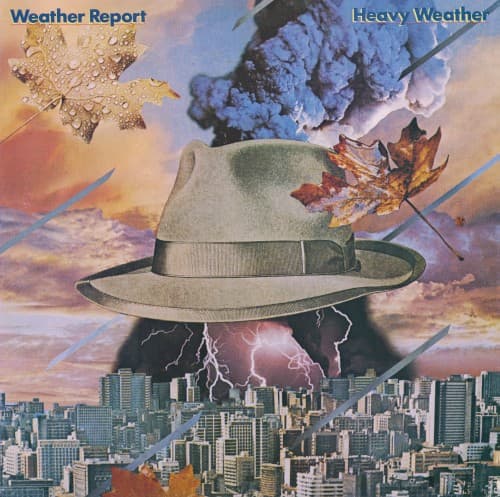
Black Market ranks as a strong but uneven entry in Weather Report's catalog, a clear step below Heavy Weather but more consistent than the albums that preceded it. The writing shows Zawinul developing the rhythmic and textural ideas that would define the band's peak work, and the production captures the layers of keyboards and percussion with clarity. The playing, however, is where the album falls short of its ambitions. Shorter sounds tentative, the rhythm section executes without igniting, and the split between two bassists creates an inconsistency that the sequencing does not overcome. The album has aged well in one respect: its world fusion approach, drawing from African and Caribbean rhythms without exoticizing them, sounds less dated than the rock-jazz fusion that many of Weather Report's peers were chasing in 1976. It has aged poorly in another: the keyboard tones, particularly the synthesizers, place it firmly in the mid-1970s in ways that the Rhodes and acoustic piano on Heavy Weather avoided.
This is an album for listeners who want to hear Weather Report working out ideas that would pay off on the next record, and for those interested in Pastorius's first appearance with the band. Casual fans should start with Heavy Weather and return to Black Market only after they know where the band was headed. The tracks to play first are the title cut, for the clearest statement of the album's rhythmic concept, and Barbary Coast, for the preview of what Pastorius would bring to the full-time role. Gibraltar is worth the eight minutes if the opener works for you. Skip Three Clowns and Elegant People unless you are committed to hearing the full album. For next steps, Heavy Weather is the obvious choice because it fulfills what Black Market was reaching toward, and Tale Spinnin', the album immediately before this one, shows where the band was coming from.
Track by track
Track Listing
Black Market
StandoutThe title track is the album's thesis statement and its most fully realized composition. Built on a repeating bass figure and layered percussion, the piece establishes a hypnotic groove that Zawinul and Shorter use as a foundation for melodic improvisation rather than harmonic exploration. Zawinul's Rhodes states fragmentary themes while the ARP synthesizers add a low drone and sustained chords that thicken the texture without cluttering it. Shorter's tenor enters midway through, playing long tones and short melodic phrases that respond to the keyboard figures rather than soloing in conventional fashion. The composition holds interest across six and a half minutes because the arrangement varies the instrumentation and dynamics, adding and subtracting layers to create tension and release. Chester Thompson and Narada Michael Walden both receive drum credits, and the interplay between drums and congas from Don Alias creates a dense rhythmic fabric that drives the piece. This is the track that best demonstrates what Weather Report was aiming for with the world fusion concept: a framework that fuses electric jazz instrumentation with African-derived rhythmic structures, creating space for improvisation that does not rely on bebop vocabulary or rock grooves. It succeeds because the composition is strong enough to carry its length and the playing, while not incendiary, is committed and focused.
Cannon Ball
StandoutThe tribute to Julian Cannonball Adderley, who had employed Zawinul as a sideman through the 1960s and died months before these sessions, takes a simpler melodic approach than the opener. Shorter plays soprano saxophone, stating a lyrical theme over a mid-tempo groove anchored by Jaco Pastorius on fretless bass. This is Pastorius's first appearance on a Weather Report record, and his tone is immediately distinctive: rounder and more vocal than Alphonso Johnson's, with a fretless sustain that allows him to shape phrases like a horn player. The composition itself is straightforward, almost a ballad, and Shorter's solo explores variations on the melody rather than venturing far from it. Alex Acuña's congas add color without dominating, and the overall feel is restrained, almost elegiac. The track works as a tribute because it does not try to imitate Adderley's style but instead offers a melodic piece that honors him by playing something singable and direct. At four and a half minutes it does not overstay, though it also does not develop much beyond its initial statement. A solid piece that benefits from Pastorius's bass work and Shorter's lyrical soprano but remains in the album's middle tier.
Gibraltar
StandoutThe longest track at eight minutes, Gibraltar aims for the extended development that the title track achieved and comes close. The piece is built on a minor-key vamp with synthesizer bass reinforcement and congas playing a steady pattern that subdivides the beat into smaller units than straight four-four. Shorter's tenor is more assertive here than elsewhere on the album, trading phrases with Zawinul's keyboards and building longer lines that suggest genuine engagement with the material. The arrangement shifts textures across the eight minutes, moving from sparse sections where the bass and percussion carry the groove to denser passages where Zawinul layers Rhodes and synthesizers to create an orchestral backdrop. Chester Thompson's drumming is active without being busy, marking transitions and adding accents that propel the piece forward. The composition justifies its length because the vamp is strong enough to support extended improvisation and the arrangement varies the density and instrumentation enough to prevent stasis. The weakness is that Shorter's solo, while more committed than on some other tracks, never catches fire the way his work on the early Weather Report albums did. This is controlled, thoughtful playing, and at moments it sounds overly careful. Still, this is the second-best track on the album, a piece that rewards attention and holds up on repeat listens as the details of the arrangement become clear.
Elegant People
SolidThis five-minute piece occupies the first slot on side two and represents the album's mid-tier material: competently executed but not memorable. The composition is built on a lighter groove than the heavier tracks on side one, with Acuña's percussion and Thompson's drums playing a pattern that suggests a Caribbean influence. Zawinul's Rhodes states a simple melodic theme, and Shorter's soprano adds embellishments, but neither the theme nor the improvisation generates much interest. The piece feels like an interlude stretched to album-track length, pleasant enough as background but lacking the structural hooks or melodic invention that would make it worth returning to. The groove is steady but it does not build, and the five-minute running time feels longer than it is because the material does not develop. This is the kind of track that pads an album to LP length without adding much substance, and it would not be missed if it had been cut.
Three Clowns
WeakAt three and a half minutes, this is the album's shortest and slightest piece. The composition is built on a bouncing, almost playful rhythm, with Zawinul's keyboards stating a theme that sounds like a sketch rather than a developed idea. Shorter's soprano plays melodic fragments that do not cohere into a solo, and the track ends before it has established much of anything. This is filler, the kind of piece that suggests the band needed one more track to fill out side two and used a studio improvisation or a half-finished composition to meet the requirement. It does not actively detract from the album because it is short and unobtrusive, but it also contributes nothing. Skip it.
Barbary Coast
StandoutJaco Pastorius's composition, featuring his fretless bass as the lead instrument, is the clearest preview of where Weather Report would go once he became the full-time bassist. The piece is only three minutes, but the bass line is the most memorable melodic material on the album: a lyrical, singing phrase that Pastorius plays with the sustain and vibrato of a horn. Zawinul's keyboards and Don Alias's percussion are arranged around the bass rather than the other way around, and Shorter's soprano adds color without asserting itself. The composition is economical, stating its idea and ending without overstaying, and it works because the bass line is strong enough to carry the track. Pastorius's tone and phrasing are fully formed here, and the contrast with Alphonso Johnson's more conventional bass work on the rest of the album is stark. This track is essential listening for anyone interested in Pastorius's entry into Weather Report, and it holds up as a self-contained piece. It is the second-best track on side two and one of the album's highlights despite its brevity.
Herandnu
StandoutThe closing track returns to the brooding, layered sound of the opener and ends the album on a stronger note than the middle of side two suggested was possible. At six and a half minutes, the piece is built on a slow, minor-key vamp with Zawinul's synthesizers providing bass reinforcement and sustained chords that create a dark harmonic backdrop. Shorter's tenor enters over the groove, playing long tones and melodic phrases that unfold slowly, and the composition builds gradually by adding layers of keyboards and percussion rather than by increasing tempo or volume. Chester Thompson's drumming is restrained, marking time without pushing, and Acuña's congas add texture without dominating. The piece does not develop as much as Gibraltar or the title track, and the improvisation is more atmospheric than dramatic, but it succeeds as a closer because it returns to the album's core sound and provides a sense of resolution. The mood is contemplative, almost somber, and it works as a counterbalance to the brighter, lighter tracks in the middle of the album. A solid, well-constructed piece that leaves the listener on a better impression than Elegant People and Three Clowns would have.