From Chicago Prodigy to Jazz's Most Fearless Innovator
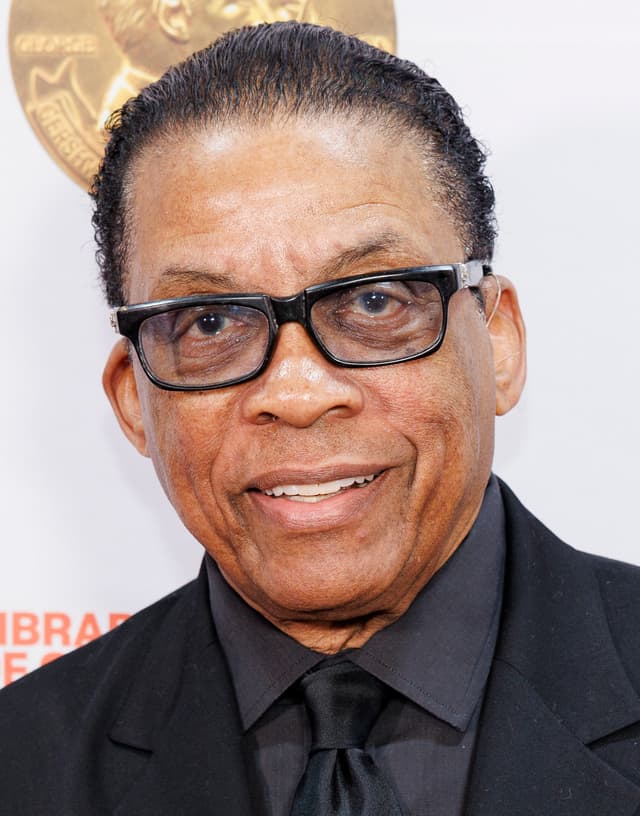
When Herbie Hancock walked into Miles Davis's quintet in 1963, he brought a harmonic sophistication that reshaped modern jazz piano. Born Herbert Jeffrey Hancock in Chicago on April 12, 1940, he was already a Mozart concerto veteran by age eleven and a Donald Byrd sideman by twenty. But the Miles years — that crucible of modal exploration and rhythmic freedom — transformed him from an exceptionally gifted pianist into someone willing to discard everything he'd mastered in pursuit of new sonic territory.
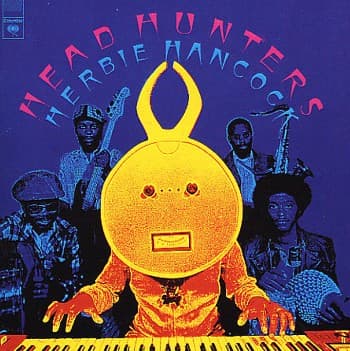
What distinguishes Hancock across six decades isn't just longevity. It's his refusal to treat jazz as a museum. While peers perfected established vocabularies, he chased synthesizers, embraced the clavinet, collaborated with hip-hop producers, and scored hit records that made purists uncomfortable. This restlessness stems from genuine curiosity rather than commercial calculation. Listen chronologically from "Maiden Voyage" through "Head Hunters" to "Future Shock" — these aren't stylistic pivots but chapters in a continuous investigation of how rhythm, harmony, and technology intersect.
His Chicago roots matter. Growing up in the city's South Side during the forties and fifties meant absorbing everything — gospel fervor, blues grit, classical rigor, and the bebop revolution happening in real time. That omnivorous foundation lets him move between idioms without code-switching. The same musician who voiced Ravel-influenced chords behind Wayne Shorter could lock into a funk pocket so deep it rewired what jazz rhythm sections believed possible.
Harmonic Architecture Meets Groove Science
Hancock's piano voice is immediately identifiable by its clarity and attack. He doesn't caress keys — he articulates them with a percussive precision inherited from Bud Powell but filtered through a harmonic palette far more ambiguous. His comping behind soloists creates space rather than filling it, offering unexpected chord substitutions that reframe the harmonic context without disrupting momentum. Listen to his work on the Miles Davis Quintet recordings from 1963-1968 and notice how he implies harmonic motion rather than stating it explicitly, leaving room for Tony Williams's polyrhythmic explosions and Ron Carter's melodic bass.
Once he embraced electric instruments, his approach transformed completely. The Fender Rhodes became his primary voice by the early seventies, and he treated it as a new instrument rather than an amplified piano. His touch adapted — lighter, more sustained, exploiting the Rhodes's bell-like decay. Then came the synthesizers. The ARP Odyssey, Solina String Ensemble, and eventually the Fairlight CMI weren't gimmicks but tools for constructing new timbral vocabularies. On "Head Hunters," the clavinet functions as both rhythm instrument and melodic voice, its wah-wah filtered attack driving "Chameleon" with a hypnotic insistence that borrowed from Sly Stone while remaining unmistakably Hancock.
His relationship with rhythm evolved radically. Early work featured the propulsive swing and metric complexity expected in post-bop. By the mid-seventies, he'd absorbed funk's metronomic precision and rock's backbeat power, creating hybrid feels that demanded different listening. The Headhunters' rhythm section — Harvey Mason, Paul Jackson, Bill Summers — locked into grooves so tight they felt architectural. Hancock's keyboard parts functioned less as solos and more as textural layers within this rhythmic machinery. He'd discovered that repetition wasn't monotony but foundation, and that dancing and thinking weren't mutually exclusive.
Reinvention as Artistic Philosophy: The Hancock Trajectory
The Donald Byrd association brought Hancock to Blue Note in 1962, and his debut "Takin' Off" announced a fully formed talent. "Watermelon Man" became an unexpected hit, its soul-jazz groove accessible without pandering. But the subsequent Blue Note albums — "My Point of View," "Inventions and Dimensions" — showed someone investigating rather than consolidating. He was writing tunes like "Maiden Voyage" that approached harmony as color and mood rather than functional progression, pieces that invited open exploration.
Joining Miles Davis in 1963 placed him in the most creatively demanding context in jazz. The second great quintet became legendary for a reason — every night was a high-wire act of collective improvisation. Hancock learned to listen at the highest level, to trust silence, and to understand that the space between notes carried as much information as the notes themselves. Miles famously told him to stop playing the butter notes — the obvious harmonic choices — which forced Hancock to develop a more elliptical, harmonically daring approach. Albums like "E.S.P.," "Miles Smiles," and "Nefertiti" document this evolution. By the time Miles went electric, Hancock was already conceptually prepared.
His own output during the late sixties reflected dual interests. "Speak Like a Child" showcased a composer working with larger ensembles and unconventional instrumentation — flugelhorns, alto flute, bass trombone creating pastel textures behind melodies of surprising tenderness. Meanwhile "Mwandishi" — both album and band name — dove into electric experimentation, featuring extended improvisations, electronic processing, and an Afrofuturist aesthetic that paralleled Miles's "Bitches Brew" investigations. This sextet included musicians who'd become major voices: Bennie Maupin on reeds, Eddie Henderson on trumpet, Julian Priester on trombone. They created dense, layered sound worlds that prioritized texture and collective interplay over individual virtuosity.
Then came the commercial breakthrough that scandalized purists. "Head Hunters" arrived in 1973 and sold over a million copies — unprecedented for a jazz album. Built on funk foundations with African percussion textures and synthesizer explorations, it grooved relentlessly while maintaining harmonic sophistication. "Chameleon" became ubiquitous, its bass line instantly recognizable, its structure allowing for extended jamming that connected with rock audiences. Critics who'd celebrated his acoustic work dismissed this as selling out, missing the point entirely. Hancock wasn't abandoning complexity — he was relocating it to rhythm, timbre, and production.
The late seventies brought "Sunlight" with synthesizer vocoder experiments, and by 1983 "Future Shock" introduced his collaboration with bassist Bill Laswell and Material. "Rockit" became an MTV staple, its scratching and robotic rhythms connecting jazz innovation to hip-hop's emerging aesthetic. The video's dancing robots reached millions who'd never heard of modal jazz or post-bop. Meanwhile, Hancock never stopped performing acoustic piano. "V.S.O.P." reunions in the late seventies reassembled the Miles Davis rhythm section, proving he could still navigate bebop and standards at the highest level. "River: The Joni Letters" in 2007 won the Album of the Year Grammy, an almost unheard-of achievement for a jazz record.
His film scoring career ran parallel — "Blow-Up," "Death Wish," "'Round Midnight" (winning an Oscar) — demonstrating his ability to serve narrative while maintaining artistic identity. Collaborations spanned genres: playing with Wayne Shorter in acoustic quartets, producing for and with hip-hop artists, exploring world music fusions. Each phase felt genuine rather than opportunistic because Hancock approached every context as a learning opportunity.
The Hancock Principle: Innovation Through Integration
Hancock's impact operates on multiple levels simultaneously. For pianists, he expanded the instrument's vocabulary — harmonically through his modal and post-tonal explorations, rhythmically through his integration of funk and hip-hop feels, and technologically through his fearless adoption of electronic keyboards. Chick Corea, Keith Jarrett, and subsequent generations absorbed his lessons about harmonic ambiguity and textural possibility. His comping approach — spare, unpredictable, harmonically rich — became a template for how to support without smothering.
But his larger cultural significance transcends instrumental influence. Hancock demonstrated that artistic growth requires risk, that mastery means knowing when to become a beginner again. In an art form often trapped between reverent traditionalism and desperate relevance-chasing, he charted a third path: evolution driven by curiosity. "Head Hunters" didn't betray jazz — it asked what jazz could become if it engaged seriously with funk, rock, and electronic music. The answer was a hybrid that influenced everyone from Weather Report to Robert Glasper, from Flying Lotus to Kamasi Washington.
His willingness to embrace technology presaged contemporary practice. When Hancock bought an ARP Odyssey in the early seventies, many jazz musicians viewed synthesizers as threats to authenticity. He heard them as colors on an expanded palette. This openness to new tools — whether samplers, vocoders, or digital workstations — made him a bridge between acoustic jazz tradition and electronic music futures. Hip-hop's embrace of jazz samples owes something to artists like Hancock who'd already proven the genres were compatible.
The institutional recognition matters less than the creative permission he granted subsequent artists. When jazz musicians integrate electronic production, collaborate across genre boundaries, or refuse to choose between tradition and innovation, they're walking paths Hancock cleared. His catalog remains remarkably current — "Chameleon" still locks dancefloors, "Cantaloupe Island" still gets reinterpreted, "Maiden Voyage" still teaches harmony students how chords can float rather than resolve. Six decades in, he continues performing, collaborating, and investigating. The restlessness that defined his twenties remains intact in his eighties, a testament to jazz as perpetual exploration rather than historical preservation.