The Architect of Modern Jazz Composition
Wayne Shorter didn't just play saxophone—he rewrote what the instrument could mean in a compositional context. Born in Newark, New Jersey in 1933, Shorter emerged from the hard bop crucible of the late 1950s to become arguably the most influential jazz composer of the post-Coltrane era. His career spanned seven decades, from his early work with Art Blakey's Jazz Messengers through landmark tenures with Miles Davis and Weather Report, culminating in a late-period renaissance that continued until his death in 2023.
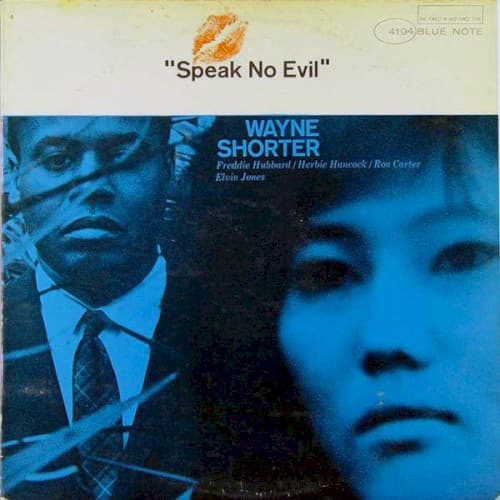
What separated Shorter from his contemporaries wasn't virtuosity alone—though his command of both tenor and soprano saxophone was formidable—but his approach to composition as narrative architecture. Where others built solos from scales and patterns, Shorter constructed entire albums as conceptual journeys. His 1965 masterwork Speak No Evil exemplifies this vision: six compositions that function as individual statements while forming a cohesive emotional arc. The album's 9.3 rating reflects not just its immediate impact but its enduring influence on how jazz musicians approach the album format.
Shorter's significance extends beyond any single group or era. He was the conceptual force behind Miles Davis's second great quintet, the primary composer for Weather Report's fusion experiments, and a restless innovator who rejected the nostalgia circuit in favor of continuous reinvention. His death at 89 closed a chapter in jazz history that began when bebop was still new.
Elliptical Melodies and Harmonic Ambiguity as Sonic Signature
Shorter's compositional language resists easy categorization because it was built on deliberate ambiguity. His melodies avoid obvious resolution, circling around tonal centers without fully committing. Listen to "Footprints" or "Nefertiti" and notice how the themes seem to float, suggesting multiple harmonic interpretations simultaneously. This wasn't obfuscation for its own sake—it was strategic openness, creating space for improvisers to find unexpected pathways through familiar changes.
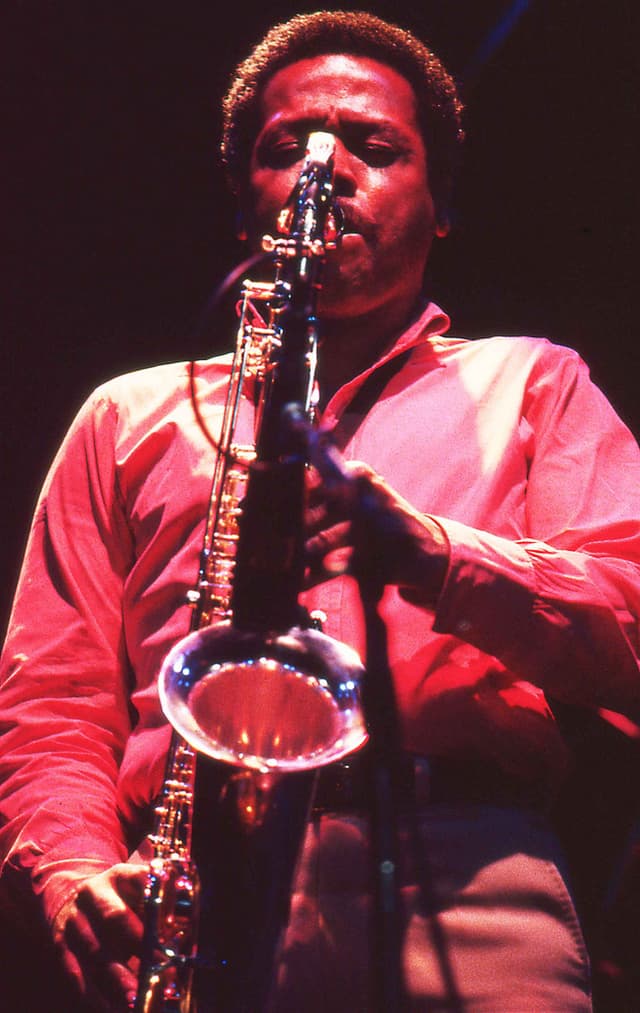
As a saxophonist, Shorter favored narrative over display. His solos rarely showcased the athletic runs and harmonic substitutions that defined hard bop virtuosity. Instead, he constructed phrases with a storyteller's sense of pacing—pregnant pauses, sudden intervallic leaps, melodic fragments that recurred like motifs in a novel. His tone on tenor was darker and more contemplative than the Coltrane-influenced intensity dominating 1960s jazz. On soprano saxophone, an instrument he championed before most of his peers, he achieved an almost vocal quality, bending pitches and manipulating timbre in ways that suggested Middle Eastern and Asian influences.
The production aesthetic surrounding Shorter's work evolved dramatically across contexts. His Blue Note albums from the mid-1960s capture the classic Rudy Van Gelder studio sound—intimate, present, every instrument clearly defined in space. His Weather Report recordings embrace studio technology, layering synthesizers and electric bass beneath his acoustic saxophone, creating a fusion vocabulary that avoided rock clichés. Late-career albums like Alegría pushed further into orchestral territory, integrating strings and electronics in ways that challenged the boundaries between jazz, contemporary classical, and world music.
From Hard Bop Apprentice to Fusion Pioneer to Conceptual Elder
Shorter's professional trajectory began conventionally enough. After military service and a music degree from New York University, he joined the Horace Silver quintet in 1956, then spent crucial years with Art Blakey's Jazz Messengers from 1959 to 1963. The Messengers functioned as jazz's premier finishing school, and Shorter absorbed Blakey's emphasis on compositional depth and rhythmic sophistication. During this period, he contributed essential repertoire—"Lester Left Town," "Free for All"—that became hard bop standards.
The pivotal career shift came in 1964 when Miles Davis recruited him for what would become the second great quintet, alongside Herbie Hancock, Ron Carter, and Tony Williams. This wasn't a simple sideman gig. Davis had moved away from composing, instead curating frameworks for his band to explore. Shorter became the group's primary composer, contributing pieces like "Footprints," "Dolores," and "Nefertiti" that redefined what a jazz composition could be. These weren't head-solo-head vehicles but conceptual structures where the written material and improvisation existed in constant dialogue. The quintet's studio albums between 1965 and 1968 represent one of jazz's great creative peaks, with Shorter's compositional vision as the binding element.
Parallel to his Miles Davis work, Shorter led his own Blue Note sessions that now stand among the label's finest achievements. Speak No Evil arrived in 1965, but the catalog also includes Night Dreamer, JuJu, Adam's Apple, and Schizophrenia—each exploring different facets of his compositional palette. These albums benefited from Blue Note's roster depth: Freddie Hubbard, McCoy Tyner, Elvin Jones, and Hancock all appear, interpreting Shorter's increasingly abstract themes. The music balanced accessibility and challenge, never drifting into academic exercise but never pandering to commercial expectations.
When the Miles Davis quintet dissolved as Davis pursued electric music, Shorter didn't retreat. Instead, he co-founded Weather Report in 1970 with keyboardist Joe Zawinul, embracing fusion before the term became loaded with negative connotations. Weather Report's approach differed from the rock-influenced fusion proliferating elsewhere. They built from a compositional foundation, using electric instruments and studio techniques as colors rather than defining elements. Shorter's soprano saxophone became the band's melodic voice, weaving through Zawinul's synthesizer textures and Jaco Pastorius's revolutionary bass work. Albums like Heavy Weather (1977) achieved commercial success without artistic compromise, proving fusion could be both popular and substantive.
After Weather Report's 1986 dissolution, Shorter entered a transitional period that confused critics expecting obvious next moves. He released albums sporadically, focused on composition for larger ensembles, and withdrew from the touring circuit that sustained most jazz careers. This wasn't retirement but recalibration. When he reemerged in the 2000s with a new acoustic quartet featuring Danilo Pérez, John Patitucci, and Brian Blade, the music sounded like nothing else in jazz—through-composed pieces that improvised collectively within strictly defined parameters, creating a sound simultaneously structured and spontaneous. This late quartet never achieved the commercial profile of his earlier work but represented his most radical creative statement: jazz as ongoing conversation rather than soloist showcase.
Compositional Blueprint for Post-Bebop Jazz
Shorter's influence operates on multiple levels, making clean attribution difficult but impact undeniable. Most directly, his compositions became permanent repertoire. Standards like "Footprints," "Infant Eyes," and "Ana Maria" appear on thousands of recordings, interpreted across every jazz subgenre. Unlike many jazz standards born from show tunes or blues forms, Shorter's pieces resist casual interpretation—they demand engagement with their specific harmonic logic and melodic construction. This keeps them fresh; musicians still discover new implications in changes Shorter wrote sixty years ago.
Beyond specific tunes, Shorter modeled a career path that prioritized creative evolution over commercial consolidation. He could have spent the 1970s touring with a conventional acoustic group, playing "Footprints" nightly for nostalgic audiences. Instead, he risked credibility and income to explore fusion, then risked fusion success to pursue orchestral composition, then returned to acoustic jazz on terms that acknowledged neither bebop tradition nor fusion innovation but synthesized both into something new. This refusal of categorization provided permission for subsequent generations to resist genre boundaries.
His compositional approach—privileging ambiguity, space, and collective interaction over individual virtuosity—established an alternative to the Coltrane model that dominated post-1960s jazz. Where Coltrane's sheets of sound inspired harmonic density and technical athleticism, Shorter's elliptical melodies suggested restraint and conceptual depth. Musicians influenced by this approach include Brad Mehldau, Mark Turner, and Chris Potter—artists who build solos architecturally rather than athletically, who value implication over statement. The entire M-Base movement, despite its rhythmic differences, shares Shorter's interest in compositional structures that blur composition and improvisation boundaries.
Shorter's extended longevity—remaining creatively vital into his eighties—redefined what a jazz career could span. His final recordings sound neither nostalgic nor anachronistic but engaged with contemporary musical conversations. He performed with younger musicians like Terri Lyne Carrington and Esperanza Spalding, not as elder statesman granting approval but as collaborator bringing equal creative investment. This model of sustained relevance without stylistic stasis offers a template for how jazz artists might navigate entire careers without creative calcification.