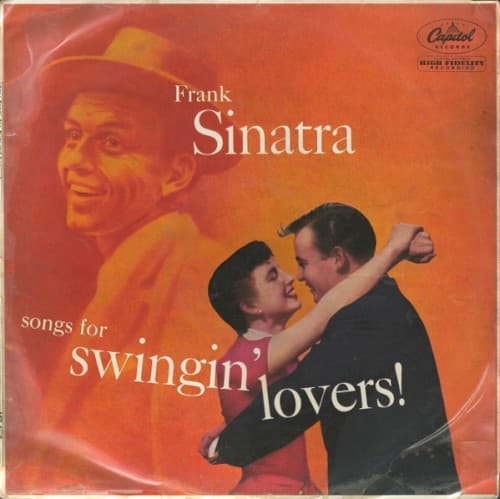
The scorecard
8.6/10 · Essential
- Composition20%
- 8.5
- Recording15%
- 8.5
- Performance30%
- 9.5
- Cohesion15%
- 7.5
- Originality10%
- 7.5
- Replay value10%
- 9.0
Fifteen first-rate standards arranged by Nelson Riddle with section writing that balances punch and swing, each chart built to let Sinatra phrase over a full orchestra without ever sounding buried.
Capitol's 1956 engineering captures the brass bright and centered, the rhythm section crisp beneath, and Sinatra's voice out front with enough room to hear him shape every consonant.
Sinatra at the peak of his Capitol run: the tempo numbers rollick with ease, the ballads bloom without excess, and the phrasing throughout is so precise that old songs sound freshly sung.
Fifteen tracks with one slow ballad feels deliberately lopsided, the album committed to uptempo swing at the cost of dynamic range, and by track twelve the momentum starts to blur.
Not the first album to swing standards hard with a big band, but Riddle's arrangements and Sinatra's rhythmic attack in 1956 redefined how a pop singer could sound modern without imitating rock and roll.
The best four or five tracks remain essential Sinatra and the weakest are still listenable; repeat plays reward attention to the orchestra and to how much variety Sinatra extracts from a single mood.
Frank Sinatra Songs for Swingin' Lovers! — The Swing Album That Outswung Rock and Roll
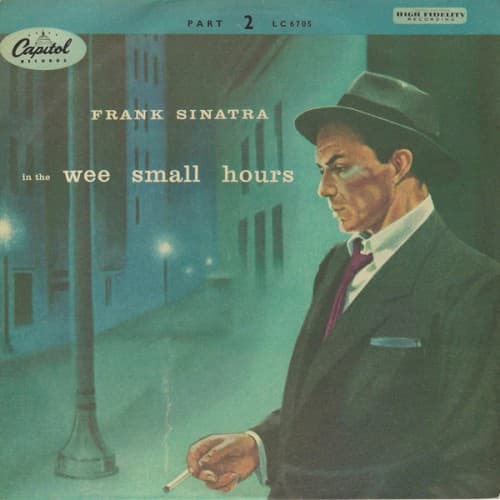
This is the album that proved a pop singer with a full orchestra could sound as vital in 1956 as a kid with a guitar, and it did so by doubling down on what a rock band could not do: fifteen songs arranged by Nelson Riddle for a twenty-piece ensemble, every chart a lesson in how to make swing feel like forward motion. Frank Sinatra had just recorded In the Wee Small Hours, a set of slow, introspective ballads that remains his most unified album. Songs for Swingin' Lovers! takes the opposite path: uptempo standards sung with the rhythmic confidence of a bandleader who knows the orchestra will be exactly where he wants it, no matter how far behind or ahead of the beat he leans. The thesis here is that swing in 1956 was not nostalgia but a contemporary vernacular, and Sinatra and Riddle made the case by treating songs from the twenties and thirties as if they had just been written for this session.
The album came out the same month as Elvis Presley's debut, and the stakes were clear. Rock and roll was selling youth and spontaneity; Sinatra was selling precision and sophistication, and he was selling it to the same demographic. What makes the album essential is not that it competes with rock on rock's terms but that it ignores rock entirely and wins anyway. Riddle's arrangements snap and glide, the rhythm section walks with the kind of propulsion that makes a dancer move, and Sinatra sings every song as though he is enjoying himself too much to care whether the record sounds important. It does, but not because it announces itself. It sounds important because Sinatra and Riddle took fifteen standards and made them swing harder than they had any right to, and in doing so created the template for every vocal jazz album that would try to sound both classic and immediate.
How Riddle's Orchestra Made Standards Sound Newly Minted
Nelson Riddle arranged all fifteen tracks, and the album's success rests on his ability to write for a full orchestra without making it sound like accompaniment. The brass section drives most of the uptempo numbers, punching accents on the beat and laying out just long enough for Sinatra to finish a phrase in open air. The saxophones answer the brass or double the melody, and the rhythm section, typically piano, bass and drums with occasional guitar, keeps the whole arrangement moving forward even when the tempo drops. Riddle understood that swing is not about speed but about where the beat lands, and he wrote charts that let Sinatra lag behind the downbeat or jump ahead of it without ever sounding out of time. The orchestration is full but never crowded: every instrument has a role, and when a trombone or a trumpet takes a short solo between vocal lines, it sounds like part of the arrangement rather than an interruption.
The best example is the arrangement on the ninth track, where a long instrumental intro builds tension before Sinatra enters, and the brass punctuates the bridge with stabs that feel like choreography. Riddle uses the orchestra as a partner, not a backdrop, and Sinatra responds by treating the band as something to swing against. His phrasing on the uptempo numbers is rhythmic and clipped, consonants landing exactly where the brass hits, and on the slower moments he stretches syllables over the bar line and lets the orchestra catch up. The Capitol engineering captures the band in a tight, bright stereo image, with Sinatra's voice centered and dry, the brass slightly to the left and right, and the rhythm section anchored low in the mix. The sound is immediate and close, closer than the big band records of the forties, and it makes the album feel modern in a way that has nothing to do with rock instrumentation.
The performances are consistently strong, but they are also consistently similar. Riddle arranged fourteen of the fifteen tracks at a medium-to-fast swing tempo, and while the harmonic details differ from song to song, the overall feel does not. The one ballad, positioned near the middle of the second side, provides relief but also highlights the problem: the album is committed to one mood, and by the time the listener reaches the thirteenth or fourteenth track, the energy has started to plateau. The omission of the slow track recorded during the sessions and left off the album suggests that the sequencing was deliberate, but deliberate does not mean balanced. The album would have benefited from two or three more ballads to break up the swing and give Sinatra room to show a different kind of control.
Fifteen Tracks, One Tempo, and the Cost of Commitment
The album opens with four uptempo swingers in a row, and the sequencing front-loads the energy before the listener has time to settle in. The pacing works for the first half: the songs move quickly, Sinatra sounds engaged, and the arrangements vary enough in texture and key to keep the flow from feeling repetitive. By the second side, the momentum begins to sag. The ballad on track eleven provides a necessary pause, but it is the only one, and the four uptempo tracks that follow it feel like a long sprint to the finish. The album is forty-three minutes, not excessive by any standard, but the lack of dynamic range makes it feel longer.
The peak arrives on track nine, which has become the album's signature song and the moment where Riddle's arrangement and Sinatra's phrasing converge most effectively. The second peak is the ballad, where Sinatra's voice softens and the orchestra thins out to strings and rhythm, a reminder that he could do more than swing when the material called for it. The weakest stretch is tracks twelve through fifteen, where the songs are solid but the delivery has settled into a groove that no longer surprises. The album would have been stronger with two ballads removed from the sessions and placed strategically in the second half, breaking the swing run and letting the uptempo numbers land with more impact. As sequenced, it is an album that makes its argument in the first half and then restates it for another twenty minutes.
Where It Ranks and Who Should Start Here
Songs for Swingin' Lovers! ranks second among Sinatra's Capitol albums, behind In the Wee Small Hours but ahead of the rest. The earlier album is more unified and emotionally deeper; this one is more fun and more technically impressive. The gap between the two is small, and the choice depends on whether the listener values cohesion or exuberance. In Sinatra's full catalog, this is one of the five essential records, the one that defines how he sounded at his most confident and how Nelson Riddle arranged swing for a modern studio. It has aged well because the performances are strong and the orchestration is specific: the album does not sound like a period piece but like a document of two musicians working at the top of their abilities.
The album is for listeners who want to hear vocal jazz done with a full orchestra and for anyone curious about how pop music sounded sophisticated before rock made sophistication unfashionable. It is not for listeners who want variety or experimentation; the album does one thing and does it very well, but it does not do much else. Start with the ninth track, then the opening track, then the ballad on eleven. Skip to track six if the first three do not convince you.
After this, listen to In the Wee Small Hours for the other side of Sinatra's range, or try the earlier Songs for Young Lovers to hear the swing approach in a shorter, more varied format. Avoid starting with the second half of the album, where the sameness becomes a liability. The album proves that swing in 1956 could still sound vital, and it makes the case so convincingly that the lack of dynamic range feels like a missed opportunity rather than a failure.
Track by track
Track Listing
You Make Me Feel So Young
StandoutThe album opens with a declaration of energy, Sinatra's voice bright and punchy over a full brass arrangement that swings from the first bar. Riddle sets the tempo at a medium clip and writes the brass section to hit accents on every phrase ending, giving Sinatra a rhythmic target to play against. The vocal phrasing is clipped and precise, every consonant landing exactly where the band expects it, and the bridge opens up with a saxophone line that lets the arrangement breathe before the brass returns. This is the template for the album: uptempo, confident, and built to make the listener move. The performance sets the standard for everything that follows, and it remains one of the best examples of how Riddle and Sinatra collaborated on the Capitol records. The song works as an album opener because it announces the mood immediately and does not waste time getting there.
It Happened in Monterey
StandoutA Latin-tinged arrangement with a rhythm section that shifts from swing to a lighter, more syncopated feel, the brass playing short, staccato figures that punctuate the melody. Sinatra's phrasing adjusts to the rhythm, looser and more playful than the opener, and the bridge brings in a trumpet solo that sounds like it belongs in a Tijuana nightclub. The track adds texture to the album without changing the overall energy, and the shift in rhythm keeps the sequencing from feeling repetitive this early in the program. Solid but not essential.
You’re Getting to Be a Habit With Me
SolidA brisk, no-nonsense swing chart with minimal arrangement, the rhythm section driving the tempo and the brass laying out for most of the track. Sinatra sings the melody straight, and the vocal performance carries the song without much help from Riddle. The simplicity works in context, but the track feels slight compared to the two that precede it. Functional.
You Brought a New Kind of Love to Me
StandoutThe arrangement reintroduces the full orchestra with a playful, bouncing rhythm and a brass section that answers Sinatra's vocal lines with short, punchy figures. The vocal phrasing is looser here, Sinatra dragging behind the beat on the verses and snapping back on the chorus, and the interplay between voice and brass gives the track a conversational feel. The middle eight features a clarinet line that lightens the texture before the brass returns for the final chorus. A strong example of how Riddle used orchestration to keep similar tempos from sounding identical.
Too Marvelous for Words
SolidAnother uptempo swing chart, this one with a slightly faster tempo and a rhythm section that walks with more drive. The brass plays sustained chords behind the vocal, and Riddle writes a brief instrumental interlude that gives the band a moment to stretch before Sinatra returns. The performance is confident but the arrangement does not add much to what has already been established. By this point the album's commitment to swing is clear, and the lack of dynamic contrast is starting to show.
Old Devil Moon
StandoutThe slowest track so far, a ballad that opens up space for Sinatra to phrase more freely and for Riddle to write a fuller, more romantic orchestration. The strings enter for the first time on the album, playing sustained chords behind the vocal, and the brass section lays out until the bridge, where it returns with a swell that lifts the arrangement without overwhelming it. Sinatra's phrasing is more relaxed, the consonants softer, and the vocal line stretches over the bar line in a way that contrasts sharply with the rhythmic attack of the uptempo numbers. The track provides necessary relief and shows that Riddle could arrange a ballad with as much care as a swinger. One of the album's best.
Pennies From Heaven
StandoutA return to medium-tempo swing with a jaunty, optimistic arrangement, the rhythm section bouncing and the brass playing short, rhythmic figures that answer the vocal. Sinatra sounds like he is enjoying himself, the phrasing loose and conversational, and the track moves quickly enough that it does not overstay its welcome. Solid but not a standout.
Love Is Here to Stay
SolidThe album's first side closes with a slow-to-medium ballad, Riddle arranging strings and muted brass behind a vocal that is warm and unhurried. Sinatra stretches the phrases and lets the melody linger, and the orchestration supports the vocal without adding much color. A serviceable closer for the side, but the arrangement feels restrained compared to the ballad on track six. The performance is fine but the track does not leave a strong impression.
I’ve Got You Under My Skin
StandoutThe album's centerpiece and the track that has outlasted the rest in the popular imagination. Riddle's arrangement is a masterclass in dynamics and pacing: a long instrumental intro builds tension with a trombone line that climbs and recedes, the full orchestra enters, and then Sinatra begins, his phrasing rhythmic and exact, every syllable placed with the confidence of a singer who knows the band will follow him. The bridge opens up with a trumpet solo that feels like it is part of the arrangement rather than an afterthought, and the final chorus brings the orchestra back at full volume for a climax that sounds earned. The performance is flawless, the arrangement is the best on the album, and the song has become the defining example of what Sinatra and Riddle accomplished together at Capitol. If the album had only this track and the ballads, it would still be essential.
I Thought About You
SolidA medium-tempo swinger with a walking bass line and a brass arrangement that plays sustained chords behind the vocal, leaving space for Sinatra to phrase freely. The vocal performance is understated, more intimate than the uptempo numbers, and the arrangement does not call attention to itself. A pleasant track that works as a transition but does not stand out.
We’ll Be Together Again
StandoutThe album's only true ballad, a slow, string-heavy arrangement with minimal brass and a rhythm section that plays so quietly it almost disappears. Sinatra's voice softens and the phrasing becomes more legato, the consonants rounded and the vowels sustained, and the emotional weight of the performance contrasts sharply with the uptempo swagger of the surrounding tracks. Riddle arranges the strings to swell and recede, supporting the vocal without ever pushing it, and the result is one of the most affecting moments on the album. The track should have been joined by one or two more like it, breaking up the swing run and giving the second half of the album room to breathe. As the only ballad, it stands out, but it also exposes how one-note the rest of the program is.
Makin’ Whoopee
SolidA return to uptempo swing with a playful, slightly ironic vocal and a brass arrangement that bounces along beneath it. Sinatra's phrasing is clipped and conversational, almost spoken in places, and the performance leans into the song's humor without overplaying it. The arrangement is efficient and the track moves quickly, but by this point the album's momentum is starting to plateau. Solid but not essential.
Swingin’ Down the Lane
SolidAnother uptempo swinger with a walking bass line and a brass section that plays short, rhythmic figures. The arrangement is straightforward and the vocal performance is confident but routine. The track does not add anything new to the album and feels like a restatement of ideas already covered. Filler.
Anything Goes
SolidA brisk, high-energy swing chart with a rhythm section that drives hard and a brass arrangement that punches every accent. Sinatra sounds engaged and the performance has snap, but the track arrives too late in the program to make a strong impact. The arrangement is one of Riddle's better uptempo charts on the album, but it is surrounded by similar tracks and the listener has heard this approach twelve times by now. A strong performance in a weak position.
How About You?
SolidThe album closes with a medium-tempo swinger, the arrangement lighter and more relaxed than the track before it, the brass playing sustained chords and the rhythm section easing off the tempo. Sinatra's vocal is warm and conversational, and the performance feels like a wind-down after the high-energy close of the previous track. A pleasant closer but not a memorable one, and the album ends without a strong final statement. The sequencing choice to close on a mid-tempo track rather than a ballad or an uptempo peak leaves the album feeling incomplete, as though it ran out of ideas rather than reaching a conclusion.