The scorecard
8.1/10 · Great
- Composition20%
- 8.0
- Recording15%
- 6.5
- Performance30%
- 9.0
- Cohesion15%
- 7.0
- Originality10%
- 9.5
- Replay value10%
- 8.0
McLaughlin's 11/8 blues "Via the Spectrum Road" and the 13-minute "Sangria for Three" push beyond standard fusion forms, though "Vashkar" feels borrowed rather than reimagined
The engineer's careless recording added distortion that works for the aesthetic, but the imbalance between organ and guitar required a later remix that some fans reject
Williams plays free-jazz drum breaks over rock volume while McLaughlin and Young improvise at the edge of control, creating interplay that no fusion band had achieved in 1969
The double-LP format accommodates the long improvisations but creates dead space: "Something Special" and the shorter second-side pieces feel like solid takes rather than necessary conclusions
The first fusion album to combine free-jazz rhythm, modal harmony and rock distortion without funk, recorded months before Bitches Brew and still more radical
The rawness that made it shocking in 1969 is the reason to return: no later fusion record sounds this unfinished and this committed
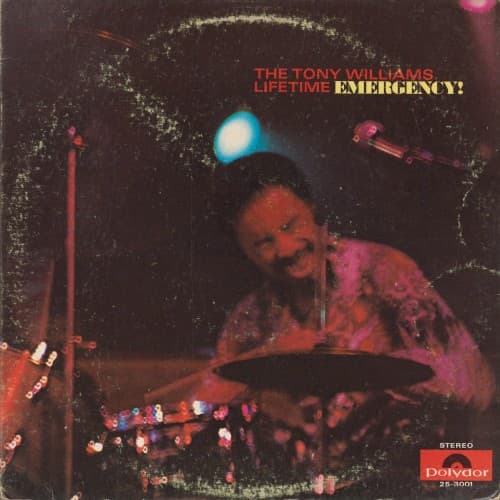
The Tony Williams Lifetime Emergency! — The First Fusion Album That Chose Chaos
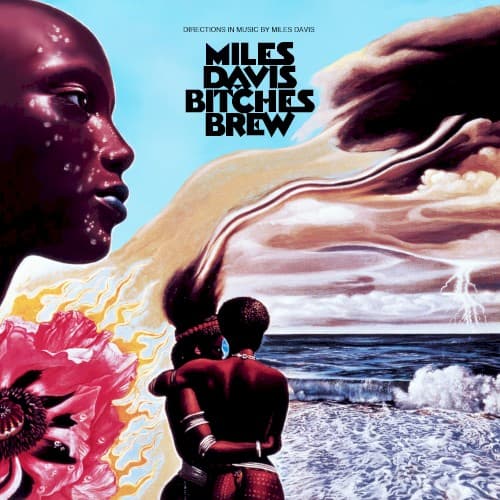
Emergency! is the album where jazz fusion found its sound by rejecting everything that would make it palatable a year later. Recorded in 1969 with guitarist John McLaughlin and organist Larry Young, Tony Williams built a trio that played free-jazz time signatures at rock volume with no bass, no safety net, and an engineer who recorded it so carelessly the tape distorted. The result synthesized modal jazz, free improvisation, and British rock in a way that Davis would approach months later on Bitches Brew but never match for sheer rawness. Where Davis smoothed the edges with studio layering and electric pianos, Williams let the trio sound like three soloists trying to wreck each other's takes.
The interplay is combative and thrilling; the mix is a mess that the label tried to fix in 1991 with a remix that fans still argue about.
The thesis is that Emergency! works because Williams refused to make fusion respectable. He sings on "Via the Spectrum Road" in a non-rock, non-jazz voice that sounds like Robert Wyatt, writes drum parts that alternate between light swing and heavy rock within the same bar, and programs a double album with improvisations that run thirteen minutes without a concession to radio. McLaughlin had recorded "Spectrum" earlier in 1969 on his own Extrapolation debut as a post-bop piece; here it is the same composition reinforced by distortion and organ. Young plays Hammond lines that could work in a church or a power trio, and the band recorded it all in sessions that one engineer treated with open contempt.
The distortion was an accident that added raw edges no one was asking for. Forty years later those edges are the point: Emergency! is jazz-rock's Are You Experienced, the one that defined the form before the form became a genre.
Three Soloists, No Bass, Full Distortion
Williams drums like he is playing two records at once: the light, rapid swing that made him Miles Davis's first-call drummer in the mid-sixties, and the heavy rock backbeat he learned from British bands. On the title track he moves between them every eight bars, and McLaughlin and Young have to decide in real time whether to follow the jazz pulse or the rock one. The solution they land on is to ignore the question and solo through the seams. McLaughlin plays long scalar runs with distortion and wah-wah that sound more like Hendrix than Wes Montgomery; Young comps with dense chord clusters that add harmonic weight without outlining changes.
The band has no bass, so the organ's left hand and the guitar's low strings have to imply the bottom. When they do not agree, the music floats. This is not a bug; the ambiguity in the rhythm section is what makes "Emergency" and "Beyond Games" feel unmoored from both jazz and rock conventions.
The compositions range from adventurous to borrowed. "Via the Spectrum Road" is an 11/8 blues co-written by McLaughlin and Williams, and the odd meter forces the band to rethink every turnaround. It is the clearest example of the rhythmic complexity that scholars cite as the album's innovation, and Williams sings the head in a soft, almost fragile voice that contrasts with the aggression underneath. "Spectrum" extends the free-flowing approach McLaughlin used on Extrapolation but now with the volume and energy of rock, and the composition gives Young space to build long modal improvisations that recall Coltrane's classic quartet without copying it.
"Sangria for Three" runs over thirteen minutes and uses the length well, moving through several moods without repeating itself. But "Vashkar," composed by Carla Bley, feels like a detour: a shorter, more conventional piece that the trio plays respectfully but does not reinvent.
The engineer's mistake is now part of the album's legacy. Gene Radice recorded the band carelessly, allowing the tape to distort in ways that were unacceptable for a major-label jazz release in 1969. Polydor left it alone, and the distortion gave the music a raw power that later fusion albums, recorded cleanly with studio separation, could not match. In 1991 Phil Schaap remixed the album to fix the sonic problems, balancing the instruments and cleaning up the low end.
The remix makes it easier to hear what Young is playing, but it also removes some of the accident that made the original feel dangerous. The 1997 CD reissue restored the original mix, and that is the version that matters: Emergency! is supposed to sound like it is coming apart.
A Double Album That Earns Half Its Length
Emergency! was released as a double LP, and the format creates both space and sag. The first two sides establish the sound with opening cuts that define the trio's combative interplay, then stretch out for over twelve minutes without losing focus, closing with a brief composed interlude. The middle section continues the momentum, exploring different approaches to odd meters and modal harmony. But the back half falters.
The closing run includes a thirteen-minute improvisation that justifies its length by moving through multiple sections and feels, but the final piece adds little. It is a solid take, competently played, but it does not conclude the album or add a perspective the earlier material missed.
The sequencing choice to spread eight tracks across four sides means there is room for the long improvisations to breathe, and the extended pieces benefit from not being edited down to fit on a single LP. But the shorter compositions feel like filler by comparison, and the double album promises a cohesion it does not quite deliver. A single LP drawn from the strongest 45 minutes would be a tighter, more essential record. As it stands, Emergency! is a document of what the trio could do over the course of a few sessions, not a carefully programmed statement.
The Fusion Blueprint Before Fusion Became a Business
Emergency! is the most important fusion album of 1969 and still the most radical. It predates Bitches Brew, In a Silent Way, and the Mahavishnu Orchestra, and it remains more uncompromising than any of them: no funk groove to anchor the rhythm, no electric piano to soften the attack, no concession to listeners who wanted jazz or rock but not both at full intensity. Williams, McLaughlin, and Young created a language that suggested fusion could evolve into something entirely new, a genre independent of its jazz and rock sources.
That development never happened. By the mid-seventies fusion had become jazz-inflected pop music with a home on FM radio, and Emergency! stands as the road not taken.
This is the album for listeners who want to hear what fusion sounded like before it became smooth, and for anyone curious about where McLaughlin's vocabulary came from before he formed the Mahavishnu Orchestra. It is not for casual fans: the distortion, the odd meters, and the lack of bass make it a challenging listen even now, and the double-LP length includes stretches that could have been cut. Skip it if you are looking for the accessibility of later Herbie Hancock or Weather Report. Start with "Emergency" to hear the trio's interplay at full force, then move to "Via the Spectrum Road" for the rhythmic ideas and "Sangria for Three" for the long-form improvisation.
If those three tracks work, the rest of the album will make sense. The catalog question is harder to answer because the Lifetime never made another record this focused; the follow-ups added more musicians and smoothed out the rough edges that made this one matter. Among 1969 fusion debuts, Emergency! ranks above everything except In a Silent Way, and it is a closer, more volatile listen than Davis's album. Hear it for what it attempted, which was everything, and for the accident that made it sound like the trio recorded it in a single take with no plan to fix the mistakes.
Next, hear McLaughlin's Extrapolation to understand what "Spectrum" sounded like before the distortion, and then hear Bitches Brew to understand what fusion became when it chose funk over free jazz. Emergency! is the moment when all options were still open and the loudest option won.
Track by track
Track Listing
Emergency
StandoutThe opening statement and the thesis in under ten minutes: Williams plays light swing and heavy rock simultaneously, McLaughlin solos with distortion and wah-wah through scalar runs that owe more to Hendrix than to jazz guitar, and Young builds dense harmonic clusters that float without a bass to anchor them. The interplay is combative, with each player pulling the rhythm in a different direction, and the distortion adds raw edges that make the track sound unfinished. It is the clearest example of what the trio could do when no one told them to choose between jazz and rock. The composition is Williams's, and the form is loose enough that the band can improvise through the structure without losing the thread. This is the track that defines the album and the one to start with if you are testing whether Emergency! is for you.
Beyond Games
StandoutAnother Williams composition, this one slightly more composed than "Emergency" but still built for improvisation. The piece moves through several moods in eight minutes, alternating between fast swing and slower, more spacious sections where Young's organ takes the lead. McLaughlin plays with more restraint here, letting the guitar lines breathe instead of filling every bar, and the result is a clearer picture of the trio's interplay. The odd meters are less obvious than on "Via the Spectrum Road," but the rhythmic complexity is still present in the way Williams shifts the feel every few bars. Solid piece that shows the band's range without repeating what "Emergency" already established.
Where
StandoutMcLaughlin's composition, and at over twelve minutes the longest track on the first half of the album. The piece is built on a modal framework that gives all three players space to stretch out, and the improvisation never sags. Young takes a long solo in the middle that recalls Coltrane's classic quartet without copying it, using the organ's sustain to build waves of harmony that McLaughlin and Williams respond to in real time. The guitar solo that follows is less scalar than on "Emergency," more focused on single-note lines that interact with the drums. The composition is strong enough to support the length, and the band plays it with more focus than some of the shorter pieces on the back half of the album. One of the clear peaks.
Vashkar
SolidComposed by Carla Bley, this is the one piece on the album the trio did not write, and it shows. The band plays it respectfully, with clean ensemble work and a clear head-solo-head structure, but they do not reinvent it the way they do with McLaughlin's "Spectrum." At five minutes it is one of the shorter tracks, and it works as a palate cleanser after the long improvisations that precede it, but it does not add much to the album's argument. Competent, unnecessary.
Via the Spectrum Road
StandoutAn 11/8 blues co-written by McLaughlin and Williams, and the track where the rhythmic ideas that scholars cite as the album's innovation are most audible. The odd meter forces the trio to rethink every phrase, and the result is a piece that swings without settling into a groove. Williams sings the head in a soft, almost fragile voice that contrasts with the aggression of the improvisation underneath, approaching the non-rock, non-jazz softness of Robert Wyatt. The composition is adventurous, and the performance matches it: McLaughlin and Young solo through the meter without simplifying it, and Williams keeps the 11/8 feel clear even when the tempo shifts. One of the album's most blatant explorations of odd meters and one of the strongest arguments for what fusion could become if it rejected funk entirely.
Spectrum
StandoutMcLaughlin's composition, first recorded on his 1969 Extrapolation debut as a post-bop piece and reimagined here with distortion and rock volume. The Extrapolation version had a free-flowing approach built on modal harmony; this version keeps the harmony but reinforces it with the energy and loudness of rock. Young takes the lead for much of the track, building long improvisations that use the organ's sustain to create harmonic density, and McLaughlin comps underneath before taking his own solo in the second half. The rhythm section interplay is tighter here than on some of the longer pieces, and the composition gives the band a clear structure to improvise within. Solid piece that shows how the trio could take a straight-ahead jazz framework and make it sound like something else.
Sangria for Three
StandoutThe album's longest track at over thirteen minutes, and one of the few pieces that earns its length. Williams's composition moves through several sections without repeating itself: a fast, aggressive opening that gives way to a slower, more spacious middle section where Young and McLaughlin trade ideas, then a return to the opening energy for the final third. The improvisation is patient, and the band resists the temptation to fill every moment with notes. Young's solo in the middle section is one of his strongest on the album, using silence and space as much as the organ's sustain, and Williams plays with more dynamic range than on the earlier tracks. The composition is less adventurous than "Via the Spectrum Road" or "Where," but the performance is focused and the pacing is right. A genuine album centerpiece that justifies the double-LP format.
Something Special
WeakA five-minute closer that adds little to what the album has already said. The piece is competent, with solid ensemble playing and a clear structure, but it does not conclude the argument or offer a perspective the earlier tracks missed. It feels like a take from the sessions that made it onto the album because there was room on side four, not because it was necessary. Filler.