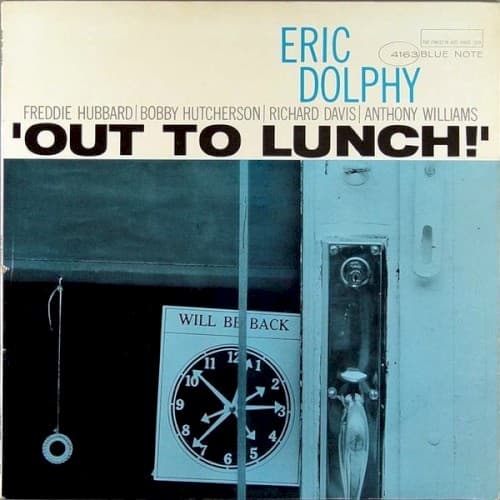
The scorecard
9.2/10 · Essential
- Composition20%
- 9.5
- Recording15%
- 8.5
- Performance30%
- 9.5
- Cohesion15%
- 8.5
- Originality10%
- 9.5
- Replay value10%
- 9.0
Five compositions that redefine the relationship between written structure and improvisation, with wide intervallic leaps and metric shifts that open rather than dictate.
Rudy Van Gelder's engineering captures Hutcherson's vibraphone as a separate plane of sound and preserves Davis's bowed bass without muddying the ensemble.
Dolphy and Hutcherson complete each other's phrases across three instruments while Williams implies pulse without stating it, a level of interplay rarely achieved.
Five pieces with no filler, but the shift from bass clarinet/flute frontline to alto saxophone side two creates a minor split in the album's arc.
Rejects bebop's walking bass and steady time without entering Coleman's free jazz, inventing a third path where pulse comes from inside the tune.
The complexity rewards repeated listens as the quintet's logic becomes audible, though the density can be taxing over full album runs.
Eric Dolphy Out to Lunch — Freedom Inside the Framework
The opening eight bars of Hat and Beard lurch through intervals no horn player would choose if they were trying to make bebop easier to blow over. Eric Dolphy's bass clarinet jumps sixths and sevenths while Bobby Hutcherson's vibraphone hammers offbeat accents and Tony Williams scatters the pulse across the kit instead of keeping it. The theme sounds composed to break expectations, and that is the point. Out to Lunch argues that you can dismantle the jazz rhythm section's traditional roles without losing coherence, that pulse can be implied rather than stated, and that compositions can lead players somewhere specific without controlling them.
Recorded in February 1964 and released posthumously after Dolphy's death that June, this remains the most successful attempt to split the difference between bebop's structures and free jazz's openness. Dolphy's only Blue Note album as a leader brings together a quintet where three of the five had recorded with him before and all five understood what he meant by freedom. Freddie Hubbard had roomed with Dolphy in New York and played on his 1960 debut. Bobby Hutcherson and Richard Davis had both appeared on Dolphy's July 1963 sessions.
Williams, eighteen years old and already in Miles Davis's band, was the wild card, and Dolphy's comment that Williams plays pulse rather than time proves accurate across all five tracks. The interplay here is not the chordal lockstep of a piano trio but a system where each musician responds to the implications in the written material and the others adjust in real time. Dolphy called it a free date, but the compositions hold; the freedom is in how the rhythm section interprets them. The album stands as proof that you can rethink the foundations of a jazz group and still produce music with a clear argument and a shape.
Pulse from Inside the Tune
Dolphy's writing works by setting frameworks that pull the players away from habits. The themes use wide intervallic leaps and rhythms that lock into no obvious meter, so the bassist cannot default to walking lines and the drummer cannot settle into ride cymbal time. Richard Davis plays rhythm with his lines, as Dolphy noted, which means he is answering the melody's shape rather than laying down quarter notes. Williams scatters accents and lets the pulse emerge from the spaces, so you feel the tempo without hearing it stated. The result is that the compositions lead the improvisation by creating specific problems rather than chord sequences, and the solos sound like they are continuing the written material's logic rather than departing from it.
Dolphy switches instruments across the five pieces: bass clarinet on the first two tracks, flute on the third, alto saxophone on the final two. The bass clarinet work on Hat and Beard is among the most radical horn playing on any Blue Note session, percussive and intervallic with no concession to conventional phrasing. Something Sweet, Something Tender uses the bass clarinet for a slower, more lyrical exposition and includes a scored duet where Dolphy and Davis on bowed bass play in unison, a texture that sounds more like chamber music than jazz. Gazzelloni, named for the classical flutist Severino Gazzelloni, opens with a bebop-style theme for thirteen bars and then breaks into freedom, showcasing Dolphy's flute work at its most advanced. The two alto pieces on side two are longer and looser, with the title track implying rather than stating the pulse and Straight Up and Down built around a staggering, drunken rhythm. Dolphy uses multiphonics and smears on the latter, voice-like effects that stretch the horn's timbral range.
Hutcherson's vibraphone is the key to the album's sound. Dolphy said that vibes open you up where pianos control you, and Hutcherson plays the instrument as a second horn rather than a harmonic anchor. He doubles themes with Dolphy, counters phrases, and uses the mallets percussively during the Hat and Beard interlude with Williams. The absence of a chording instrument means there is no harmonic center pulling the solos back, so the group can imply changes without stating them. Hubbard's trumpet is the most conventional voice, but his solos on the title track and Straight Up and Down show he understood the assignment: he phrases against the rhythm section's displacements rather than fighting them. Rudy Van Gelder's engineering captures the vibraphone as a separate sonic plane and keeps Davis's bass present without muddying the ensemble, a balance that matters when the rhythm section is doing this much.
The weakness is that Dolphy's ambition occasionally outpaces the material's internal necessity. Gazzelloni's shift from structured bebop to freedom at bar thirteen feels more like a formal device than an organic evolution, and the piece does not fully earn its seven minutes. Straight Up and Down's drunken-stagger concept is clever but the track sags in the middle when the rhythm loses its shape and the solos tread water. These are minor failings in an album this inventive, but they show that even a player this advanced can miss the balance between idea and execution.
The Album as Argument
Out to Lunch sequences its five pieces to prove the same point from different angles. The first stretch opens with the album's most confrontational track, so the listener knows immediately that the rhythm section will not behave. The second piece provides a slower, lyrical counterpoint and shows that the approach works at different tempos. The middle section bridges to side two by starting with a recognizable bebop theme before dissolving into freedom, a transition that makes the final two tracks feel earned rather than arbitrary.
The back half's two long pieces, both over eight minutes, are where the album makes its full case. Hat and Beard uses implied pulse to let the solos breathe without losing coherence, and it is the clearest example of Dolphy's claim that pulse comes from inside the tune. The closing run features the most aggressive rhythm and the most overtly experimental soloing, so the album ends at its furthest edge. The sequencing is deliberate: each piece introduces a new variable while holding others constant, and the forty-two-minute runtime never feels padded.
The only pacing issue is that the back half's two alto tracks blur together slightly, where the instrument variety on the opening stretch created more textural contrast. But the flow is coherent and the argument builds.
Where Freedom Leads
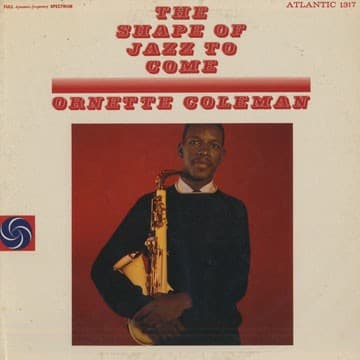
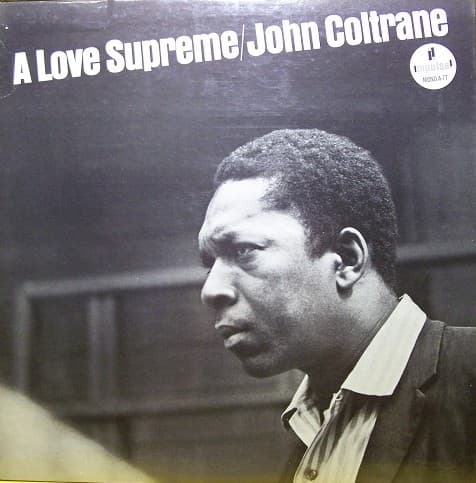
Out to Lunch sits near the top of 1960s avant-garde jazz, behind A Love Supreme and The Shape of Jazz to Come in influence but equal to either as a realized statement. It is the most complete execution of Dolphy's idea that compositions can open players up rather than control them, and it remains the best answer to the question of what happens when you dismantle the rhythm section's traditional roles without losing the tune. The fact that Dolphy died four months after the session and never developed the concept further makes the album feel like both a peak and a dead end, but the influence is audible in Anthony Braxton's intervallic writing, David Murray's bass clarinet vocabulary, and any modern group that tries to imply time without stating it.
This is for listeners who want to hear the mechanics of freedom, not freedom as pure abandon. If you expect walking bass and ride cymbal swing, the album will sound unmoored. If you understand bebop's frameworks well enough to hear them being rethought in real time, Out to Lunch is essential. Start with the title track, where the implied pulse is easiest to follow, then move to Hat and Beard for the most radical bass clarinet work, then play the album straight through.
The interplay between Dolphy and Hutcherson is the album's center, and it only becomes clear after multiple listens. For the next step, hear Andrew Hill's Point of Departure, recorded a month later with Davis and Williams from this same band, which applies similar rhythmic concepts to a different compositional voice. Out to Lunch remains the definitive document of Dolphy's mature vision, and no other album from 1964 rethinks the relationship between structure and improvisation this successfully.
Track by track
Track Listing
Hat and Beard
StandoutThe album's thesis stated in eight minutes. Dolphy's bass clarinet theme leaps across intervals that refuse to resolve into bebop phrasing, and Hutcherson doubles him with mallet strikes that land on offbeats, so the melody itself creates rhythmic displacement. Williams scatters the pulse across toms and cymbals without settling into a pattern, and Davis plays fragmented lines rather than walking. The result is that the listener has to construct the pulse from implications, which is the point. Dolphy's solo is percussive and angular, using the bass clarinet's lowest register for guttural honks and its upper range for intervallic leaps. The interlude where Williams and Hutcherson play together without the horns is a minute of pure rhythmic invention, mallets and drums creating a metric ambiguity that the bass clarinet re-enters to resolve. This is as radical as Blue Note got in 1964, and it still sounds like it is happening in real time rather than being composed note-for-note. The title references Thelonious Monk, and the piece shares Monk's angularity without imitating his harmonic language. A landmark track and the album's clearest statement of purpose.
Something Sweet, Something Tender
SolidDolphy switches the bass clarinet's role from percussive to lyrical, playing long tones and gentler intervals over a slower pulse. The theme is the album's most conventionally pretty melody, and the group locks into a texture that sounds closer to a ballad than the rhythmic experiments elsewhere. The scored duet between Dolphy and Davis on bowed bass is the album's most explicit chamber music moment, two voices moving in parallel with no harmonic support, and it earns the lyrical mood Dolphy described in the liner notes. Hutcherson uses mallets to sustain chords rather than playing percussive stabs, so the vibraphone becomes a harmonic instrument for the only time on the album. Hubbard's solo is muted and restrained, phrased to fit the tenderness rather than disrupt it. The track shows that the album's rhythmic concepts work at ballad tempo, but it also reveals a limitation: when the rhythm section plays this straight, the music loses some of the interplay that makes the harder pieces cohere. Solid and necessary as contrast, but not among the album's peaks.
Gazzelloni
SolidNamed for the classical flutist under whom Dolphy studied, this is the album's showcase for Dolphy's flute work. The theme is bebop for thirteen bars, a clear reference point with a walking bassline and conventional phrasing, then it breaks into freedom and the rhythm section stops stating time. The shift is deliberate and slightly schematic, more of a formal trick than an organic evolution, and the piece does not entirely justify the contrast. Dolphy's flute solo is technically advanced, using the full range and playing with the kind of rhythmic precision that bebop flute solos rarely attempt, but the solo also exposes a weakness: without the rhythmic displacement that defines the bass clarinet and alto tracks, the freedom here sounds more like post-bop blowing than a rethinking of structure. Hutcherson's solo is the most conventional vibes playing on the album, and Williams settles into a pulse that is easier to follow than anything on side one. The track is fine and the flute work is impressive, but Gazzelloni does not do the conceptual work the other pieces do. It shows that Dolphy's vision was most effective when the compositions stayed strange all the way through.
Out to Lunch
StandoutThe title track and the album's longest piece at over twelve minutes, this is where implied pulse works most clearly. The theme is a jagged melody with no obvious downbeat, and the rhythm section responds by scattering time across the ensemble so that the pulse is felt rather than heard. Davis plays lines that outline the harmonic movement without walking, Williams plays accents that mark phrases rather than beats, and Hutcherson doubles fragments of the melody. The result is that the solos float over a rhythmic foundation that is coherent but never explicit, and the freedom feels earned rather than arbitrary. Dolphy's alto solo is the album's most extended statement, full of intervallic leaps and phrases that start in one metric position and resolve in another. Hubbard's trumpet solo swings harder than anything else on the album, but he phrases against the rhythm section's displacements rather than trying to straighten them out, so the swing is crooked. Hutcherson's vibes solo is a minute of mallets bouncing off metal in patterns that imply meter without stating it. The track is the clearest execution of Dolphy's concept and the album's conceptual peak. If you want to understand what pulse from inside the tune means, this is the track to study.
Straight Up and Down
SolidDolphy described this as a drunken stagger, and the rhythm lurches through the theme with intentional instability. The tempo is mid-tempo but the phrasing is all offbeat accents and displaced downbeats, so the listener has to work to find where the one is. Dolphy's alto solo uses multiphonics, smears and voice-like effects to stretch the horn's timbral range, and the solo is more about texture than line. It is the most overtly experimental playing on the album and the furthest from bebop, but it also shows a limitation: when Dolphy abandons line for pure sound, the solo loses shape and the middle section sags. Hubbard's solo steadies the rhythm slightly, but the stagger returns when Dolphy re-enters, and the track ends in rhythmic ambiguity. The concept is clever and the opening minute is striking, but the piece does not sustain its idea across eight minutes. It works as a closer because it pushes the album to its furthest edge, but it is not as fully realized as the title track or Hat and Beard. Solid and necessary, but the album's weakest long piece.