The scorecard
9.5/10 · All-time
- Composition20%
- 10.0
- Recording15%
- 8.5
- Performance30%
- 9.5
- Cohesion15%
- 10.0
- Originality10%
- 9.5
- Replay value10%
- 9.0
A continuous composition structured as ballet, building from solo to collective movement through precisely calibrated harmonic and rhythmic transformations across six movements.
The eleven-piece band is captured with unusual depth and balance, though the horns occasionally crowd the mix in the densest ensemble passages.
The ensemble plays Mingus's orchestration with astonishing precision and emotional range, from intimate solos to surging collective statements, all in a single January session.
Conceived as one unbroken forty-minute work divided into movements, the album earns every minute of its length through strict structural logic and dynamic pacing.
The 1963 orchestration integrates elements no other large-ensemble jazz had combined: flamenco-tinged themes, African rhythmic layers, and classical ballet structure, all without sounding like fusion.
The complexity rewards repeated listening as new countermelodies and ensemble details emerge, though the unbroken intensity demands full attention.
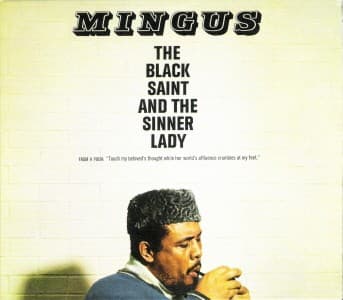
Charles Mingus The Black Saint and the Sinner Lady — Jazz as Ballet Without Dancers
The Black Saint and the Sinner Lady is an argument about what large-ensemble jazz could organize itself around if it stopped imitating big band swing or the classical concerto. Mingus takes the forty-minute structure seriously: not four separate compositions, but one continuous piece written as a ballet, divided into movements that follow a dramatic arc from solo dancer through duet to group, then a three-part finale that recapitulates and resolves. The orchestration never simplifies for accessibility. Themes enter over shifting rhythmic foundations, horns double at unexpected intervals, and the dynamic range moves from a single guitar statement to eleven players at full cry. The album was recorded in one session on January 20, 1963, with co-orchestrator Bob Hammer, and Mingus spent six weeks rehearsing the material at the Village Vanguard before the date. That preparation is audible: the ensemble executes transitions and tempo shifts that would collapse under less precise hands, and the soloists improvise within frameworks that are already half-composed.
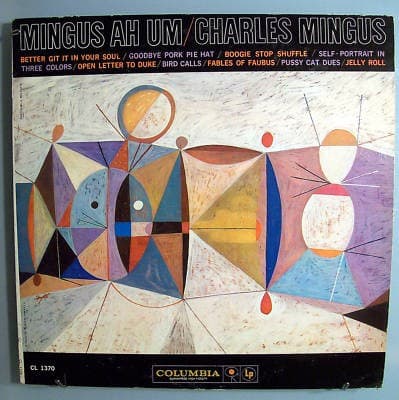
The stakes are higher than on Mingus Ah Um. That album proved Mingus could write for a mid-sized band with wit and melodic invention; this one attempts something closer to through-composed orchestral jazz, where the arrangement is the composition and every section carries structural weight. Mingus called it ethnic folk-dance music, and the orchestration layers African rhythmic cells with Spanish harmonic color and blues phrasing, all without quoting any of them literally.
The liner notes include commentary from his psychotherapist, a gesture that frames the music as autobiography and internal conflict made audible. The album divides listeners: some hear it as Mingus's peak, others as overwritten. The claim here is that it succeeds precisely because Mingus does not compromise. He builds a forty-minute work that moves like a ballet, sounds like a jazz orchestra, and holds together as a single statement, which no one else had done in 1963 and few have managed since.
Orchestration as Architecture
The composition begins with Track A, a solo dancer represented by guitar and bass under minimal orchestration. The theme is stated quietly, almost recessed in the mix, and the rhythm section establishes the first tempo, a walking pulse that feels relaxed but not swinging in the conventional sense. The horn writing enters incrementally, adding voices rather than stating a full ensemble figure, and the effect is of a gradual reveal rather than an entrance. Track B moves to duet, pairing soloists against a rhythm section that begins to complicate the pulse with cross-rhythms and shifting meters. The orchestration thickens but remains transparent; you can hear the bass clarinet and baritone saxophone moving independently beneath the trumpet and alto, a counterpoint that never locks into simple call-and-response. The transitions between movements are written, not improvised, and Mingus uses silence and tempo changes to mark the shifts rather than fadeouts or applause breaks.
Track C introduces the full ensemble as group dancers, and the orchestration becomes dense and layered. Horn voicings move through close intervals that sound closer to Ellington's late work than to any arranger working in 1963. The rhythm section—two drummers, bass, piano, guitar—creates a polyrhythmic foundation that supports the horns without overwhelming them, though the balance occasionally tips toward clutter in the loudest passages. The Spanish elements Mingus referenced appear here as harmonic choices, not as literal flamenco rhythms; the progressions suggest Andalusian modes without quoting them, and the effect is evocative rather than exotic. Bob Hammer's co-orchestration work is evident in how the voicings distribute the ensemble across registers; nothing doubles unnecessarily, and the orchestration maintains clarity even when all eleven players are engaged.
The three-part finale, Modes D, E, and F, occupies nearly nineteen minutes and recapitulates earlier themes while introducing new material. Mode D opens with a trio section that isolates the rhythm players before reintroducing the horns, a structural choice that resets the dynamic range before the final build. Mode E features solos over group accompaniment, and the soloists—most prominently alto saxophone and trumpet—improvise within tightly written backgrounds that shift harmonically beneath them. Mode F brings the full ensemble back for a collective statement that moves through several tempo and mood changes, from aggressive to elegiac, before ending on a quiet restatement of the opening theme. The finale is the album's riskiest section; the length could sag, and the final resolution could feel arbitrary. It works because Mingus has established the thematic material clearly enough in the first three tracks that the recapitulation feels like a payoff rather than a recap.
The weakness is in the sheer density. Some listeners will find the orchestration too written, too controlled, and will miss the looser interplay that defines much of Mingus's best small-group work. The solos are strong but brief, and the album prioritizes compositional logic over extended improvisation. The mixing occasionally loses definition in the densest passages, particularly when the two drummers and the full horn section converge; individual lines blur, and the orchestration becomes more felt than heard. These are not flaws that undermine the album, but they explain why some prefer the more open structures of Mingus Ah Um or the raw energy of live recordings like The Great Concert of Charles Mingus.
The Ballet Without Intermission
The album's structure demands that you hear it straight through; breaking it into tracks defeats the purpose. The pacing is deliberate: the first three movements build from sparse to dense, establishing the thematic material and the ensemble's range, while the three-part finale manipulates that material through recapitulation, variation, and resolution. The sequencing is not about peaks and valleys in the conventional sense but about architectural logic. Track A sets the foundation, Track B introduces complexity, Track C delivers the first full statement, and the finale earns its length by reworking everything that came before.
The risk is that the album never relaxes. There are quieter moments—the opening of Track A, the trio section in Mode D—but no filler, no throwaway interludes, no space for the listener to disengage. At forty minutes, that intensity is sustainable but not comfortable.
The album aged well because it never relied on the conventions of its moment; it does not sound like 1963 Impulse! or like anything else Mingus recorded. The length is earned, but only if you accept the premise that a jazz album can function as a single through-composed work. Listeners who prefer modular structures or extended solos will find it claustrophobic. Listeners who want to hear how far orchestral jazz could be pushed without breaking will find it essential.
The Case for the Other Masterpiece
The Black Saint and the Sinner Lady ranks alongside Mingus Ah Um as Mingus's major statement, but it serves a different purpose. Mingus Ah Um is the accessible entry point, the album that proves Mingus could write memorable themes and lead a band with personality and wit. The Black Saint is the album that proves he could construct a large-scale work with classical rigor and make it swing, sort of. It does not replace Mingus Ah Um; it complements it. In the catalog, this is the album for listeners who want to hear Mingus think big, the one that demonstrates his ambition and his ability to execute on it. It is not the place to start unless you already know you want dense orchestration and through-composed structure over blues-based themes and extended solos.
The album is for serious listeners who want to hear what orchestral jazz could sound like when it stopped imitating big band arrangers and started thinking about ballet, for musicians interested in how Mingus layered rhythms and voiced horns, and for anyone who believes that a jazz album can earn forty minutes without repeating itself. Skip it if you prefer Mingus raw and unfiltered, if you want solos over structure, or if you find through-composed jazz too controlling. The album has aged into a reference point: critics and musicians cite it as proof that large-ensemble jazz could be composed with the same rigor as chamber music, and its influence shows up in later orchestral jazz that attempts similar ambition without always matching the execution.
Start with Track A to hear how Mingus establishes the thematic material, then commit to the full listen or skip it entirely; there is no casual middle ground. After this, hear Mingus Ah Um if you have not, then move to Pithecanthropus Erectus to trace how Mingus developed the orchestral thinking that made this album possible. The Black Saint and the Sinner Lady is not the most enjoyable Mingus album, but it is the one that proves he could build something no one else in jazz was attempting in 1963 and make it hold together for forty minutes without intermission.
Track by track
Track Listing
Track A: Solo Dancer
StandoutThe opening movement establishes the album's thematic material with unusual restraint. Mingus begins with guitar and bass, setting a walking tempo that feels less like swing and more like a processional. The horn orchestration enters gradually, adding voices one at a time rather than announcing the ensemble with a full statement. The solo dancer motif is carried by quiet melodic fragments that pass between alto saxophone and trumpet, accompanied by rhythm section figures that suggest but do not state the polyrhythmic foundation that will dominate later movements. The mood is introspective, almost tentative, and the dynamics remain low throughout. The movement works as a thesis statement: this will be orchestral jazz that builds incrementally rather than arriving fully formed, and the ensemble will function as a collective voice rather than as a platform for extended solos. The subtitle reference to Sinner Jim Whitney is never explained, and the movement does not require it; the music establishes character through tone and pacing rather than through narrative. At under seven minutes, it is the briefest complete movement, and it leaves space rather than filling it.
Track B: Duet Solo Dancers
StandoutThe second movement introduces pairing and dialogue. Two soloists—most prominently trumpet and alto saxophone—improvise over a rhythm section that begins to complicate the pulse with cross-rhythms and meter shifts. The orchestration thickens without losing transparency; bass clarinet and baritone saxophone move independently beneath the front line, creating a counterpoint that never settles into predictable patterns. The harmonic progression shifts subtly, introducing Spanish-tinged voicings that suggest flamenco modes without quoting them. The duet structure is less about call-and-response and more about two voices occupying the same space with overlapping but independent lines. The rhythm section, now featuring both drummers, begins to layer African-derived polyrhythms under the written horn parts, a technique that will dominate the finale. The movement sustains interest through textural variety rather than melodic development, and the transition into Track C is written rather than improvised, a deliberate choice that reinforces the album's through-composed structure. At just under seven minutes, it balances solo space with ensemble writing and avoids the density that occasionally blurs the later movements.
Track C: Group Dancers
StandoutThe third movement delivers the first full ensemble statement, and the orchestration becomes dense and harmonically complex. All eleven players are engaged, and the horn voicings move through close intervals that recall Ellington's late-period writing more than any contemporary arranger. The rhythm section creates a churning, polyrhythmic foundation that supports the horns without overwhelming them, though the balance occasionally tips toward clutter in the loudest passages. The Spanish harmonic elements introduced in Track B become more pronounced here, with progressions that evoke Andalusian modes without literalism. The group dancer motif is enacted through collective improvisation over tightly written backgrounds; solos are brief and integrated into the ensemble texture rather than featured as distinct breaks. Bob Hammer's co-orchestration is most evident in this movement, where the voicings distribute the ensemble across registers without doubling unnecessarily. The dynamic range is wide, moving from near-silence to full-band fortissimo, and Mingus uses those shifts to mark structural divisions within the movement. The subtitle, Soul Fusion and Freewoman and Oh, This Freedom's Slave Cries, suggests autobiography and internal conflict, but the music does not require programmatic interpretation; it works on purely sonic terms as the album's emotional peak before the finale.
Mode D: Trio and Group Dancers / Mode E: Single Solos and Group Dance / Mode F: Group and Solo Dance
StandoutThe three-part finale occupies nearly nineteen minutes and functions as recapitulation, variation, and resolution. Mode D opens by isolating the rhythm trio—bass, drums, guitar—in a sparse section that resets the dynamic range after the density of Track C. The horns reenter gradually, restating earlier themes in altered voicings, and the tempo shifts multiple times within the first five minutes, a structural risk that works because the ensemble executes the transitions with precision. Mode E features extended solos over group accompaniment, the closest the album comes to conventional blowing. The alto saxophone solo is the most developed individual statement on the record, improvising over a written background that shifts harmonically beneath the line, forcing the soloist to adjust rather than coasting over static changes. The trumpet solo that follows is shorter but more aggressive, pushing against the ensemble rather than integrating with it. Mode F brings the full band back for a collective statement that moves through several distinct moods: an aggressive, almost chaotic section where the two drummers and the horn section converge in dense polyrhythm; a quieter, elegiac passage that recalls the opening of Track A; and a final restatement of the primary theme that ends the album on a quiet, unresolved note rather than a triumphant climax. The finale is the album's riskiest section because the length could sag and the final resolution could feel arbitrary. It succeeds because Mingus has established the thematic material clearly enough in the first three tracks that the recapitulation feels earned rather than repetitive. The mixing occasionally loses definition in the densest passages, particularly when all eleven players converge, and individual lines blur into texture rather than remaining distinct. The subtitle references—Stop! Look! And Sing Songs of Revolutions, Saint and Sinner Join in Merriment on Battle Front, Of Love, Pain, and Passioned Revolt—frame the music as political and personal struggle, but the finale works without the programmatic scaffolding, purely as orchestral jazz that sustains interest and structural logic across eighteen-plus minutes without repeating itself.