The Relentless Evolution of John Coltrane's Musical Vision
John Coltrane compressed a lifetime of innovation into roughly a decade of sustained creative output. Between his emergence as a sideman in the mid-1950s and his death in 1967, he moved from capable hard bop saxophonist to the most influential voice on his instrument, reshaping jazz's harmonic language and spiritual possibilities. Born in Hamlet, North Carolina in 1926, Coltrane grew up in a religious household that planted seeds for his later merger of musical and spiritual seeking. His early professional years involved journeyman work with rhythm and blues bands before jazz claimed him fully.
The transformation happened in stages. Working with Miles Davis from 1955 onward gave Coltrane the laboratory he needed. Davis trusted him with space, and Coltrane filled it with increasingly complex harmonic explorations. His tenor saxophone sound grew denser, more urgent. By 1957, when he recorded his first session as a leader for Prestige, the foundation was set. But substance abuse interrupted his trajectory. A 1957 spiritual awakening prompted sobriety and rededication. When he rejoined Davis in 1958, he returned as a different player—focused, disciplined, and hungry to push modal concepts Davis was developing.
Coltrane's solo career launch in 1960 with Atlantic Records marked full artistic autonomy. He assembled a quartet with pianist McCoy Tyner, bassist Jimmy Garrison, and drummer Elvin Jones that became one of jazz's most telepathic units. From this platform, he'd pursue increasingly radical investigations into harmony, rhythm, and tone. His influence extended beyond technique into philosophy. Jazz became a vehicle for transcendence under his hands, a devotional practice as much as entertainment or art.
Harmonic Density and the Architecture of Spiritual Sound
Coltrane's early style drew from Charlie Parker's bebop vocabulary but quickly exceeded it. His approach to chord changes became obsessive. Musicians called it "sheets of sound"—cascading sixteenth-note runs that outlined chord progressions with such density that individual notes blurred into texture. This wasn't showboating. Coltrane was mapping every harmonic possibility within a progression, treating the saxophone as a tool for exhaustive exploration. His tone on tenor was thick and slightly aggressive, with a vibrato that intensified during climactic passages. He rarely played pretty. Beauty emerged from intensity and commitment.
The modal period brought spaciousness. Working on Davis's Kind of Blue in 1959 forced Coltrane to abandon rapid chord movement for sustained exploration of single scales. His response was to dig deeper into each mode, finding melodic and emotional variations within constraint. This approach reached full maturity on his own Giant Steps (1960), where he composed progressions specifically designed to challenge conventional navigation. The title track moves through key centers so rapidly that most saxophonists still struggle with it decades later. Yet Coltrane played it with clarity and swing.
By the mid-1960s, harmonic constraints felt limiting. Coltrane moved toward freer structures, allowing emotional expression to guide form rather than preset changes. His tone became harsher, more vocalized. He incorporated techniques from global traditions—Indian classical music's devotional intensity, African ceremonial repetition. The soprano saxophone, which he adopted in 1960, became an equal voice to his tenor. On soprano, his sound was plaintive and searching, less earthbound. This dual instrumental identity allowed him to shift between passionate cry and transcendent ascent within single performances.
From Sideman Apprenticeship to Spiritual Leadership in Jazz
Coltrane's professional beginning was humble. After Navy service, he played alto saxophone in Philadelphia and worked various R&B gigs. His first significant jazz position came in 1949 with Dizzy Gillespie's band, though he remained a supporting player. The pivotal break arrived when Miles Davis hired him in 1955 for what would become the first great quintet. Davis was exploring new territory, and Coltrane had the technical facility and intellectual curiosity to follow. Their collaborations produced essential recordings: 'Round About Midnight, Milestones, and the landmark Kind of Blue. But Davis fired Coltrane in 1957 due to heroin addiction.
The dismissal became a turning point. Coltrane underwent a spiritual conversion, quit drugs and alcohol, and returned to music with monastic dedication. He spent 1957 with Thelonious Monk, whose angular compositions and rhythmic displacement pushed Coltrane into new phrasing concepts. Monk demanded space and silence, forcing Coltrane to edit his dense style. When Davis rehired him in 1958, Coltrane was a fundamentally different musician—sober, focused, and ready to engage Davis's modal experiments fully. The 1959 sessions for Kind of Blue found him at peak lyrical power, particularly on "Flamenco Sketches," where his patient mode exploration demonstrated complete mastery of the new approach.
His 1960 departure from Davis to form his own group marked artistic independence. The classic quartet coalesced quickly: McCoy Tyner's modal piano voicings created harmonic foundations, Elvin Jones's polyrhythmic drumming generated perpetual forward motion, and Jimmy Garrison's bass work provided both anchor and counterpoint. Atlantic Records gave Coltrane creative freedom, resulting in My Favorite Things (1961), which introduced his soprano work and proved his commercial viability. The album's title track—a waltz-time reworking of a Rodgers and Hammerstein song—became his signature piece and demonstrated that avant-garde approaches could reach audiences.
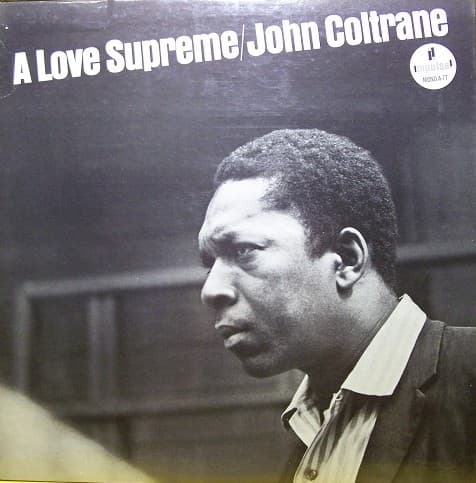
Signing with Impulse! Records in 1961 provided even greater latitude. Producer Bob Thiele understood Coltrane's vision and documented it extensively. Africa/Brass, Impressions, and Coltrane "Live" at Birdland captured the quartet's development. But 1965's A Love Supreme represented a culmination. The four-part suite merged all of Coltrane's interests—modal jazz, spiritual devotion, compositional architecture, and collective improvisation. Its commercial and critical success surprised even Impulse. Here was explicitly religious music, intensity personified, that connected with listeners across demographics. The album's influence extended far beyond jazz into rock, soul, and experimental music communities.
The post-Love Supreme period saw Coltrane pushing into territories that alienated some longtime fans but inspired a new generation. Ascension (1965) featured eleven musicians in structured collective improvisation, drawing from free jazz pioneer Ornette Coleman's example while maintaining Coltrane's own harmonic preoccupations. The quartet expanded to include second drummer Rashied Ali and Coltrane's wife, pianist Alice Coltrane. Tenor saxophonist Pharoah Sanders joined, his harsher tone complementing Coltrane's increasingly vocalized approach. Albums like Meditations and Expression document music that privileges emotional and spiritual expression over conventional jazz structures. This late work was controversial—critics called it self-indulgent, formless, even unlistenable. Yet it established templates for spiritual jazz and free improvisation that resonated for decades.
Coltrane's career ended abruptly. Liver cancer, likely related to his earlier substance abuse, was diagnosed too late. He died July 17, 1967, at age 40. The brevity of his peak period—essentially 1957 to 1967—makes his output even more remarkable. He left behind a discography spanning hard bop, modal jazz, post-bop, free jazz, and spiritual jazz, each phase influencing musicians across genres.
The Continuing Reverberation of Coltrane's Spiritual and Musical Practice
Coltrane's influence operates on multiple levels. Technically, he redefined saxophone vocabulary. Every tenor player after him contends with his harmonic approach, his tone concepts, his rhythmic ideas. Saxophonists as diverse as Michael Brecker, Kamasi Washington, and Branford Marsalis cite him as the foundation. His compositional structures—particularly the symmetrical key movement of "Giant Steps" and the suite architecture of A Love Supreme—became study texts in jazz education. Colleges teach "Coltrane changes" as a specific harmonic system that remains challenging a half-century later.
Beyond technique, Coltrane established jazz as spiritual practice. His open devotional stance gave permission for musicians to pursue transcendence without irony. Alice Coltrane continued this work after his death, as did Sanders, and a lineage extends through spiritual jazz practitioners like Kamasi Washington and contemporary saxophonist Shabaka Hutchings. The Black church's influence on Coltrane's music helped legitimize gospel and spiritual elements in jazz, creating space for artists to address faith directly. His example proved that accessibility and artistic integrity weren't opposites—A Love Supreme reached audiences while compromising nothing.
Coltrane's late work proved prophetic. What sounded chaotic in 1966 became blueprint material. Free improvisation communities, European avant-garde jazz, and American loft jazz scenes all drew from his final recordings. His willingness to risk alienating his audience for artistic truth became a model for uncompromising creativity. The commercial music industry often demands artists repeat successful formulas. Coltrane demonstrated an alternative path: continuous evolution, even when it costs listeners. That example resonates beyond jazz into rock, electronic music, and hip-hop, where artists cite his dedication as inspiration for their own refusal to stagnate.