The Saxophonist Who Brought Jazz Back to the Mainstream Conversation
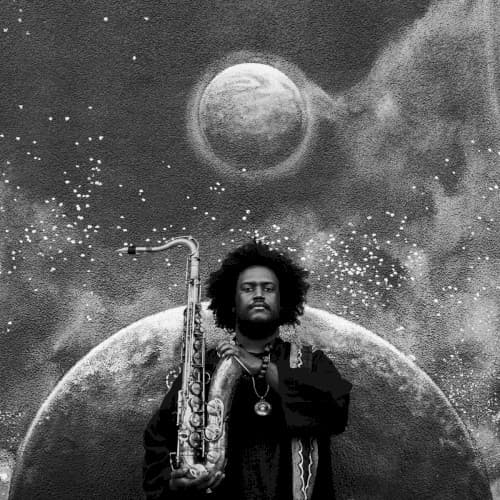
When Kamasi Washington released a three-hour triple album as his debut in 2015, the jazz world didn't just take notice—it recalibrated. The Epic arrived like a statement of intent from Los Angeles, announcing that spiritual jazz wasn't a relic of the 1970s but a living, breathing force ready to speak to contemporary audiences. Washington, a product of South Central LA's storied jazz lineage, emerged not as a throwback but as an architect of something simultaneously ancient and radically new.
Born in 1981, Washington grew up immersed in the West Coast jazz tradition through his father, Rickey Washington, a saxophonist who played with legends including Horace Tapscott and the Pan Afrikan Peoples Arkestra. This grounding in communal, spiritually conscious jazz shaped Washington's entire approach—music as ritual, performance as collective experience, albums as journeys rather than collections. By the time he stepped into the spotlight, he'd already spent years as a sought-after session musician, contributing tenor saxophone to records by Kendrick Lamar, Thundercat, and Flying Lotus, weaving jazz DNA into hip-hop's progressive edge.
What distinguishes Washington from his contemporaries isn't just technical virtuosity—though his command of the tenor saxophone is formidable—but his willingness to think big. Where many modern jazz artists opt for intimate quartet settings, Washington assembles orchestras. Where others pursue minimalism, he embraces maximalism with strings, choirs, and extended compositional forms that recall the ambition of John Coltrane's late period and the cosmic reach of Sun Ra.
Orchestral Maximalism and the Sound of Spiritual Ascension
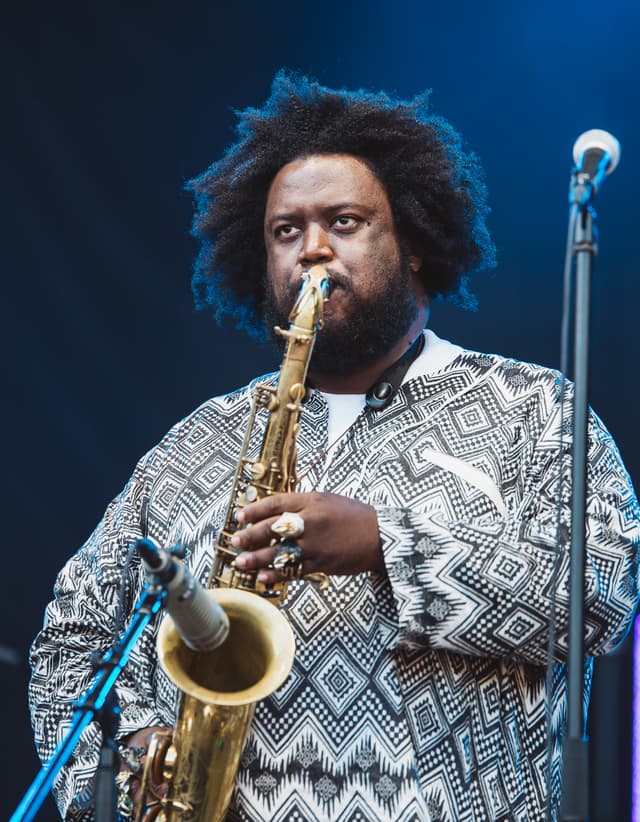
Washington's sonic signature is unmistakable: massive ensemble arrangements that layer strings, horns, choir vocals, and rhythm sections into towering walls of sound. His tenor saxophone cuts through these dense textures with a tone that's both muscular and lyrical, capable of righteous declarations and tender introspection within the same phrase. Unlike the cool, restrained approach of West Coast jazz's earlier generation, Washington's playing burns hot—rooted in the cry and moan tradition of spiritual jazz, echoing the transcendent pursuits of artists like Pharoah Sanders and the devotional intensity of Alice Coltrane's work.
The production aesthetic Washington cultivated with his core collaborators—the West Coast Get Down collective including Cameron Graves, Miles Mosley, Tony Austin, and Ronald Bruner Jr.—favors live-in-the-room warmth over clinical precision. His albums sound like captured ceremonies rather than studio constructions. Strings swell with cinematic grandeur, drums thunder with rock-concert physicality, and his saxophone solos spiral upward in searching, exploratory patterns that prioritize emotional arc over technical showboating. There's a deliberate embrace of excess here: ten-minute tracks are standard, fifteen-minute epics common, and compositional movements unfold with patience that demands listener commitment.
What makes this approach work is Washington's understanding of dynamics and space. For all the orchestral density, his arrangements breathe. He knows when to pull back to a hushed piano-and-bass dialogue, when to let the choir carry the melody alone, when to strip everything away so his saxophone can speak in naked vulnerability. This dynamic range—from whisper to roar—gives his extended compositions shape and narrative momentum, preventing the maximalism from collapsing into formless sprawl.
From Session Sideman to Spiritual Jazz Revivalist
Washington's path to prominence was unusually gradual for someone who would eventually be framed as jazz's savior. Throughout the 2000s and early 2010s, he worked as a session musician and touring saxophonist, building deep collaborative relationships within LA's creative music community. His contributions to Kendrick Lamar's To Pimp a Butterfly in 2015 introduced his sound to millions—those soaring saxophone passages on tracks like "u" and "Mortal Man" carried unmistakable emotional weight, demonstrating jazz's capacity to amplify hip-hop's most vulnerable moments.
But it was The Epic, released in May 2015 on Brainfeeder, that transformed Washington from skilled journeyman to visionary bandleader. The sheer audacity of the project—nearly three hours of music across three discs, featuring a 32-piece orchestra, a 20-voice choir, and a 10-piece band—signaled ambitions that extended far beyond conventional album cycles. Critics responded with a mixture of awe and hesitation; some heard a monumental achievement in the lineage of Coltrane's Ascension and Sanders' Karma, while others questioned whether the album's sprawl justified its length. What couldn't be disputed was its impact: The Epic became a cultural phenomenon, charting on Billboard, earning widespread media coverage beyond jazz publications, and establishing Washington as the public face of jazz's 21st-century renewal.
Washington followed with Harmony of Difference in 2017, a more focused six-track EP that explored fugue-like compositional structures, demonstrating growing interest in formal complexity alongside spiritual expression. Then came Heaven and Earth in 2018, another double album that expanded his conceptual reach—split into two halves representing earthly and celestial realms, the project doubled down on the cosmic ambitions of his debut while incorporating more pronounced funk and fusion elements. Throughout this period, Washington maintained his collaborative spirit, appearing on albums by Herbie Hancock, Terrace Martin, and Robert Glasper, always operating as both individual voice and ensemble player.
His subsequent work has explored different facets of his vision. Becoming (2022), a meditation on growth and transformation composed largely during pandemic lockdown, showed Washington working with more restraint—still orchestral, still expansive, but with increased focus on melodic clarity and compositional economy. Live albums and collaborative projects have filled out his discography, revealing an artist who sees recording and performance as equally vital modes of expression. Throughout, Washington has remained committed to the West Coast Get Down collective, treating his career as inseparable from his musical community rather than a solo elevation story.
Redefining Jazz's Cultural Position in the Streaming Era
Washington's significance extends beyond the music itself to what his success represents. At a moment when jazz had largely retreated to academic settings and niche festival circuits, he demonstrated that ambitious, spiritually driven instrumental music could still command mainstream attention. The Epic's crossover success—embraced by jazz purists and indie rock audiences alike, featured in year-end lists across genre boundaries—proved that hunger existed for complex, extended-form jazz if presented with conviction and contemporary relevance.
His influence on younger jazz musicians is already apparent. The wave of orchestral, spiritually minded jazz that emerged in the late 2010s—from London's Ezra Collective to Chicago's Makaya McCraven—operates in a landscape Washington helped create, where thinking big is once again acceptable. His normalization of collaboration between jazz and hip-hop communities has opened doors for artists working at that intersection, validating jazz as a living language rather than museum artifact. Even his visual presentation—the elaborate stage productions, the thematic album concepts, the integration of multimedia elements—has encouraged jazz artists to think beyond the traditional club gig toward larger experiential frameworks.
Yet Washington's legacy remains in progress, still being written. Questions linger about whether his maximalist approach will continue to evolve or calcify into formula, whether his spiritual seeking will deepen or become aesthetic mannerism. What seems certain is that he redirected jazz's trajectory at a critical moment, reminding listeners that the genre's most powerful expressions have always been about more than technical prowess—they've been about transcendence, community, and the possibility that music can still change consciousness. In that pursuit, Washington stands as a bridge between jazz's cosmic past and its unwritten future.