Style & Context
Influences
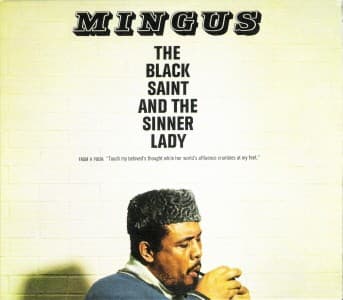
Documentary realism, European art film posters, jazz photography of Herman Leonard and Francis Wolff
Location
This cover speaks to the intellectual ambitions of post-bop, where jazz aspired to concert hall legitimacy.
Visual Language
The tight crop and natural lighting reject the glamour of commercial jazz photography for something more raw and honest.
Symbols
Closed eyes
Mingus retreats inward to the emotional landscape where his autobiographical ballet unfolds.
Hand touching face
The gesture suggests vulnerability and deep contemplation before the storm of orchestration begins.
Cropped composition
Cutting off Mingus's body mirrors the album's fragmented narrative and psychological complexity.
Where Sound Meets Image
The cover's meditative intimacy perfectly matches an album Mingus described as a ballet about his own psyche, where musical themes represent different aspects of his personality in conflict. The closed eyes suggest the internal theater where Mode D (the Black Saint) and Mode F (the Sinner Lady) dance their psychological battle. The warm, earth-toned palette reflects the album's fusion of Spanish flamenco, Mexican folk, and African-American church music into one autobiographical statement. Mingus's contemplative pose captures the album's blend of compositional precision and raw emotional confession.
This cover helped establish the template for presenting avant-garde jazz as serious art requiring focused listening rather than casual consumption. Its rejection of action shots and nightclub glamour influenced how artists like Ornette Coleman and Cecil Taylor would be photographed in the mid-1960s. The minimalist approach, letting a single contemplative image carry the weight of complex music, became a blueprint for albums dealing with psychological or spiritual themes.