The Composer Who Made Jazz a Vehicle for Rage and Beauty
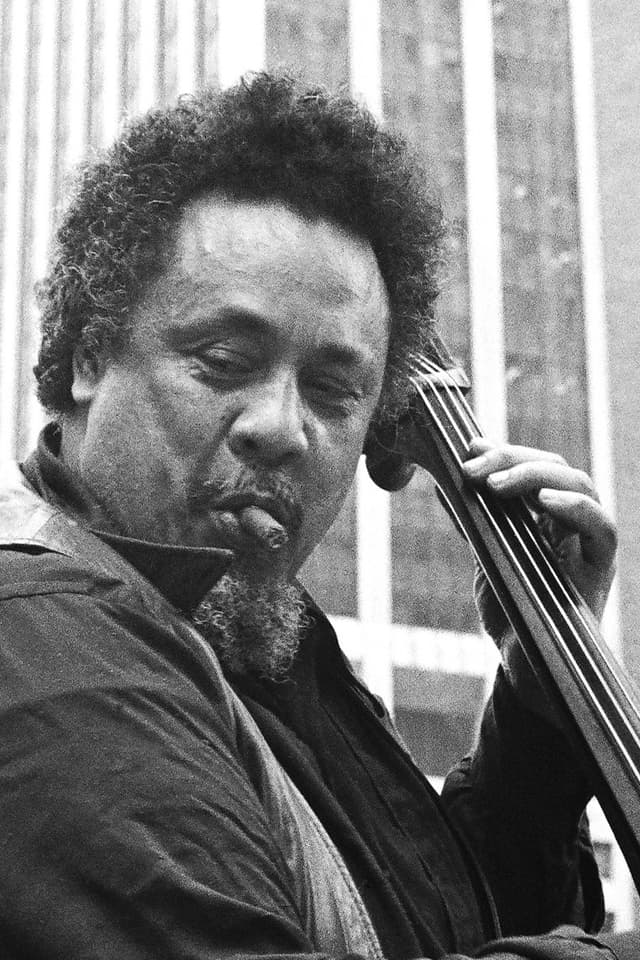
Charles Mingus didn't just play jazz — he wrestled with it, challenged it, turned it inside out until it reflected the full complexity of Black American life in the mid-20th century. Born in Arizona, raised in the Watts neighborhood of Los Angeles, Mingus came up through the traditional channels: church music, classical training, apprenticeship with jazz elders. Yet everything he touched became something else, something more confrontational and emotionally direct than what came before. He approached the bass as both anchor and voice, developing a technique that allowed him to lead from the rhythm section, pushing bands forward with the force of his convictions.
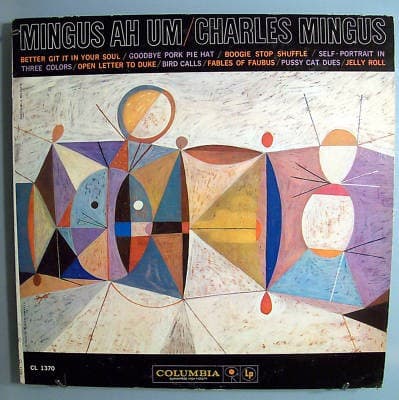
By the time Mingus Ah Um arrived in 1959, he had already established himself as someone who refused to separate his music from his politics or his personal struggles. That album — with its sly reference to segregation in the title itself — captured Mingus at a creative peak, balancing compositional rigor with the raw energy of collective improvisation. But that was just one snapshot of a career that spanned bebop, hard bop, free jazz experiments, and ambitious large-ensemble works that borrowed from gospel, classical music, and the blues. Mingus treated jazz as a living tradition that could absorb everything and still sound urgent.
The Mingus Sound: Controlled Chaos and Emotional Transparency
Mingus developed a compositional approach that gave musicians strict frameworks while demanding emotional honesty within those structures. His pieces often featured abrupt tempo changes, shifting time signatures, and dense harmonic movement — challenging material that required players to listen intensely to each other. He wanted improvisation that felt spontaneous but served the larger architecture of the composition. This wasn't jazz as background music or polite entertainment. Mingus wrote pieces that built tension, released it, then built it again in unexpected ways.
His bass playing matched this aesthetic. Mingus had studied with Red Callender and Herman Rheinschagen, developing both the walking bass vocabulary of swing and the melodic fluency of bebop. But he also used the instrument percussively, attacking strings with a physicality that other bassists avoided. He could anchor a groove with rock-solid time, then suddenly pivot into a bowed solo that sounded like a cello crying out in protest. The Workshop format he favored — rehearsing extensively, then allowing space for explosive improvisation — meant his music always had an element of unpredictability. Audiences never knew if they'd witness transcendence or a very public firing of a musician who wasn't meeting his standards.
From Sideman to Bandleader: Mingus's Journey Through Jazz's Transformation
Mingus came up during bebop's emergence, working with Louis Armstrong, Lionel Hampton, and Red Norvo in the 1940s. Those years taught him the professional musician's craft, but they also exposed him to the racial indignities built into the entertainment industry. He watched white bandleaders get credit for innovations that Black musicians developed. He experienced the economic exploitation of jazz artists who created wealth for club owners and record labels while struggling to survive. These experiences shaped his militant stance on artistic ownership and creative control.
The 1950s saw Mingus begin his transformation into a composer-bandleader. He co-founded Debut Records in 1952 with Max Roach, attempting to create an artist-controlled alternative to the major label system. The label documented the legendary Massey Hall concert with Charlie Parker, Dizzy Gillespie, Bud Powell, and Roach — a document of bebop's peak that might have been lost without their intervention. Mingus also formed his Jazz Workshop, a fluid ensemble that allowed him to develop compositions through performance, treating each gig as rehearsal for the next evolution of a piece.
Pithecanthropus Erectus in 1956 marked his arrival as a major compositional voice. The title track presented a four-part tone poem depicting humanity's evolution and self-destruction — ambitious programmatic jazz that drew from Ellington's extended works while pushing into more dissonant, emotionally raw territory. The Clown, Tijuana Moods, and Blues & Roots followed, each exploring different facets of Mingus's vision. Then came Mingus Ah Um in 1959, featuring "Goodbye Pork Pie Hat" (his elegy for Lester Young), "Better Git It in Your Soul" (gospel-infused exuberance), and "Fables of Faubus" (a protest against segregationist Arkansas Governor Orval Faubus). Columbia Records wouldn't let him include the lyrics that named Faubus directly — another reminder of the industry's limits.
The early 1960s brought increasingly radical work. Mingus presented live concerts that incorporated poetry, political commentary, and music that moved toward the emerging free jazz movement while maintaining his insistence on compositional structure. The Black Saint and the Sinner Lady in 1963 stands as perhaps his masterpiece — an elaborate ballet score that moves through Latin rhythms, blues feeling, and orchestral textures, all unified by Mingus's emotional intensity. Liner notes included excerpts from his psychotherapist's analysis, making explicit the connection between personal struggle and artistic expression.
Mingus's volatility became legendary. He fired musicians onstage, berated audiences he felt weren't listening properly, and once physically confronted a talkative club patron. These weren't calculated provocations but genuine expressions of someone who believed jazz deserved the same reverence as classical music and refused to accept less. Record labels found him difficult. Club owners tired of his demands. But musicians who could meet his standards — Eric Dolphy, Dannie Richmond, Booker Ervin, Rahsaan Roland Kirk — produced some of their finest work in his ensembles.
Mingus's Enduring Influence on Jazz as Political and Personal Expression
Mingus forced jazz to confront its contradictions. He proved you could honor the tradition while pushing its boundaries, write complex compositions while maintaining blues feeling, and use the music as explicit political commentary without sacrificing artistic depth. His influence appears in every bassist who treats the instrument as a melodic voice, every composer who builds controlled spaces for collective improvisation, every bandleader who insists on creative ownership and fair compensation.
The Mingus Dynasty, Mingus Big Band, and various Mingus tribute ensembles continue performing his compositions decades after his death from ALS in 1979. Musicians keep discovering new layers in pieces he wrote half a century ago — proof of their durability and depth. His autobiography, Beneath the Underdog, remains controversial for its unreliable narrative and sexual frankness, but it captures the raw personality that drove his music. Current artists wrestling with how to make jazz socially relevant without becoming didactic still look to Mingus as a model for merging personal expression with political consciousness. He demonstrated that jazz could be intellectually rigorous, emotionally devastating, and funky as hell — all in the same composition.