Style & Context
Influences
William Claxton, Francis Wolff, Herman Leonard, Jim Marshall
Location
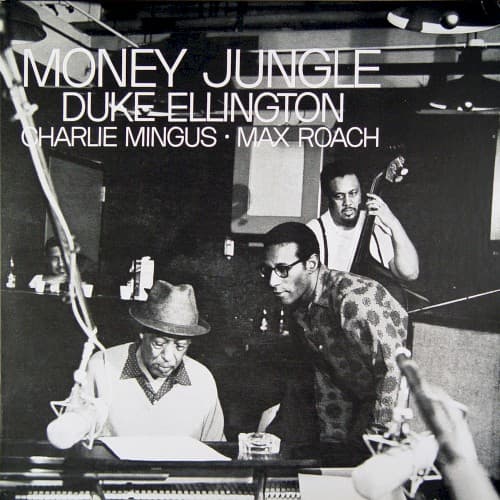
This Greenwich Village studio session brought Harlem tradition face-to-face with bebop's radical younger voices.
Visual Language
The candid studio shot follows Blue Note's documentary tradition while capturing interpersonal dynamics among collaborators.
Symbols
Ellington's casual fedora and V-neck
The elder statesman dresses down to meet the modernists on equal footing, signaling openness to generational dialogue.
Mingus positioned physically above
The bassist's elevated stance reflects his assertive musical voice and the vertical power dynamics at play.
Partially visible drum set
Roach remains partly obscured, suggesting the drummer's role as foundational force rather than visual centerpiece.
Where Sound Meets Image
The photograph's tension mirrors the album's creative friction, where Ellington's stride piano heritage collides with Mingus's volcanic bass lines and Roach's polyrhythmic explosions. The close physical proximity of the three musicians reflects the trio format's conversational intensity, particularly on tracks where Mingus's aggressive time-feel challenged Ellington's traditional swing. The visible concentration on each face hints at the real-time negotiation happening musically, as three strong personalities forged a synthesis between swing-era sophistication and post-bop aggression.
This cover established a template for presenting intergenerational jazz collaborations as serious artistic encounters rather than nostalgic celebrations. The documentary approach influenced how labels would photograph supergroup sessions throughout the 1960s, prioritizing authenticity over glamour. Its refusal to romanticize the studio environment anticipated the raw aesthetic that would dominate 1970s jazz photography.