The scorecard
8.2/10 · Great
- Composition20%
- 8.5
- Recording15%
- 9.0
- Performance30%
- 8.0
- Cohesion15%
- 7.5
- Originality10%
- 8.0
- Replay value10%
- 8.5
Jobim's compositions balance melodic sophistication with structural restraint, giving soloists frameworks that reward subtlety over display
Phil Ramone's recording at A&R Studios captures the intimate balance between Getz's tenor, Gilberto's whispered vocal, and the rhythm section with unusual clarity
Getz's warm tone adapts to the bossa nova pulse while Gilberto's nearly vibrato-free vocal and minimalist guitar define the album's delicate interplay
Eight tracks flow naturally but the two older sambas shift the mood slightly, and the brief runtime leaves the listener wanting more depth
The album introduced bossa nova to a mass audience but refines an established Brazilian style rather than inventing new ground
The restraint and space in these performances reveal new details on each listen, and the minimalism has aged better than many flashier jazz records
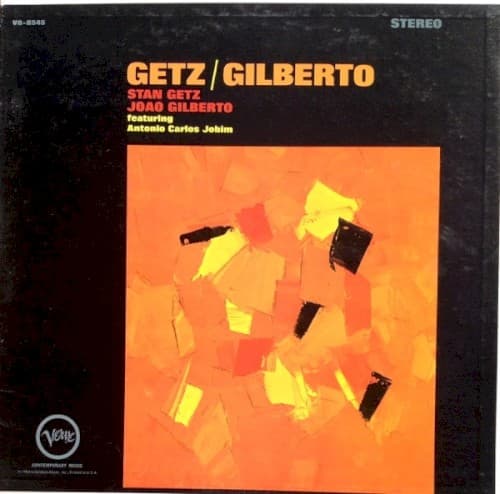
Stan Getz Getz/Gilberto — When Jazz Learned to Whisper
Getz/Gilberto works because it respects the silence. Where most jazz albums from 1964 chased volume and complexity, this collaboration between Stan Getz and João Gilberto left space for the rhythm to breathe, the melodies to land, and the solos to mean something. The thesis is audible in the first thirty seconds of "The Girl from Ipanema": Jobim's piano states the theme with no decoration, Milton Banana's brushes mark time without insisting, and when Getz enters his tone is warm but never loud.
The album proved that restraint could sell a million copies and win Album of the Year, but the commercial success has overshadowed what makes the record worth returning to sixty years later. This is not background music or a smooth-jazz blueprint. It is a document of musicians from two continents finding a shared language, and the tension between Getz's harder swing and Gilberto's delicate samba pulse is what gives the album its edge.
Bossa nova had been introduced in Brazil in 1958 and reached Carnegie Hall in 1962, but this March 1964 release on Verve was the record that made the genre unavoidable in North America. Producer Creed Taylor shelved the project for nearly a year, fearing commercial failure. He was wrong about the sales, but the album's reputation as a crossover hit has made it harder to hear what is actually on the tape: eight performances where less is more, and where the space between the notes does as much work as the notes themselves.
The Sound of Not Playing Too Much
The recording sessions at A&R Studios in March 1963 were completed in two days, and Phil Ramone's engineering captures the room in a way that rewards close listening. The balance between Getz's tenor saxophone, Gilberto's nylon-string guitar, Jobim's piano, Sebastião Neto's bass and Banana's drums is intimate without sounding small. Every instrument occupies its own space in the stereo field, and the absence of reverb or studio trickery lets the interplay speak for itself.
Jobim's piano work throughout the album is deliberately minimal, contributing only what the arrangement requires and stepping back when the vocal or Getz's tenor take the lead. This is not lazy accompaniment but a compositional choice, and it sets the tone for the entire session.
Getz adapts his usual approach to fit the bossa nova pulse, playing behind the beat and letting his phrasing breathe in ways his hard bop records never required. His tone is full and warm, but he resists the urge to dominate, trading the usual saxophone spotlight for a role closer to co-conspirator. The rhythm section locks into the bossa nova groove with Banana's brushes and light stick work on drums and pandeiro providing the gentle propulsion that keeps the album moving without ever pushing.
Gilberto's vocal style, nearly free of vibrato and delivered in a near-whisper, became a defining characteristic of bossa nova, and on this album his restraint forces the listener to lean in. Astrud Gilberto's two vocal turns add a different texture, her untrained delivery more conversational than her husband's, demonstrating the range of vocal jazz approaches within the bossa nova framework. The compositions by Jobim and his collaborators balance melodic sophistication with structural simplicity, giving Getz room to solo without demanding pyrotechnics.
Tracks like "Desafinado" and "Corcovado" present clear harmonic frameworks that reward subtlety, and Getz responds by playing melodies rather than racing through changes. The two older sambas, "Doralice" and "Para machucar meu coração", sit slightly apart from the Jobim compositions, their rhythms less smooth and their arrangements more polished, but they deepen the album's connection to Brazilian tradition.
The weakness is in the brevity. Eight tracks pass in just over half an hour, and while the pacing is deliberate, the album ends before it has fully explored the possibilities of the collaboration. There is no extended solo feature, no moment where Getz or Gilberto stretch out, and the result feels more like a statement of intent than a complete artistic document.
The disagreements between Getz and Gilberto during the sessions, with Gilberto reportedly frustrated by Getz's rhythmic approach, hint at a creative tension that could have been pushed further. Instead, producer Creed Taylor chose takes that emphasized smoothness over friction, and the album is cleaner and more polite than it might have been.
A Sequence That Ends Too Soon
The album opens with its most famous track and never quite escapes its shadow. The sequencing is logical, alternating between vocal and instrumental-led performances, but there is little dynamic variation across the runtime. The first stretch deepens the mood without shifting the energy, and by the closing run the listener is still waiting for a peak that never arrives.
The two older sambas in the middle of the tracklist provide the only real shift in texture, their rhythms slightly more insistent and their melodies less smooth, but they pass quickly and the album returns to its hushed tone. The pacing works because the performances are strong, but the lack of contrast makes the album feel shorter than its thirty-three minutes.
This is not an album that builds to a climax or takes the listener on a journey. It establishes a mood in the first two minutes and sustains it until the final note, and whether that is a strength or a limitation depends on what you came for.
Where It Stands and Who Needs It
Getz/Gilberto ranks as the essential Stan Getz bossa nova album and one of the few jazz records from the 1960s that crossed over without compromising. It introduced a global audience to bossa nova and launched Astrud Gilberto's career, but its influence has made it harder to hear on its own terms. This is not smooth jazz or easy listening; it is a document of musicians working at the edge of restraint, finding out how little they could play and still hold the room.
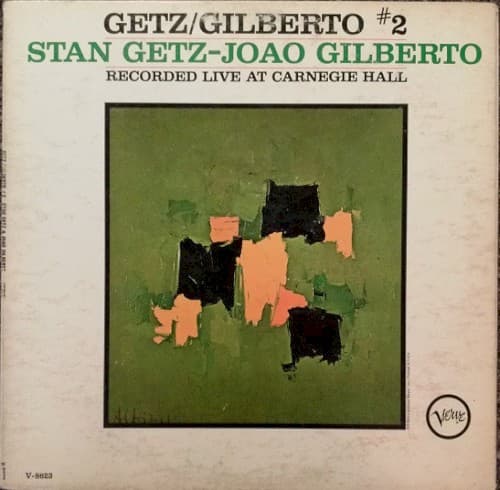
Compared to Getz/Gilberto #2 from 1966, which split the saxophonist and the guitarist onto separate sides due to their artistic differences, this album benefits from the friction between the two approaches. The sequel is competent but lacks the spark of the original, and the decision to keep Getz and Gilberto apart drains the energy.
For listeners new to bossa nova, start with the opening stretch to hear the interplay at its most focused, then move to the most famous track to understand why the album sold a million copies. Skip this if you want extended solos or dynamic range. The album is best suited to listeners who value melodic clarity, rhythmic subtlety, and the discipline to leave space unfilled.
For the next step, try João Gilberto's Chega de Saudade from 1959 to hear the source, or Jobim's own Stone Flower from 1970 to hear where the composer took these ideas after the bossa nova boom faded. Getz/Gilberto has aged better than most crossover jazz records because it never chased trends. It defined one, then moved on.
Track by track
Track Listing
The Girl from Ipanema
StandoutThe album's defining moment and its most famous track, featuring Astrud Gilberto's untrained but conversational vocal in English after João Gilberto's Portuguese verse. Getz's solo between the vocal sections is a model of melodic restraint, his tone warm and his phrasing unhurried, never pushing against the bossa nova pulse. The arrangement is spare, with Jobim's piano contributing only what is needed and the rhythm section maintaining the gentle sway that became the album's signature. The track won Record of the Year and launched Astrud Gilberto's career, but the commercial success has made it harder to hear the interplay that makes the performance work. The solo is short and the structure is simple, but every note is deliberate and the space between the phrases does as much work as the phrases themselves. This is the template for the rest of the album, and nothing that follows quite escapes its influence.
Doralice
SolidAn older samba composed before the bossa nova era, arranged here with more polish and a slightly more insistent rhythm than the Jobim tracks that surround it. João Gilberto's vocal is more animated than elsewhere on the album, and the melody has a brightness that contrasts with the hushed tone of the opening track. Getz's solo is brief and stays close to the theme, respecting the song's structure without imposing his own ideas. The track serves as a reminder of the Brazilian tradition that bossa nova grew from, and its inclusion deepens the album's connection to samba history, but it sits slightly apart from the surrounding material.
Para machucar meu coração
StandoutThe second pre-bossa nova samba, slower and more melancholic than "Doralice", with Gilberto's vocal at its most intimate. The melody is simple and the harmonic movement is minimal, giving the performance a meditative quality that fits the album's overall restraint. Getz's tenor adds color without drawing attention, his phrases echoing the vocal line and extending its mood. The rhythm section is barely there, Banana's brushes and Neto's bass providing just enough pulse to keep the track moving. This is one of the quieter moments on an already quiet album, and it works because everyone involved resists the urge to fill the space.
Desafinado
StandoutOne of the strongest performances on the album, with Getz and Gilberto finding the balance between the saxophonist's warmer tone and the guitarist's delicate pulse. The melody is more complex than "The Girl from Ipanema", its harmonic movement requiring more attention from the soloists, and Getz responds with a solo that follows the changes without racing through them. Gilberto's vocal is precise and nearly free of vibrato, his phrasing locked into the rhythm in a way that makes the song's title, which translates to "out of tune", feel ironic. Jobim's piano is minimal, stating the chords and stepping back, and the rhythm section maintains the bossa nova groove without insisting. This is the track that best demonstrates what the collaboration could do when everyone was listening to each other, and it holds up better than the album's more famous moments.
Corcovado
StandoutAstrud Gilberto's second vocal feature, performed in both Portuguese and English, with a melody that moves in longer phrases than the other tracks. The arrangement is spacious, with Getz's tenor entering after the vocal and playing a solo that stretches out more than elsewhere on the album. His tone is full and his phrasing is relaxed, and the interplay with the rhythm section is looser and more conversational than on the more structured tracks. The English lyrics by Gene Lees fit the melody naturally, and Astrud Gilberto's delivery is more confident here than on "The Girl from Ipanema", though still conversational rather than polished. The track is one of the album's longest and one of its most successful, giving the musicians room to develop ideas without rushing.
Só danço samba
SolidA slightly faster tempo and a more rhythmically insistent groove than the surrounding tracks, with Gilberto's vocal more animated and Getz's solo more energetic. The melody is catchy and the arrangement is looser, with the rhythm section pushing the pulse in a way that makes the track feel less restrained than the rest of the album. Getz's tone is still warm but his phrasing is more assertive, and the interplay between the tenor and the guitar is more conversational. This is the closest the album comes to swing, and it works as a change of pace, but it also highlights how much of the album's strength comes from its restraint. The track is solid but not essential.
O grande amor
SolidA quieter return to the album's hushed tone, with Gilberto's vocal at its most intimate and the arrangement stripped back to just guitar, bass, light drums and occasional piano. Getz's solo is brief and stays close to the melody, and the rhythm section is barely audible, providing texture rather than propulsion. The track is pretty but slight, and it feels like an interlude rather than a fully developed performance. The melody is simple and the harmonic movement is minimal, and while the restraint is consistent with the rest of the album, the brevity makes it feel like a missed opportunity.
Vivo sonhando
SolidThe closing track, instrumental except for some wordless vocal phrases from Gilberto, with a melody that feels like a lullaby. Getz's tenor carries most of the performance, his tone warm and his phrasing at its most relaxed, and the rhythm section maintains the gentle pulse without drawing attention. Jobim's piano is minimal, and the arrangement is the sparsest on the album, with long stretches where only the tenor and the rhythm section are audible. The track is a quiet ending to a quiet album, and it works as a closing statement, but it also underscores the album's lack of dynamic range. Nothing builds, nothing peaks, and the album ends where it began.