The scorecard
7.8/10 · Great
- Composition20%
- 8.0
- Recording15%
- 7.5
- Performance30%
- 7.0
- Cohesion15%
- 8.5
- Originality10%
- 9.0
- Replay value10%
- 8.0
The standards are impeccably chosen, eight American Songbook ballads in the same emotional register, sequenced to sustain one mood without variation.
Dick Bock's recording is clean and balanced, piano and bass audible throughout, the room quiet enough to foreground Baker's fragile delivery without making it feel exposed.
Baker sings barely in tune and often behind the beat, but the wavering pitch and detached phrasing create an intimacy that compensates for the lack of control.
Twenty-three minutes, eight tracks, same tempo range, no filler: the brevity and consistency make it feel like one long statement rather than a collection of takes.
The first jazz vocal album to make technical limitation into an aesthetic, predating bossa nova's conversational style and redefining what jazz singing could sound like.
The fragility that makes the first listen so striking holds up because the material is strong and the mood never breaks, though the sameness tests patience after repeated plays.
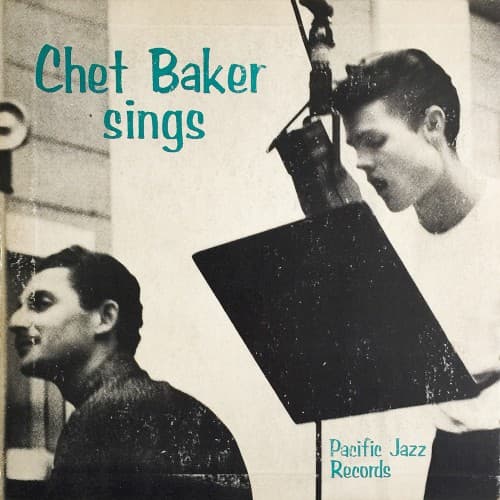
Chet Baker Sings — How Fragility Became a Style
The argument against Chet Baker as a vocalist was straightforward: he could not sing. Producer Dick Bock required numerous takes on every song because Baker struggled to stay in key. Pianist Russ Freeman, who selected several of the songs, later dismissed the project outright, contrasting it with the jazz phrasing of Louis Armstrong and Jack Teagarden. Metronome's review compared Baker's vocal coordination to a four-month-old baby learning to walk. Yet Chet Baker Sings became a financial success, a Grammy Hall of Fame inductee, and an influence on bossa nova that Baker himself would not learn about until he played Brazil decades later. The question is not whether Baker could sing by conventional standards—he could not—but whether the album works in spite of that limitation, or because of it.
The thesis here is that Baker made technical deficiency into an aesthetic, and the album succeeds because it commits fully to that aesthetic without apology. The eight tracks are all American Songbook ballads in the same emotional register, sequenced to sustain one unvarying mood across twenty-three minutes. Baker sings them in a near-whisper, wavering in pitch, often behind the beat, treating melody as suggestion rather than obligation. His wife Ruth Young later said he sang from a musical place and the words were mere notes to him, which explains the detachment: these performances are not about lyric interpretation but about Baker's voice as an instrument in the arrangement.
Freeman's piano and the rhythm section provide the harmonic stability Baker does not, and Bock's clean recording keeps the balance tight enough that the fragility reads as intimacy rather than incompetence. The reception was polarized—critics called the voice fey and effete, conflicting with the macho stereotypes of male jazz singers—but DownBeat readers named him best vocalist in 1954, above Nat King Cole. The album found its audience despite, or perhaps because of, how little it sounded like anything else.
Room Tone and the Limits of Pitch
The production on Chet Baker Sings is functional and deliberate. Dick Bock recorded the album in Hollywood with a small group—Russ Freeman on piano and celesta, Carson Smith or Joe Mondragon on bass, Bob Neel on drums—and the engineering is dry and present, no reverb to hide behind. The balance puts Baker's voice slightly forward but not isolated; Freeman's piano is audible in both hands throughout, and the bass is clear enough that the harmonic movement does the work Baker's pitch does not. When Baker drifts flat or sharp, which happens on nearly every track, the piano anchors the tonality and the arrangement continues undisturbed. The room sound is controlled, with minimal bleed and no audible edits, which suggests Bock spliced takes together but kept the transitions clean. The result is a recording that sounds intimate without feeling raw, polished without sounding processed.
Baker's vocal technique is limited in ways that would disqualify most singers. He does not support his breath consistently, which makes his tone thin and unsteady. His phrasing is often behind the beat, sometimes by a full count, which creates space in the melodic line but also makes the rhythm section sound like it is waiting for him. His intonation wanders, particularly on sustained notes and at phrase endings, where he tends to drop in pitch as his air runs out.
Freeman later said the sessions were bullshit, and the background musicians reportedly grew frustrated with the number of takes required. What keeps the album from collapsing under these limitations is the choice of material and the consistency of approach. The eight standards are all slow ballads with simple melodic contours, which minimizes the demands on Baker's range and agility. The tempos are uniformly slow, which gives him time to place each phrase deliberately even when he is behind the beat.
The performances are arranged identically: piano intro, vocal, brief instrumental bridge, vocal out, all within three minutes. The sameness is the point. The album establishes a mood in the first thirty seconds and never deviates, which turns the technical weaknesses into texture.
The weakness is that the album offers no variation. Every track is the same tempo, the same dynamic, the same emotional register, and the same arrangement. There is no uptempo number, no moment of swing or rhythmic lift, no contrast to make the ballads feel more tender. The sequencing does no work beyond grouping eight similar performances together. By the halfway point the uniformity begins to feel less like commitment and more like limitation, and by the end it is clear that Baker's range as a vocalist, at this stage, was narrow. The album earns its length by staying brief—twenty-three minutes is exactly the duration this approach can sustain—but it does not leave the listener wanting more songs in this mode.
Eight Tracks, One Arc
The album has no arc. It opens with the first track, sets a mood, and holds it for twenty-three minutes without deviation. There are no peaks or valleys, no sequencing choices that create contrast or build toward a climax. Each track is self-contained, and the transitions between them are inaudible because there is nothing to transition between: the tempo stays slow, the instrumentation stays the same, and Baker's vocal approach does not vary.
The consistency is the album's structural idea, and it works because the length is short enough that the sameness does not wear out its welcome. A ten-inch LP in 1954 could hold roughly twenty-five minutes per side; Chet Baker Sings fills one side and ends. That brevity is a feature, not a bug. The album does not overstay its premise.
The placement of the signature song in the fourth slot is the only sequencing choice that matters. It sits early enough in the running order to announce itself without being buried. Beyond that, the order is arbitrary. The album does not build or resolve; it simply is. Whether that reads as unity or monotony depends on the listener's tolerance for a single mood sustained across eight tracks.
First in the Catalog, First of Its Kind
Chet Baker Sings ranks first in Baker's catalog by default—it is the only album of his rated on the site—but its importance is not just historical. This is the album that defined Baker as a vocalist and established a template he would return to for the rest of his career. It is also the album that influenced bossa nova's conversational vocal style, a fact Baker did not learn until he played Brazil in 1980. The album works because it commits fully to an aesthetic that no one else was attempting in 1954: singing as texture, voice as a fragile instrument in the arrangement rather than the lead. The technical limitations are real—Baker could not sing in tune, could not project, could not phrase like a jazz singer in the Armstrong or Teagarden mold—but the album succeeds by making those limitations the point. The detachment that his wife Ruth Young described, the sense that the words were mere notes to him, is what gives the performances their strange intimacy.
This album is for listeners who want to hear where the cool jazz vocal aesthetic began, and for anyone curious about an album that became a foundational text for Brazilian music despite being made in Hollywood by a white trumpeter who had barely sung before. It is not for listeners who expect vocal virtuosity or dynamic range. Start with "My Funny Valentine" and "Time After Time," which show the approach at its most effective, then move to "I Fall in Love Too Easily" for the slightly more relaxed phrasing of the earlier session. Skip it if you need variety or swing. The album that comes next depends on what you are looking for: if you want more of this, the sequel Chet Baker Sings and Plays expands the idea; if you want to hear Baker as a trumpeter first, go back to the earlier Pacific Jazz sessions with Gerry Mulligan. Chet Baker Sings remains the consistent best seller in Baker's discography because it captured something that did not exist before: a jazz vocal album that treated fragility as strength.
Track by track
Track Listing
But Not for Me
SolidThe album opens with the thesis statement. Baker's voice enters thin and unsupported, wavering in pitch from the first phrase, and Freeman's piano provides the harmonic grounding that Baker's vocal line does not. The phrasing is behind the beat, which creates space in the melody but also makes the rhythm section sound like it is waiting. The detachment is immediate: Baker sings the lyric as if he is reading melody off a chart, with no interpretive inflection. The arrangement is spare—piano, bass, drums, no trumpet—and the brevity keeps the performance from overstaying the idea. It sets the template for the next seven tracks.
Time After Time
StandoutThe phrasing here is slightly more relaxed than the opener, with Baker placing some phrases ahead of the beat rather than consistently behind it. Freeman's piano intro establishes the harmonic progression clearly, and the bass line is more audible in the mix, which helps anchor the tonality when Baker drifts flat on the sustained notes. The lyric is about memory and repetition, and Baker's detachment makes it sound like he is singing about something that happened to someone else. The vocal melody stays in a narrow range, which minimizes the demands on Baker's limited technique, and the performance ends before the sameness becomes monotonous.
My Funny Valentine
StandoutThis became Baker's signature song, the track he would perform in concert for the rest of his career, and the recording shows why. The tempo is slower than the previous tracks, which gives Baker more time to place each phrase, and the melody sits comfortably in the middle of his range where his pitch is most stable. Freeman's piano accompaniment is sparse, often leaving Baker's voice exposed against bass and drums, and the arrangement builds to a brief instrumental bridge before the vocal returns for the final phrase. The fragility that elsewhere sounds like limitation here sounds like vulnerability, and the two minutes twenty-one seconds feel complete rather than truncated. It is the strongest performance on the album, and the one that best demonstrates how Baker's weaknesses could function as strengths when the material was right.
I Fall in Love Too Easily
StandoutOne of the two tracks recorded earlier, in October 1953, and the slightly different rhythm section does not change the approach. Baker's phrasing is more conversational here, less bound to the written melody, and the lyric about falling in love quickly maps onto the way Baker treats each phrase as if he is discovering it in the moment. The performance is longer than most of the other tracks, stretching past three minutes, and the extra length allows Freeman to take a brief solo in the middle that provides harmonic contrast without breaking the mood. The vocal return after the piano solo is quieter, almost a whisper, and the dynamic drop works because the recording is intimate enough to support it.
There Will Never Be Another You
SolidThe tempo picks up slightly here, though it remains a ballad, and the change in pace provides the first hint of variation on the album. Baker's pitch wanders more noticeably on the chorus, particularly on the long notes at phrase endings, and Freeman's piano fills the gaps with chord voicings that pull the tonality back into focus. The rhythm section is more present in the mix, with the bass walking a clearer line, which makes the track feel more like a standard jazz ballad and less like a vocal showcase. The performance is solid but less distinctive than the earlier tracks, and the three-minute runtime feels slightly padded compared to the tighter performances elsewhere.
I Get Along Without You Very Well
SolidThe lyric is about independence after a breakup, but Baker sings it with the same detachment he brings to every other track, which drains the irony out of the title. The phrasing is behind the beat again, and the piano intro and outro are nearly identical, which makes the track feel like a loop. Freeman's celesta appears briefly in the arrangement, adding a slightly brighter timbre to the texture, but the effect is subtle and does not change the overall mood. The performance is competent but inessential, one of the weaker tracks on an album with little variation to begin with.
The Thrill Is Gone
SolidThe second of the two tracks recorded in October 1953, and the arrangement is slightly fuller than the later sessions, with the rhythm section more active in the accompaniment. Baker's vocal is more rhythmically engaged here, landing closer to the beat, and the melody has more contour than some of the other standards on the album. The lyric is about disillusionment, and Baker's flat affect makes it sound resigned rather than bitter, which works for the material. The performance is stronger than the previous two tracks but still falls short of the album's best moments. The brevity is a mercy.
Look for the Silver Lining
WeakThe album closes with the least convincing performance. The lyric is about optimism, and Baker's detachment makes it sound hollow, as if he is singing a jingle rather than a standard. The melody has a slightly wider range than the other tracks, and Baker struggles more noticeably with pitch on the higher notes, dropping flat as he runs out of breath. Freeman's piano outro is the most extended instrumental passage on the album, nearly thirty seconds, and it provides a stronger close than the vocal does. The track ends the album on a weak note, but the album is brief enough that the final impression does not undo the stronger performances earlier.