Style & Context
Influences
Hollywood poster design, magazine advertising photography, midcentury graphic modernism
Location
This aesthetic reflects the aspirational nightclub culture where suburban couples dressed up for Saturday evenings downtown.
Visual Language
The overlapping photographic elements create depth while the monochromatic wash unifies disparate images into cohesive storytelling.
Symbols
Layered portrait technique
Sinatra's larger image watching over the dancing couple positions him as both performer and romantic guide.
Dancing couple in formal attire
The tuxedo and cocktail dress represent aspirational sophistication accessible to postwar middle-class Americans.
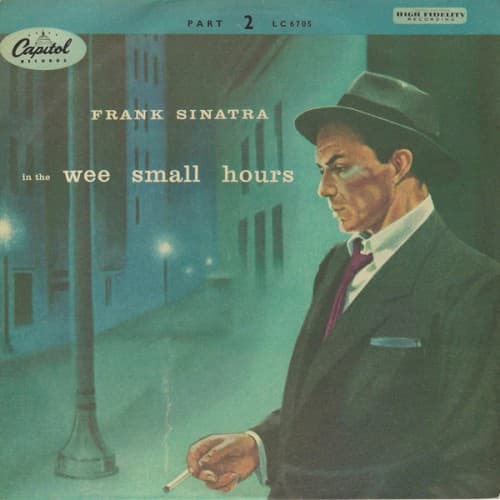
Sinatra's tilted fedora
The rakish hat angle signals relaxed confidence and the performer's signature casual elegance and charm.
Where Sound Meets Image
The layered design mirrors the album's arrangement approach—Nelson Riddle's lush orchestrations supporting but never overwhelming Sinatra's intimate vocal delivery. The dancing couple visualizes the album's swinging tempos and romantic lyrics, from 'You Make Me Feel So Young' to 'I've Got You Under My Skin.' The warmth of the color palette matches Sinatra's vocal tone during this peak period—confident, sensual, and effortlessly inviting. The cover promises exactly what the grooves deliver: music for romance and movement.
This cover established Capitol Records' visual vocabulary for Sinatra's classic period and influenced decades of romantic album packaging. The photographic montage technique became standard for vocal albums aiming to convey both the artist's personality and the music's emotional promise. The design's warm, monochromatic approach anticipated the sophisticated minimalism that would dominate jazz packaging in the late 1950s while maintaining mass appeal.