Style & Context
Influences
psychedelic poster art, Eastern spiritual iconography, cosmic jazz aesthetics, early prog rock packaging
Location
The cover reflects the spiritual seeking prevalent in early 1970s counterculture, when jazz musicians adopted Indian gurus and cosmic consciousness.
Visual Language
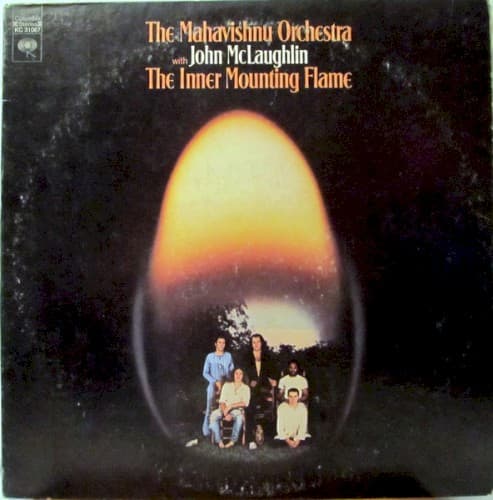
The composite merges documentary band photography with mystical overlay, creating a visual bridge between rock presentation and devotional art.
Symbols
Egg-shaped flame aura
The ovoid form represents birth, cosmic creation, and the contained explosive potential of consciousness expanding through improvisation.
Five seated musicians
The band assumes meditative postures beneath the flame, positioning themselves as vessels channeling universal energy rather than ego-driven performers.
Darkness surrounding the flame
The infinite black void represents the unknown musical territory fusion was entering, with the flame as a beacon.
Where Sound Meets Image
The flame's contained violence mirrors McLaughlin's guitar playing—technically controlled yet explosively powerful, capable of searing runs that never lose compositional logic. The egg shape suggests the incubation of new forms, which the album delivered through its unprecedented blend of Indian rhythms, jazz harmonies, and rock intensity. The meditative positioning of the band beneath the flame reflects the spiritual discipline required to execute the complex rhythmic patterns and tempo shifts throughout the recording. The darkness surrounding the light parallels the album's dynamic range, from Billy Cobham's thunderous drum work to moments of delicate interplay between McLaughlin's guitar and Jerry Goodman's violin.
This cover established visual vocabulary for spiritual jazz-rock, influencing how fusion albums communicated elevated consciousness through cosmic imagery rather than nightclub sophistication. The combination of mystical symbolism with straightforward band photography created a template that Return to Forever, Weather Report, and other fusion acts would adapt throughout the 1970s. Its success demonstrated that jazz packaging could embrace psychedelic aesthetics without compromising artistic credibility.