The Seismic Force That Redefined Jazz's Boundaries in the 1970s
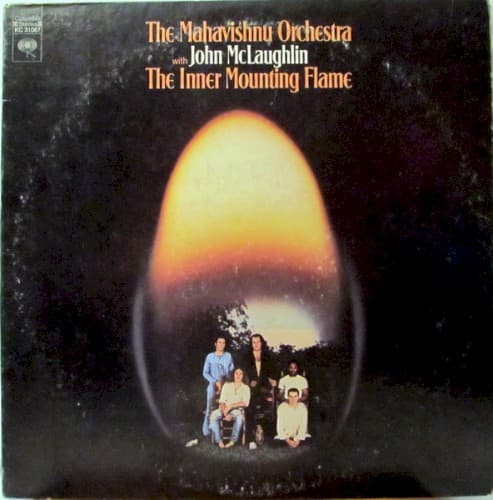
When Mahavishnu Orchestra released The Inner Mounting Flame in 1971, the resulting sonic explosion left audiences uncertain whether they'd witnessed a rock concert, a spiritual awakening, or a jazz revolution. The answer was all three. Led by British guitarist John McLaughlin fresh from sessions with Miles Davis on Bitches Brew, this quintet didn't just blend jazz and rock—they created something ferociously new, a high-velocity fusion powered by Indian classical philosophy and executed with conservatory precision. Where Weather Report floated and Herbie Hancock grooved, Mahavishnu attacked.
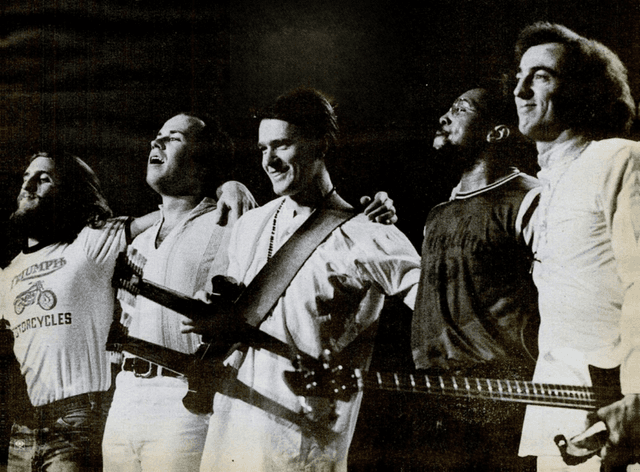
The original lineup—McLaughlin on guitar, violinist Jerry Goodman, keyboardist Jan Hammer, bassist Rick Laird, and drummer Billy Cobham—became one of the most technically formidable units in jazz history. Their music demanded everything: the harmonic sophistication of bebop, the volume and energy of hard rock, the odd-meter complexity of Indian tala cycles, and the spiritual intensity of Coltrane's later work. This wasn't background music for cocktail lounges. This was jazz that could fill stadiums and bend minds.
Born from the cultural ferment of early-seventies America—where spiritual seeking, psychedelic consciousness, and musical boundary-breaking converged—Mahavishnu Orchestra existed at a precise moment when such radical synthesis felt both possible and necessary. Their five-year run left an indelible mark on how musicians thought about genre, virtuosity, and the spiritual possibilities of electrified improvisation.
Precision Intensity: The Mahavishnu Sound of Controlled Combustion
The Mahavishnu Orchestra approach centered on a paradox: absolute compositional control married to explosive improvisational fire. McLaughlin wrote pieces in 11/8, 19/16, and other meters that defied rock's four-four foundation, yet the band navigated these rhythmic labyrinths at blistering tempos without losing the visceral punch of amplified rock. Jan Hammer's Moog synthesizer screamed and wailed like a second guitar, while Goodman's amplified violin added a keening, almost vocal dimension that no other fusion group possessed.
The sonic signature was built on layers of distortion and speed. McLaughlin's guitar tone—searing, sustained, heavily overdriven through a Marshall stack—became the template for fusion guitar vocabulary. His phrasing drew from flamenco's rapid-fire articulation, blues bending, and the scalar runs of Indian classical music, all executed with a picking technique that could sustain note densities approaching the physically impossible. Cobham's drumming provided the engine: massive tom fills, explosive cymbal crashes, and a bass drum technique influenced by Indian tabla patterns that gave even the most complex passages a driving, danceable pulse.
What separated Mahavishnu from mere technical showmanship was the spiritual intent. McLaughlin, a devotee of guru Sri Chinmoy, conceived these performances as offerings, acts of transcendence through sound. The music's intensity wasn't aggression for its own sake—it was ecstatic, an attempt to achieve through volume and velocity what Coltrane pursued through extended modal exploration. Listening to The Inner Mounting Flame feels less like hearing a jazz record and more like witnessing musicians attempt to shatter the membrane between material and spiritual realms using only amplified instruments.
From Miles's Shadow to Stadium Fusion: Mahavishnu's Meteoric Arc
John McLaughlin arrived in New York in 1969, quickly becoming Miles Davis's first-call guitarist for the electric experiments that would yield In a Silent Way and Bitches Brew. But McLaughlin heard something beyond Miles's atmospheric electric explorations—a fusion that could be both more aggressive and more spiritually directed. After meeting Sri Chinmoy and receiving the spiritual name "Mahavishnu," McLaughlin assembled his orchestra with a specific vision: musicians who could read complex notation, improvise at the highest level, and commit to the spiritual discipline the music demanded.
The Inner Mounting Flame, recorded in just three days in August 1971, announced their arrival with uncompromising force. Tracks like "Meeting of the Spirits" and "The Noonward Race" married composed complexity to improvisational fire, while "A Lotus on Irish Streams" showed the band could also access delicate lyricism. The album's 8.8 rating reflects its status as a landmark—not just in fusion but in demonstrating that jazz's vocabulary could absorb rock's power without diluting its sophistication. Columbia Records barely knew how to market it, but word spread through underground networks and the album found its audience among both jazz heads and progressive rock fans.
Birds of Fire followed in 1972, pushing the formula even further. The title track became a fusion anthem, its unison melody and metric shifts establishing a new standard for technical ensemble playing. The album reached number 15 on the Billboard charts—extraordinary for music this challenging. Mahavishnu Orchestra began headlining major venues, bringing jazz fusion to audiences who'd never attended a jazz concert. They represented something genuinely new: a jazz band that could compete with rock acts on sheer volume and spectacle while maintaining improvisational credibility.
But the intensity that made the music couldn't be sustained in the personalities. By 1973, internal tensions—over musical direction, Sri Chinmoy's growing influence, and the pressure of constant touring—began fracturing the original lineup. Between Nothingness & Eternity, recorded live in Central Park, captured the band at their peak power but also marked the beginning of the end. Cobham and Goodman departed, replaced by a rotating cast that included violinist Jean-Luc Ponty. The second-era albums—Apocalypse with the London Symphony Orchestra and Visions—explored orchestral integration but lacked the original quintet's combustive chemistry.
By 1976, McLaughlin dissolved the project, exhausted by the demands of leading such an intense operation. Brief reunions occurred in the eighties, but the essential statement had been made. Mahavishnu Orchestra existed as a supernova—brilliant, brief, and impossible to sustain indefinitely. The original quintet's three studio albums remain the definitive statement, a concentration of virtuosity and vision that changed what jazz fusion could mean.
The Mahavishnu Mutation: How One Band Rewired Jazz's DNA
Mahavishnu Orchestra's influence radiates through multiple generations and across genre boundaries. For jazz, they proved that fusion needn't mean dilution—that incorporating rock's energy and volume could expand rather than compromise jazz's core values of improvisation and harmonic sophistication. Every guitarist who followed—from Al Di Meola to John Scofield to modern fusion players—inherited McLaughlin's vocabulary of sustained distortion, rapid scalar runs, and the possibility of using guitar as a vehicle for spiritual expression.
The impact extended beyond jazz into progressive rock. Bands like Yes, King Crimson, and later Dream Theater absorbed Mahavishnu's lessons about odd-meter composition and technical precision as aesthetic values. The whole progressive metal movement—with its synthesis of extreme technique and complex composition—can trace lineage back to Birds of Fire. Even outside these direct descendants, the idea that instrumental virtuosity could be emotionally expressive rather than merely demonstrative owes much to how Mahavishnu Orchestra balanced technical mastery with spiritual urgency.
Billy Cobham's drumming approach—massive, tom-heavy, incorporating Indian rhythmic concepts into a rock framework—became foundational for fusion drummers. Jan Hammer's synthesizer work anticipated the eighties fusion sound while maintaining a rawness later players often polished away. The mere presence of amplified violin in a rock-adjacent context opened doors for string players to imagine themselves in high-energy settings.
Perhaps most significantly, Mahavishnu Orchestra demonstrated that jazz could be physically powerful without sacrificing intellectual content, that music could serve spiritual purposes while sounding absolutely ferocious. They inhabited a space between Coltrane's transcendent searching and rock's visceral impact, proving these impulses weren't contradictory but could fuel each other. The sheer intensity of their commitment—to the music, to the moment, to the spiritual dimension they believed sound could access—remains their most enduring legacy. They showed a generation of musicians that playing with absolute conviction at maximum intensity could be its own form of truth.