Style & Context
Influences
Indian devotional imagery, Black Power portraiture, psychedelic album aesthetics
Location
Released when Detroit and New York jazz communities were exploring modal forms and rejecting commercial pressures for accessible formats.
Visual Language
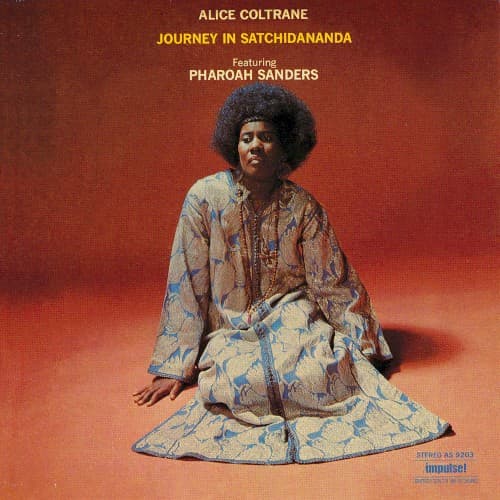
The studio setup borrows from spiritual iconography while maintaining the directness of documentary photography favored in early-seventies jazz.
Symbols
Seated meditation posture
Coltrane assumes the classical yogic position, signaling her study under Swami Satchidananda and rejection of Western performance conventions.
Patterned ceremonial robes
The flowing garments blend Indian textile motifs with African diasporic dress, visualizing the album's East-meets-Black-America fusion.
Gradient sky background
The photographic limbo space removes earthly context, positioning Coltrane in a realm between material and spiritual dimensions.
Where Sound Meets Image
The meditative stillness mirrors the album's spacious modal compositions built on tanpura drones and shimmering harp. Coltrane's centered posture reflects the music's suspension of Western time signatures in favor of breath-based phrasing. The warm color field matches the album's timbral glow created by Pharoah Sanders' soprano saxophone floating over rhythmic cycles. Just as the cover removes worldly context, the music dissolves jazz convention into devotional sound.
This cover established visual language for spiritual jazz that persists in contemporary reissues and new age packaging. The presentation of a Black woman as spiritual authority influenced how female jazz artists could control their visual representation beyond sexualized imagery. Modern artists exploring Afrofuturism and jazz meditation reference this aesthetic of seated power and chromatic transcendence.