Style & Context
Influences
Hieronymus Bosch, Salvador Dalí, Afro-Caribbean mysticism, psychedelic poster art
Location
Columbia Records took a massive risk approving this gatefold, knowing it would alienate traditional jazz audiences completely.
Visual Language
Klarwein's meticulous airbrush technique creates seamless impossible juxtapositions that feel both ancient and futuristic simultaneously.
Symbols
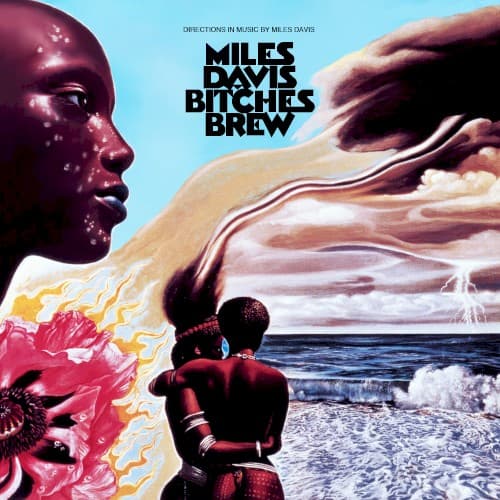
Embracing couple gazing seaward
The intimate pair represents the merging of musical traditions and the spiritual journey into uncharted sonic territory.
Disembodied face in profile
The floating visage symbolizes Miles Davis himself, overseeing the creative chaos like a cosmic conductor of change.
Hibiscus flower with radiating tendrils
The organic bloom exploding into electric filaments visualizes acoustic jazz transforming into electrified fusion.
Where Sound Meets Image
The collage's layered, overlapping elements mirror the album's dense polyrhythmic texture, where multiple electric keyboards, guitars, and percussion weave together without traditional structure. The dreamlike quality captures the hypnotic modal vamps that stretch across entire sides, while the vibrant color clashes echo the album's jarring timbral contrasts between electric and acoustic instruments. The couple's forward gaze toward the turbulent ocean visualizes tracks like 'Spanish Key' and 'Miles Runs the Voodoo Down,' where relentless grooves propel the music into unknown waters.
Bitches Brew's cover shattered the Blue Note and Prestige aesthetic that dominated jazz packaging, proving album art could be as experimental as the music. Klarwein's work influenced countless fusion and progressive rock covers throughout the 1970s, from Santana's Abraxas to Weather Report's I Sing the Body Electric. The gatefold's visual ambition set expectations that jazz could compete with rock for cultural relevance and commercial success.