Style & Context
Influences
American landscape photography, ECM visual identity, minimalist composition
Location
This cover announced a new chapter for jazz guitar beyond urban bebop traditions.
Visual Language
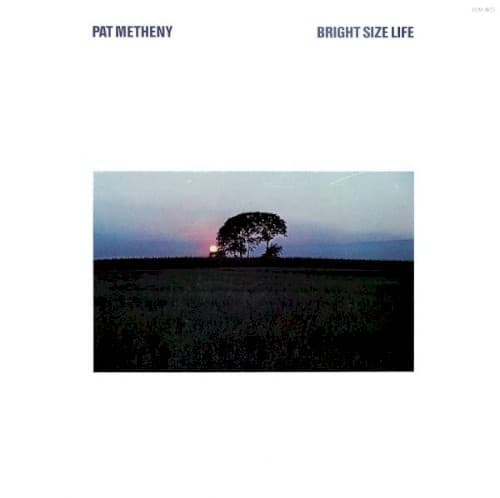
The centered composition and naturalistic color capture ECM's house style of austere beauty.
Symbols
Solitary tree
The single tree represents Metheny's individual voice emerging from the open jazz landscape.
Horizon line placement
The low horizon emphasizes sky over earth, suggesting endless melodic possibilities and freedom.
Twilight timing
The transitional light captures the album's position between traditional jazz and new directions.
Where Sound Meets Image
The tree's solitary stance mirrors the album's guitar-bass-drums trio format, where each voice has room to breathe. The twilight palette reflects Metheny's harmonic approach on tracks like the title song, where bright major tonalities emerge from darker modal foundations. The vast sky suggests the open-ended improvisations and the spacious interplay between Metheny, bassist Jaco Pastorius, and drummer Bob Moses. The landscape's stillness captures the album's lyrical restraint and rejection of fusion's electric density.
This cover established the visual vocabulary for Metheny's career and reinforced ECM's reputation for treating albums as art objects. The rural landscape photography became a template for presenting contemporary jazz as introspective and intellectual. Later guitar albums would reference this minimalist approach, using natural imagery to signify authenticity and compositional sophistication over technical showboating.