The Multi-Instrumentalist Who Expanded Jazz's Vocabulary
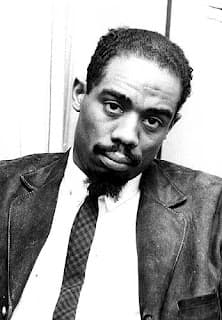
Eric Dolphy compressed a lifetime of innovation into barely half a decade of major label recording. Between 1960 and his sudden death in 1964, the Los Angeles-born woodwind player permanently altered what was considered possible on alto saxophone, bass clarinet, and flute — instruments he approached with equal virtuosity and radical imagination. Where most jazz musicians of the early 1960s chose specialization, Dolphy moved fluidly between reeds, treating each instrument as a distinct voice capable of sounds the jazz world had never heard.
His technical command allowed him to pursue musical ideas that seemed impossible. Dolphy drew from bird calls, twentieth-century classical composition, and the outer limits of bebop harmony to create a language that sounded simultaneously ancient and futuristic. Working alongside Charles Mingus, John Coltrane, and Ornette Coleman during their most adventurous periods, he became the connective tissue between hard bop's rhythmic drive and free jazz's wide-open spaces. He died in Berlin at thirty-six from undiagnosed diabetes, leaving behind a relatively small but seismically influential catalog.
Dolphy's music divided audiences during his lifetime. Critics accused him of playing "anti-jazz," while fellow musicians recognized a master expanding the tradition rather than abandoning it. His intervals were wider, his phrasing more angular, his tonal palette more varied than convention allowed. Decades later, that controversial approach reads as visionary — the work of someone who understood jazz not as a fixed style but as a constantly evolving conversation.
Redefining Reed Instruments Through Extended Technique and Intervallic Freedom
Dolphy's alto saxophone work retained bebop's rhythmic intensity while demolishing its harmonic boundaries. He favored wide interval leaps that defied singable melody, constructing lines that zigged where listeners expected resolution. His tone was bright and cutting, with a directness that made every note count. Unlike the smooth-toned approach dominating West Coast jazz of his youth, Dolphy embraced rawness, allowing squeaks, honks, and overtones to become expressive tools rather than mistakes to avoid. His solos felt conversational yet unpredictable, as if he were translating a private internal logic into sound.
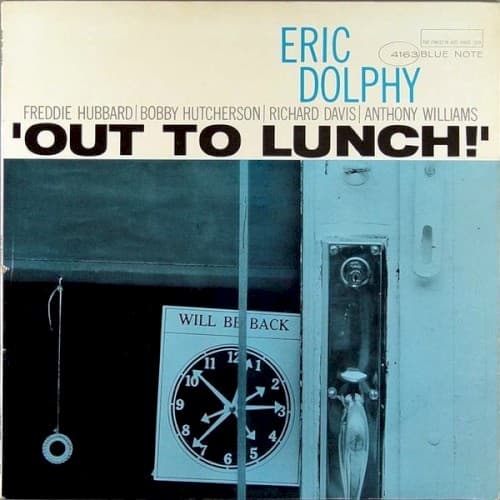
On bass clarinet, Dolphy became jazz's first true master of an instrument previously relegated to ensemble textures. He discovered a lower register capable of guttural growls and singing lyricism within the same phrase. His bass clarinet solos on albums like 'Out to Lunch!' moved with shocking agility, navigating the horn's unwieldy physics to create lines as fluid as anything he played on alto. The instrument's woody, reedy timbre gave his music an almost orchestral dimension, a voice that could anchor ensembles or float above them.
His flute playing drew heavily from non-Western sources and the natural world. Dolphy studied bird songs with scientific attention, incorporating their pitch bends and rhythmic patterns into his improvisations. This wasn't mere mimicry but translation — finding the musical logic in avian communication and applying it to jazz structures. His flute tone was full-bodied rather than breathy, articulating rapid passages with clarinetist precision. Combined with his willingness to explore microtonality and extended techniques across all three instruments, Dolphy created a sonic fingerprint impossible to mistake for anyone else.
From West Coast Foundations to European Tragedy: A Compressed Creative Arc
Eric Allan Dolphy grew up in Los Angeles during the 1930s and 40s, studying music formally from childhood. His early training included classical clarinet and saxophone, providing the technical foundation for later innovations. He spent the 1950s working in Los Angeles jazz circles, gigging with local bands and developing his approach largely outside the New York spotlight. This West Coast apprenticeship gave him time to absorb bebop's vocabulary while beginning to question its harmonic assumptions.
His national breakthrough came through Charles Mingus, who recognized Dolphy's ability to navigate complex written arrangements while improvising with absolute freedom. Joining Mingus's working band in 1959 placed Dolphy in an environment that demanded both compositional rigor and spontaneous risk-taking. The partnership produced several essential recordings and established Dolphy as a voice capable of handling the most demanding modern jazz contexts. Mingus's music required quick shifts between composed passages and open improvisation, a balance Dolphy managed with rare fluency.
Dolphy's association with John Coltrane during 1961-62 introduced him to larger audiences while cementing his controversial reputation. Adding his multi-instrumental textures to Coltrane's questing quartet, Dolphy appeared on European tours and several important recordings. Conservative critics attacked the music's perceived chaos, but the collaboration represented two masters pushing each other toward new territory. When Dolphy left Coltrane's group, he'd absorbed lessons about extended modal exploration and spiritual intensity that would inform his later work.
His solo career peaked with 'Out to Lunch!' in February 1964, a session that stands as his definitive artistic statement. Recorded for Blue Note with a quintet including trumpeter Freddie Hubbard, vibraphonist Bobby Hutcherson, bassist Richard Davis, and drummer Tony Williams, the album reimagined post-bop composition. Dolphy's five originals twisted familiar jazz forms into new shapes — angular melodies over shifting meters, harmonies that dissolved and reformed, ensemble interplay that sounded both structured and spontaneous. The album's critical and commercial reception was mixed initially, with some finding it too cerebral, others recognizing a new vocabulary taking shape.
Earlier landmark recordings include 'Far Cry' (1960) and 'Out There' (1960), both showcasing his abilities as bandleader and composer. 'At the Five Spot' (1961) captured his working relationship with trumpeter Booker Little, a partnership cut short by Little's death that same year. Dolphy also appeared as a crucial sideman on Ornette Coleman's 'Free Jazz' (1961), proving his adaptability to the most radical jazz experiments of the period. His discography reveals an artist equally comfortable in tightly arranged settings and completely open improvisation.
Dolphy moved to Europe in spring 1964, finding audiences more receptive to avant-garde jazz than American crowds had been. He planned to settle in Europe permanently, recording and performing with various ensembles. On June 29, 1964, while in Berlin, he collapsed and fell into a diabetic coma. Medical staff, unfamiliar with his condition and allegedly dismissive of a Black jazz musician, misdiagnosed him as intoxicated. He died the same day. His final recordings, made just weeks before his death, show an artist still evolving, still reaching for sounds beyond the established limits.
How Dolphy's Brief Career Redefined the Sonic Possibilities of Jazz Woodwinds
Dolphy's influence operates at multiple levels. Most directly, he established bass clarinet as a legitimate solo voice in jazz, inspiring later players like Bennie Maupin and John Surman to explore the instrument's possibilities. His approach to alto saxophone — intervallic freedom, extended techniques, timbral variety — provided a template for post-Coltrane saxophonists seeking alternatives to sheets-of-sound intensity. Flutists studying his work discovered that the instrument could do more than provide coloristic contrast, that it could carry the same harmonic and rhythmic weight as any horn.
His compositional approach anticipated developments that wouldn't fully emerge until the 1970s and beyond. The through-composed yet open structures on 'Out to Lunch!' prefigured later work by Anthony Braxton, Henry Threadgill, and other composer-improvisers who rejected the strict head-solos-head formula. Dolphy demonstrated that jazz compositions could be architecturally complex without sacrificing spontaneity, that written and improvised elements could interpenetrate rather than simply alternate. Musicians studying his lead sheets encounter harmonic movements and melodic shapes that still sound fresh decades later.
Beyond technique and composition, Dolphy represented an ethos — the belief that jazz tradition was strong enough to accommodate radical innovation. He studied the bebop masters deeply before moving beyond their harmonic framework, demonstrating that avant-garde exploration could emerge from rather than reject what came before. This both/and approach influenced generations of musicians seeking to honor jazz history while pushing its boundaries. His early death prevented him from consolidating his innovations into a school or movement, but that incompleteness paradoxically enhanced his mystique. Dolphy remains a figure of pure potential, an artist whose recorded work asks more questions than it answers, perpetually inviting reinterpretation.