The Architectural Mind Behind Modern Jazz Piano
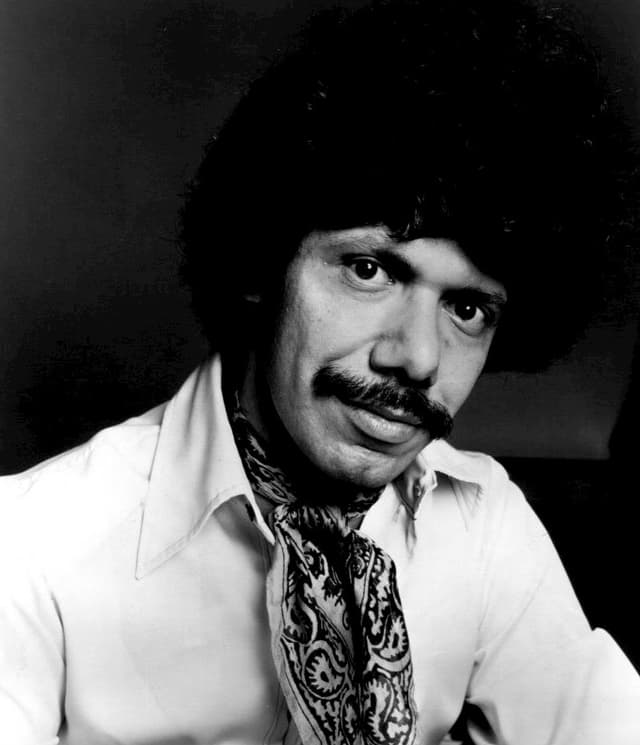
Chick Corea spent six decades redrawing the boundaries of jazz keyboard expression. Born Armando Anthony Corea in Chelsea, Massachusetts in 1941, he emerged from the piano tradition of Bud Powell and Horace Silver before dismantling those very foundations in his late-1960s work with Miles Davis. His relationship with the instrument was fundamentally exploratory—each new project represented a fresh sonic hypothesis rather than refinement of an established voice. By the time of his death in February 2021, he'd accumulated 27 Grammy Awards across categories as disparate as best improvised jazz solo and best instrumental arrangement, testament to a creative restlessness that refused categorization.
What separated Corea from his contemporaries wasn't virtuosity alone—the jazz world has never lacked for technical brilliance at the piano bench. His distinction lay in conceptual flexibility, the ability to inhabit radically different aesthetic zones without losing compositional identity. The pianist who crafted crystalline acoustic miniatures like "Spain" and "Crystal Silence" was the same artist engineering the electric chaos of Return to Forever's fusion peak. This wasn't stylistic dilettantism but genuine intellectual curiosity about what jazz piano could become when liberated from traditional constraints. His influence rippled through generations not as a single revolutionary statement but as permission for constant reinvention.
Electric Textures and Harmonic Architecture
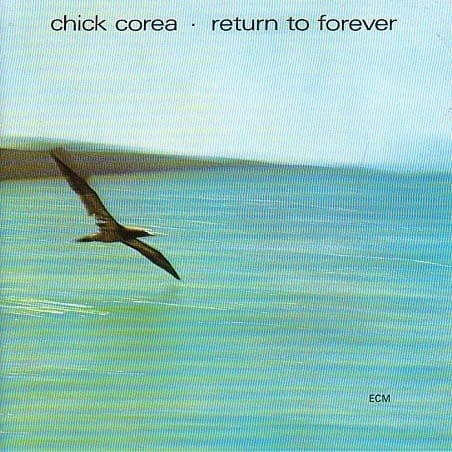
Corea's acoustic piano work carried the fingerprints of his classical training and bebop foundation, but it was his embrace of electric keyboards that fundamentally altered jazz's sonic palette. The Fender Rhodes became his primary voice in the early 1970s, and he approached it not as a piano substitute but as a distinct instrument with its own expressive vocabulary. His touch on the Rhodes was percussive yet singing, exploiting the instrument's bell-like sustain while maintaining the rhythmic precision of his acoustic roots. Those cascading electric runs on Return to Forever's self-titled 1972 debut don't merely replicate piano technique—they reveal someone thinking in electronic textures, using distortion and sustain as compositional elements rather than effects.
Harmonically, Corea built structures that acknowledged bebop's chromatic complexity while reaching toward something airier and more suspended. His compositions favored modal frameworks that allowed for melodic freedom, but he layered these foundations with harmonic ambiguity that kept listeners slightly off-balance. "La Fiesta" from the Return to Forever album demonstrates this perfectly: a Latin-inflected 6/8 groove anchors a melody that seems to float above rather than lock into the harmonic progression. His voicings were spacious, often leaving room in the middle register that traditional jazz piano filled reflexively. This architectural approach to harmony—building frameworks rather than walls—made his compositions ideal vehicles for improvisation while remaining structurally identifiable.
The rhythmic dimension of his playing revealed Latin influence absorbed during formative years studying Afro-Cuban music. Unlike pianists who approached Latin jazz as occasional stylistic detour, Corea internalized clave patterns and montuno rhythms as foundational elements of his musical language. His left hand could outline complex rhythmic cycles while the right hand spun melodic lines that either reinforced or playfully contradicted the underlying pulse. This polyrhythmic sophistication elevated even straightforward fusion tracks beyond simple groove-based platforms, creating layers of rhythmic interest that rewarded close listening.
From Sideman Laboratories to Fusion Architect
Corea's professional emergence came through the traditional jazz apprenticeship route—sideman work with established voices who recognized his harmonic sophistication and improvisational fluency. His early 1960s tenure with Mongo Santamaria, Willie Bobo, and Blue Mitchell provided laboratories for developing his Latin jazz vocabulary while absorbing the art of accompaniment. The work wasn't glamorous, but it was essential: learning when to comp aggressively and when to leave space, understanding how piano functions within ensemble textures rather than as solo spotlight.
Everything accelerated when Miles Davis recruited him in 1968 to replace Herbie Hancock. Joining Davis meant entering the most adventurous working group in jazz, a band actively dismantling the modal frameworks that had defined the trumpeter's 1960s work. Corea's electric piano became crucial to the sound Davis was pursuing—something grittier and more groove-oriented than the acoustic sophistication of the second great quintet. His work on Bitches Brew and In a Silent Way established the template for electric jazz piano as textural element rather than harmonic anchor. He wasn't soloing in the traditional sense but creating sonic environments, letting notes bleed into one another through distortion and sustain.
The formation of Return to Forever in 1972 marked Corea's transition from innovative sideman to bandleader with a distinct artistic vision. The group's debut album presented a Latin-inflected fusion that felt organic rather than constructed, drawing on Brazilian rhythms and featuring vocalist Flora Purim's ethereal vocals. This iteration of Return to Forever produced some of his most enduring compositions—"Spain" became a jazz standard almost immediately, its flamenco-tinged introduction and joyous melodic arc making it accessible without sacrificing sophistication. The album demonstrated that fusion could be lyrical and nuanced, not just loud and dense.
But Corea's vision for Return to Forever evolved rapidly. By 1973's Hymn of the Seventh Galaxy, the group had transformed into an electric powerhouse featuring guitarist Bill Connors and drummer Lenny White, pursuing a more aggressive fusion aesthetic influenced by rock's energy and volume. The 1976 album Romantic Warrior represented the culmination of this electric period—elaborate compositions that merged fusion's virtuosity with progressive rock's compositional ambition. These albums divided critics but expanded fusion's commercial reach, proving the music could fill arenas while maintaining improvisational integrity.
Concurrently, Corea maintained acoustic projects that satisfied his desire for intimate, acoustic expression. His duet work with vibraphonist Gary Burton produced a series of albums showcasing chamber jazz at its most refined, while his acoustic trio recordings explored the piano-bass-drums format with fresh ears. This dual-track approach—electric spectacle alongside acoustic meditation—characterized his entire career. He refused to be confined to a single aesthetic lane, pursuing whichever sonic direction currently fascinated him regardless of market expectations or critical orthodoxy.
His later decades brought continued exploration: the Elektric Band updated his fusion vision for the 1980s, incorporating synthesizers and programmed elements; his classical ventures included performances with Bobby McFerrin and the Kronos Quartet; his final years saw renewed focus on acoustic jazz through various trio configurations. Even a 2008 reunion tour with Return to Forever felt less like nostalgia exercise than genuine curiosity about whether that particular chemistry still generated heat. The throughline wasn't stylistic consistency but intellectual engagement—each project represented a genuine question Corea wanted to answer through music.
Redefining Jazz Piano as Endless Possibility
Corea's influence on jazz piano is both pervasive and difficult to quantify precisely because it manifests across such diverse stylistic territories. His pioneering electric keyboard work established vocabulary and technique that every fusion pianist since has either built upon or reacted against. The way contemporary players approach the Rhodes or synthesizers—as expressive instruments with unique sonic properties rather than piano substitutes—traces directly to his exploratory approach in the 1970s. Players like Robert Glasper and Jacob Collier, working decades later in very different musical contexts, inherited the permission structure Corea established: keyboards can be anything, sound like anything, function within any musical framework.
Beyond technical influence, Corea modeled a career philosophy that valued creative curiosity over brand consistency. In an industry that pressures artists toward identifiable "sounds" and reliable product, he demonstrated that sustained relevance could come through constant evolution rather than stylistic entrenchment. This philosophical legacy may prove more durable than any specific musical contribution—he showed multiple generations that jazz careers need not follow predictable arcs, that commercial success and artistic experimentation weren't mutually exclusive, that a single artist could authentically inhabit multiple aesthetic worlds simultaneously.
His compositional legacy lives in the standard repertoire. "Spain" has been recorded hundreds of times by artists across jazz's stylistic spectrum, its opening flourish instantly recognizable even to casual listeners. That a composition this harmonically sophisticated achieved such widespread adoption speaks to Corea's gift for packaging complexity within memorable melodic containers. His music sounds challenging to play—because it is—but never sounds labored or academic in performance. This accessibility within sophistication made his work ideal pedagogical material, studied in jazz programs worldwide as examples of modern jazz composition at its most structurally sound and melodically appealing.
The sheer breadth of his recorded output—over 80 albums as leader, countless more as sideman—creates an almost overwhelming legacy for listeners approaching his work today. There's no single "essential" Corea because there are multiple essential Coreas depending on which facet of his creativity speaks most urgently to individual sensibilities. This abundance, once a potential obstacle to legacy consolidation, now reads as his most contemporary quality—a refusal to be contained by singular narratives, an insistence that artistic identity could be multiple, contradictory, and constantly self-revising. Jazz piano after Corea is a more spacious field of possibility because he spent six decades proving that boundaries existed primarily to be tested, questioned, and ultimately transcended.