The Architect of Wide-Angle Jazz: Pat Metheny's Sonic Vision
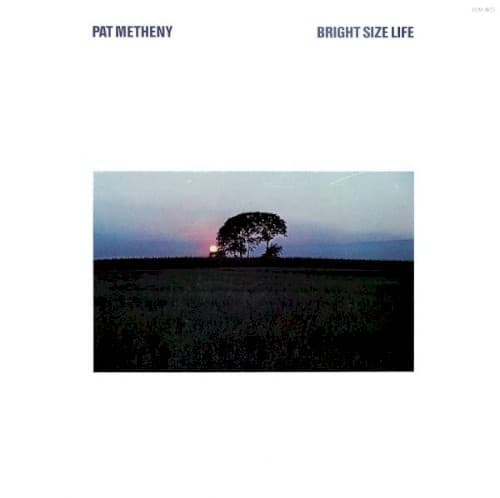
Pat Metheny emerged in the mid-1970s as the guitarist who made space itself part of his instrument. Where others filled every measure with notes, Metheny built cathedrals of sound — ambient washes punctuated by lyrical melodies that felt like they'd existed long before he discovered them. His 1976 debut Bright Size Life announced a musician already in possession of a fully formed aesthetic: crystalline tone, harmonic sophistication drawn from both bebop and folk traditions, and a sense of openness that felt more like prairie landscapes than urban jazz clubs.
Born in Lee's Summit, Missouri in 1954, Metheny grew up absorbing the melodic sensibility of Wes Montgomery alongside the modal experiments reshaping jazz in the 1960s. By age fifteen he was teaching at the University of Miami, and by twenty he'd joined Gary Burton's band — an apprenticeship that refined his ability to think in textures rather than just lines. What set Metheny apart wasn't technical virtuosity alone, though he possessed that in abundance. It was his refusal to treat the guitar as a percussive or purely linear instrument. He approached it orchestrally, using delay, chorus, and later the Roland GR-300 guitar synthesizer to create environments as much as solos.
Across five decades, Metheny has navigated an improbable path: commercially successful yet critically respected, accessible without sacrificing complexity, deeply rooted in jazz tradition while constantly pushing beyond its boundaries. He's won twenty Grammy Awards spanning categories from contemporary jazz to rock instrumental to best new age album — a breadth that speaks to his refusal to be confined by genre expectations. His influence extends beyond jazz into film scoring, world music collaborations, and experimental sonic territories that few guitarists have dared explore.
Harmonic Expansiveness and the Geography of Sound
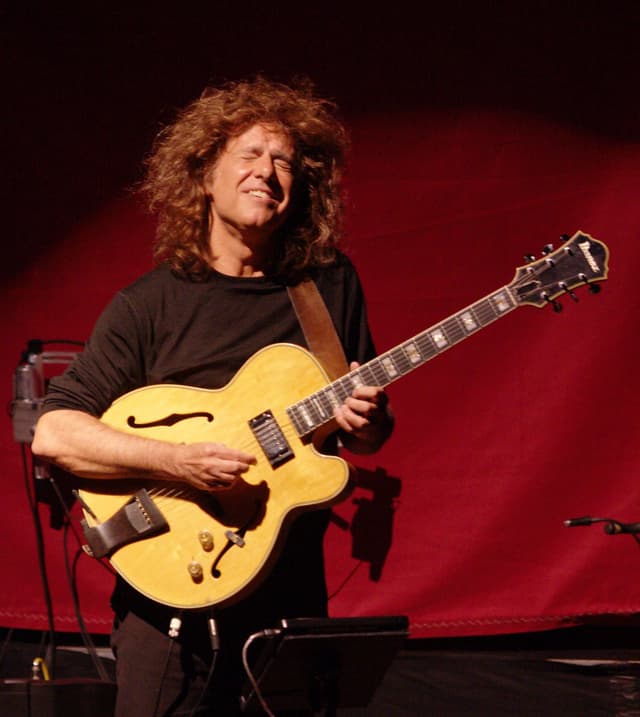
Metheny's guitar tone is instantly recognizable: warm, shimmering, enveloped in chorus and delay that creates a sense of infinite space. He favors Gibson ES-175 and custom-built guitars that produce a singing, vocal quality — notes that bloom and sustain rather than snap and decay. This tonal palette became his signature, allowing single-note lines to occupy the same sonic real estate that keyboardists and horn sections fill. His use of effects isn't decorative; it's architectural. The delay creates rhythmic counterpoint, the chorus adds harmonic thickness, and the reverb suggests physical dimensions.
Harmonically, Metheny operates at the intersection of jazz sophistication and folk directness. He absorbed the complex chord voicings of bebop but filtered them through a melodic sensibility closer to American folk music or Brazilian bossa nova. His compositions often rest on simple, memorable themes that get developed through intricate harmonic recoloring rather than fragmentation. Listen to how he constructs solos: long, singing lines that move through chord changes with liquid ease, always resolving to melodic statements that a non-musician could hum. This accessibility never comes at the expense of depth — beneath those singable melodies lies harmonic movement that rewards close listening.
Rhythmically, Metheny pioneered what became known as the "Pat Metheny Group sound" — a blend of rock's propulsive energy, Brazilian polyrhythms, and jazz's improvisational freedom. Working primarily with keyboardist Lyle Mays and a rotating cast of percussionists, he built grooves that locked tightly while maintaining flexibility. His right-hand technique emphasizes fluidity over attack, creating lines that flow rather than punch. When he does accelerate into bebop territory, his eighth-note lines maintain that singing quality, never devolving into mechanical scale-running. He thinks in phrases, not patterns — each solo tells a story with beginning, middle, and satisfying conclusion.
From ECM Minimalism to Group Maximalism: Four Decades of Evolution
Metheny's recorded career began with a statement so fully realized it remains startling. Bright Size Life, released on Manfred Eicher's ECM label in 1976, paired the twenty-one-year-old guitarist with bassist Jaco Pastorius and drummer Bob Moses. The album's aesthetic — spacious, melodically focused, harmonically sophisticated — established the template for ECM's American jazz wing. Tracks like "Sirabhorn" showcased Metheny's ability to construct compositions that breathed, leaving silence as integral as sound. His interplay with Pastorius, another young virtuoso reimagining his instrument, crackled with mutual discovery. The album earned critical acclaim and introduced Metheny as a new voice: technically accomplished but more interested in lyricism than display, modern but rooted in melody.
The formation of the Pat Metheny Group in 1977 marked a pivot toward a more populist sound without sacrificing artistic ambition. With keyboardist Lyle Mays as creative partner, Metheny built a band sound that integrated synthesizers, world music influences, and compositional structures drawn from both jazz and progressive rock. Albums like Pat Metheny Group (1978) and American Garage (1979) found commercial success unusual for instrumental jazz, with the latter's title track becoming an unlikely radio staple. The Group refined its approach through the 1980s, with Still Life (Talking) (1987) and Letter from Home (1989) incorporating more sophisticated production and guest vocalists. These records balanced accessibility with complexity — infectious grooves supporting intricate arrangements that revealed new layers on repeated listening.
Simultaneously, Metheny maintained a parallel career as a straight-ahead jazz guitarist and experimental provocateur. His 1980 album 80/81 featured a powerhouse band including Dewey Redman, Charlie Haden, and Jack DeJohnette, proving his bebop credentials to skeptics who dismissed the Group work as soft fusion. Question and Answer (1990), a trio date with Dave Holland and Roy Haynes, showcased his ability to swing hard in acoustic settings. Then came Song X (1985), his confrontational collaboration with Ornette Coleman — an album of free improvisation and jagged energy that alienated some fans while demonstrating Metheny's commitment to pushing boundaries. He wasn't interested in settling into a signature sound; each project explored different facets of his musical personality.
The 1990s and 2000s saw Metheny expand his orchestral ambitions and embrace technology. Secret Story (1992) incorporated world musicians and lush arrangements that approached cinematic scope. We Live Here (1995) added samples and drum programming, pursuing a more urban sound palette. The Way Up (2005), a continuous sixty-eight-minute composition, represented his most ambitious Group statement — a suite that moved through multiple sections and moods while maintaining thematic coherence. Meanwhile, projects like Trio 99→00 with Larry Grenadier and Bill Stewart explored standard repertoire with fresh harmonic approaches, and collaborations with artists from Brad Mehldau to Joni Mitchell demonstrated his versatility as a sideman and duet partner.
In recent decades, Metheny has pursued increasingly personal projects while maintaining the Group format. The Unity Band, formed in 2012 with Chris Potter, Ben Williams, and Antonio Sanchez, combined the energy of his earlier fusion work with the improvisational freedom of his jazz trios. From This Place (2020) featured orchestral arrangements and guest vocalists, synthesizing elements from across his career into a mature statement about geography, memory, and musical tradition. His Orchestrion project — creating compositions for a room full of robotic acoustic instruments he controlled in real-time — exemplified his willingness to explore radical concepts. Through it all, he's remained impossibly prolific, releasing albums at a pace that would exhaust musicians half his age while touring constantly with different configurations.
The Guitarist Who Made Jazz Accessible Without Compromise
Pat Metheny occupies a unique position in jazz history: an artist who achieved genuine commercial success while maintaining the respect of purists, who embraced technology and pop sensibilities without abandoning jazz's core values of improvisation and harmonic sophistication. His influence on guitar playing extends across multiple generations. Countless contemporary jazz guitarists owe their sound to Metheny's pioneering use of chorus, delay, and guitar synthesis — tools that became standard only after he demonstrated their expressive potential. His approach to composition, balancing memorable melodies with harmonic complexity, created a template for what's now called "contemporary jazz" or "smooth jazz," though his own work transcends those categories.
Beyond technique and tone, Metheny legitimized certain musical possibilities. He proved that jazz could incorporate rock's energy, world music's rhythms, and folk's melodic directness without becoming diluted fusion. His Pat Metheny Group albums sold hundreds of thousands of copies while featuring odd meters, through-composed sections, and genuine improvisation — a commercial achievement that opened doors for subsequent artists seeking wider audiences without sacrificing artistic integrity. His collaborations with Ornette Coleman and other avant-garde figures demonstrated that accessibility and experimentalism weren't opposing forces but different aspects of a complete musical personality.
Metheny's twenty Grammy Awards across multiple categories reflect his refusal to be confined by genre boundaries. He's influenced not just jazz guitarists but film composers, ambient musicians, and progressive rock artists who heard in his work a model for combining beauty with substance. His relationship with ECM in the 1970s helped define that label's aesthetic, while his Group albums created a sound that defined 1980s instrumental music for a generation of listeners who might never have explored jazz otherwise. Decades later, his technical innovations — from the 42-string Pikasso guitar to the Orchestrion — continue inspiring musicians to think beyond their instrument's conventional possibilities. He remains a working artist, still evolving, still exploring, still proving that popularity and artistic ambition need not be mutually exclusive.