The scorecard
5.7/10 · Mixed
- Composition20%
- 5.5
- Recording15%
- 7.0
- Performance30%
- 6.5
- Cohesion15%
- 4.5
- Originality10%
- 4.0
- Replay value10%
- 5.0
The Jobim themes are strong, the blues and standard are routine filler, and the waltz is pleasant but unmemorable.
Phil Ramone's engineering maintains the studio clarity of the first session, though the divided format weakens the album's sonic identity.
Getz plays with more authority than on the first record, and Gilberto's solo performances on side B remain elegant despite the reduced setting.
The side A quartet/side B solo split fractures the album into two unrelated halves, and filler tracks pad both sections unevenly.
This is outtakes from a finished statement, adding nothing to what Getz/Gilberto already accomplished two years earlier.
The Jobim pieces hold up on their own terms, but the patchwork sequencing and obvious filler make full listens unrewarding.
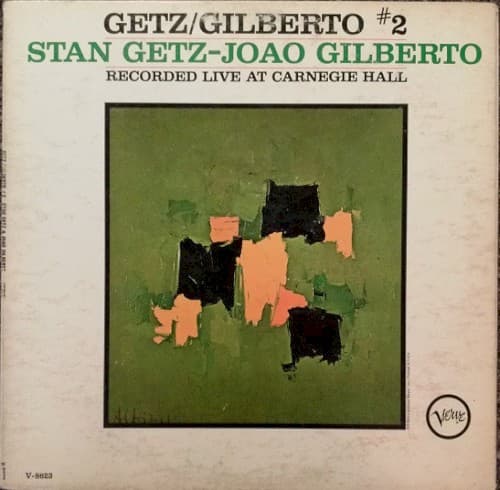
Stan Getz Getz/Gilberto #2 — The Leftovers from a Landmark
This is what happens when a label wants more product from a session that already said everything it needed to. Getz/Gilberto #2 appeared in 1966, two years after the original became the first non-American album to win a Grammy for Album of the Year and turned bossa nova into an international phenomenon. The second volume offers the outtakes: Jobim themes that didn't make the cut, a Getz original blues, a standard, and João Gilberto solo performances recorded to fill out side B after the artistic differences that split the March 1963 sessions.
The material is split down the middle by design, not by flow. Side A features Getz with the same rhythm section from the first album: Jobim on piano, Sebastião Neto on bass, Milton Banana on drums. Side B is Gilberto alone with his guitar, performing songs the producers apparently thought couldn't support the full group or didn't fit the first record's arc.
The thesis is simple: this album proves that even a great session has a natural length, and that mining it for sequels produces diminishing returns. The first Getz/Gilberto worked because restraint and focus were the point. This one works in pieces but fails as a statement because it was assembled from what was left over, not from what belonged together.
The best moments remind you why the collaboration mattered. The rest reminds you that outtakes usually stay unreleased for a reason.
Two Sessions, Two Sounds, No Through Line
The side A quartet tracks show Getz settling into the bossa nova groove with more confidence than he had on the first album. By 1963 he had already recorded Jazz Samba and Jazz Samba Encore, and the hesitance that occasionally surfaced on those records is gone here. On Meditation, he phrases behind the beat with the ease of someone who has internalized the rhythm rather than studied it, and his tone stays warm without the insistent vibrato that could make his earlier bossa nova work sound like a tourist translating a phrase he didn't quite understand.
Jobim's piano is as minimal as it was on the first record, contributing only what the harmony needs and leaving space for Getz to stretch. Neto and Banana provide the same light, rolling pulse that anchored the original sessions, never pushing and never dragging.
The problem is the material. Meditation and Samba Da Minha Terra are legitimate Jobim compositions that hold their own, and the former gives Getz one of his most lyrical statements on either Getz/Gilberto album. But Stan's Blues is exactly what the title says: a twelve-bar head that could have been recorded in any context and serves no purpose beyond filling time.
Here's That Rainy Day, the Jimmy Van Heusen standard, is competent and lifeless, a concession to listeners who wanted familiar repertoire instead of another Brazilian theme. Grandfather's Waltz has a lilting melody but no development, and it fades into background music within thirty seconds.
Side B is Gilberto alone, the result of tension between him and Getz that led producer Creed Taylor to separate them. According to the fact sheet, Gilberto found Getz's rhythmic approach too hard and told Jobim to translate an insult as a compliment. The solo performances are elegant in the manner of Gilberto's early albums, but they suffer from the reduction.
Rosa Morena and Um Abraço no Bonfa are samba themes that benefit from the intimacy, and Gilberto's nylon-string guitar and near-whispered vocals create the same hypnotic effect that defined his work on Chega de Saudade. But Bim Bom, one of his own compositions from his 1958 single, is a miniature that works as an album closer but not as a statement, and O Pato, while charming, is a novelty.
The two halves never cohere because they were never meant to. This is two EPs on one LP, and the seams show.
A Sequence Built from Two Separate Piles
The album peaks early and never recovers the momentum. Meditation, the second Jobim theme on side A, is the clear high point: Getz's solo unfolds with patience, and the interplay between his saxophone and Jobim's piano has the conversational ease that made the first Getz/Gilberto worth releasing. After that the side sags.
The blues and the standard are professional but anonymous, the kind of tracks that fill out a set list but not an album, and by the time side A ends the argument for this record existing has already collapsed.
Side B starts over with a different aesthetic. The solo Gilberto performances are quieter and more introspective, but the lack of a rhythm section makes them feel like demos rather than finished statements. The back half has melodic appeal, but it drifts rather than builds, and the pacing never lifts.
The two sides together run just over thirty minutes, and even that feels padded. The division of the album reflects the division in the studio: Getz wanted one thing, Gilberto wanted another, and Taylor gave them each half an LP to make their case. Neither half justifies the whole, and the sequencing makes no attempt to disguise the compromise.
A Postscript Mistaken for a Follow-Up
This is the weakest entry in Getz's bossa nova run, and it ranks below the original Getz/Gilberto by a wide margin for the obvious reason that it is the outtakes from that session released as a product. The first album was a landmark because it brought together three master musicians at the peak of their powers and gave them material worthy of the collaboration. This one is what was left in the vault after the landmark was finished: decent performances of secondary themes, filler to meet a running time, and solo recordings made to avoid further conflict in the studio.
Listeners who come to this record hoping for a sequel to the first Getz/Gilberto will find a few moments that justify the search—Meditation earns its place in the Jobim catalog, and the solo Gilberto performances on side B are as refined as anything on his early albums—but they will also find that the album as a whole adds nothing to what the collaboration already accomplished. For Getz completists and listeners curious about the material that didn't make the original cut, this is worth hearing once. For anyone else, it is skippable.
The first Getz/Gilberto said everything this partnership had to say in thirty-three minutes of focused, purposeful music. This one says that even a great session runs dry when you go back to the well a second time. Start with Meditation and Samba Da Minha Terra, skip the blues and the standard, and then move on to the original Getz/Gilberto if you haven't already, or to João Gilberto's Chega de Saudade to hear where the bossa nova aesthetic came from before Getz arrived.
Track by track
Track Listing
Grandfather's Waltz
SolidA lilting three-four theme that opens the album with pleasantries and no substance. The melody is gentle, the rhythm section provides a light bounce, and Getz plays the head with his usual warmth, but the track never develops beyond the initial statement. It fades into background music and sets a low bar for what follows.
Tonight I Shall Sleep With a Smile on My Face
SolidAnother minor Jobim composition that doesn't justify its inclusion. The melody has a wistful quality, and Gilberto's vocal on side B would have served it better, but as a quartet instrumental it meanders without arriving anywhere. Getz sounds engaged, but the material gives him nothing to work with beyond restating the theme.
Stan's Blues
WeakPure filler: a twelve-bar blues head that could have been recorded in any context with any rhythm section. Getz plays competently, the changes are standard, and the track accomplishes nothing beyond padding the running time. It has no connection to the bossa nova aesthetic and no reason to exist on this album.
Here's That Rainy Day
WeakThe Jimmy Van Heusen standard, performed with technical skill and zero inspiration. Getz's tone is warm, Jobim comps tastefully, and the rhythm section stays out of the way, but the performance is rote. This is a concession to listeners who wanted familiar repertoire instead of another Brazilian theme, and it shows.
Samba Da Minha Terra
StandoutThe first track on side A that justifies its presence. Jobim's melody has shape and momentum, and Getz responds with a solo that balances lyricism and swing. The rhythm section locks into the samba groove without forcing it, and Banana's drumming adds color without cluttering the texture. This is the sound of musicians who understand the material and trust one another to make it work. A strong case for what the quartet could do when given legitimate themes.
Rosa Morena
SolidGilberto alone with his guitar, opening side B with one of the album's quieter moments. The melody is simple, his vocal is barely above a whisper, and the nylon-string guitar provides just enough harmonic movement to support the line. The intimacy works, but the lack of a rhythm section makes the performance feel incomplete, more like a demo than a finished statement.
Um Abraço no Bonfa
SolidA tribute to guitarist Luiz Bonfá, performed solo by Gilberto with the same restrained elegance that defined his early albums. The guitar work is intricate without showing off, and the vocal delivery maintains the near-whispered style that became his signature. The melody drifts rather than builds, and the track would have benefited from the full rhythm section, but it holds attention on its own terms.
Bim Bom
SolidGilberto's own composition from his 1958 single, performed here as a brief, charming miniature. The lyric is simple, the melody is a nursery rhyme, and the whole thing lasts just over a minute. It works as an album closer in the context of side B, but it underscores how thin the material is when a one-minute sketch is doing the heavy lifting.
Meditation
StandoutThe album's clear peak and the only track that belongs in the same conversation as the best material from the original Getz/Gilberto. Jobim's melody is one of his strongest, a long-lined theme that gives Getz room to phrase behind the beat and develop his ideas without rushing. The solo unfolds with patience, each phrase answering the last, and the interplay between Getz's saxophone and Jobim's piano has the conversational ease that made the first collaboration worth releasing. Neto and Banana provide the lightest possible support, never pushing and never dragging, and the whole performance feels effortless in the way that only deep preparation allows. This is bossa nova at its best: restraint, space, and melody in perfect balance. If the rest of the album had met this standard, the sequel would have been justified.
O Pato (The Duck)
SolidA novelty samba about a duck, performed solo by Gilberto with the same deadpan delivery he brings to every lyric. The melody is playful, the rhythm is light, and the track is charming in small doses, but it's hard to take seriously as a closing statement for an album that also includes Meditation. This is the kind of material that works as an encore, not as a final word.