The Tenor Sound That Bridged Continents
Stan Getz possessed a tenor saxophone tone so immediately recognizable that a single sustained note could identify him across decades of stylistic shifts. The Stan Getz Quartet, in its various incarnations from the late 1940s through the 1980s, served as the primary vehicle for this singular voice—a sound characterized by lyrical warmth, impeccable breath control, and an almost vocal quality that prioritized melodic storytelling over technical showmanship. While Getz worked with countless configurations throughout his career, his quartet format became the laboratory where he developed the aesthetic that would eventually make him one of jazz's most commercially successful artists without compromising artistic credibility.
Born in Philadelphia and raised in the Bronx, Getz emerged from the big band era carrying lessons learned in the orchestras of Stan Kenton, Jimmy Dorsey, and Woody Herman's Second Herd. His early quartet work in the late 1940s helped define cool jazz alongside peers on the West Coast, but Getz's artistic restlessness prevented comfortable categorization. The quartet format gave him control—over repertoire, tempo, dynamics, and the crucial spaces between notes where his phrasing lived. When bossa nova arrived in the early 1960s, the Getz Quartet became the conduit through which Brazilian music entered American consciousness, creating a cultural exchange that permanently altered both traditions.
Lyrical Minimalism and the Architecture of Breath
Getz's approach to the tenor saxophone rejected the muscular intensity that defined hard bop in favor of what one critic called "the sound of silk." His tone emerged from a specific embouchure and air column technique that produced minimal vibrato and maximum tonal purity—a sound closer to Lester Young's elegant restraint than the gospel-inflected cry of contemporaries. Within quartet settings, this meant every note carried weight. He didn't fill space; he sculpted it. His solos unfolded with narrative logic, each phrase commenting on the last, building tension through melodic development rather than harmonic complexity or rhythmic fireworks.
The quartet configurations Getz favored typically featured piano, bass, and drums—a traditional setup he never felt compelled to reinvent. What changed was how he used it. With pianists like Lou Levy, Horace Silver early on, or later Kenny Barron, Getz established conversational dynamics. He listened. Long stretches of his solos feature him playing behind the beat, letting the rhythm section establish the pulse while he floated above it, creating a tension between metric time and rubato phrasing that became a signature. His ballad work, particularly, revealed an understanding of silence as compositional element. The spaces allowed his tone to resonate, to breathe, to speak with the intimacy of a whispered confidence.
The bossa nova period introduced rhythmic subtleties that influenced his phrasing permanently. The Brazilian clave, with its syncopated two-bar pattern, required a different relationship to downbeats than straight-ahead swing. Getz absorbed this, allowing his line to float across bar lines with the effortless swing of samba. Even after returning to standards and original compositions, traces of that rhythmic sophistication remained—a looseness in time, a willingness to displace phrases, an awareness that groove could be gentle without losing propulsion.
From Cool Jazz Pioneer to Bossa Nova Ambassador
Getz's quartet work began in earnest after leaving Woody Herman's Second Herd in 1949, where his solo on "Early Autumn" had made him a recognized name at twenty-two. His early quartet recordings showcased a musician already in full command of his aesthetic—the 1950 sessions with Al Haig on piano demonstrated the cool jazz sensibility forming in opposition to bebop's frantic energy. These weren't exercises in detachment, however. Getz played with emotional directness, his melodies carrying a melancholic undercurrent that separated him from the cerebral West Coast scene despite superficial similarities.
The 1950s brought prolific recording activity and persistent personal struggles. Getz's heroin addiction led to arrests, unreliability, and a brief relocation to Denmark in 1958. The Scandinavian period proved artistically fertile—European audiences embraced him, and the distance from New York's competitive scene allowed creative breathing room. Quartet recordings from this period, often with local rhythm sections, show an artist refining his ballad approach and expanding his harmonic vocabulary. Standards became laboratories for melodic invention, each performance a fresh interrogation of the material rather than rote repetition.
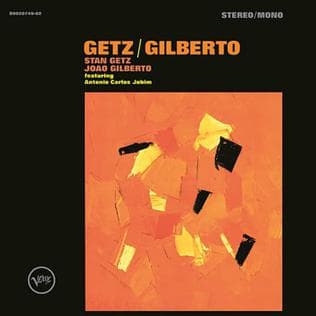
The early 1960s transformed Getz's career and American popular music simultaneously. Jazz & Samba in 1962, featuring guitarist Charlie Byrd, introduced American audiences to Brazilian rhythms filtered through Getz's lyrical sensibility. The follow-up, Getz/Gilberto in 1964, became a cultural phenomenon—featuring João Gilberto, his wife Astrud, and pianist/composer Antonio Carlos Jobim, it yielded "The Girl from Ipanema," a single that dominated radio and introduced millions to both bossa nova and Getz's tenor sound. The album's success was unprecedented for a jazz recording, spending ninety-six weeks on the Billboard chart and winning the Grammy for Album of the Year.
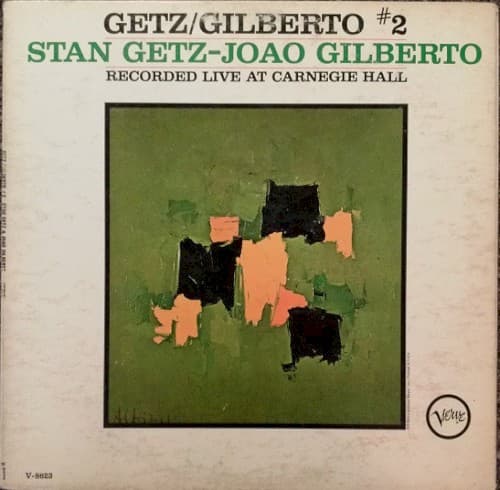
Getz/Gilberto #2, released in 1966 and drawn from the same sessions, couldn't replicate its predecessor's commercial lightning but revealed the depth of the collaboration. Stripped of the crossover single's novelty, tracks like "Menina Moça" and "Só Danço Samba" showed Getz fully inhabiting the Brazilian idiom—not as tourist but as participant. His phrasing matched the Portuguese language's cadences, his tone captured saudade's bittersweet longing. The album rated a 6.3 reflects solid craftsmanship rather than innovation; by 1966, the format had become familiar, the revolutionary moment passed. Yet it documents Getz at a creative peak, his quartet seamlessly integrating with Brazilian musicians in genuine cultural exchange rather than appropriation.
Post-bossa nova, Getz resisted the fusion movement's electric instruments and rock rhythms. His late 1960s and 1970s quartets returned to acoustic jazz, often featuring younger sidemen like Chick Corea, who brought modal and avant-garde influences Getz absorbed selectively. The 1972 album Captain Marvel showed him engaging with contemporary harmonic concepts while maintaining his melodic priorities. Unlike peers who chased relevance through stylistic reinvention, Getz trusted his core aesthetic, allowing it to evolve organically. The quartet with Corea, Stanley Clarke, and Tony Williams represented his most adventurous rhythm section, pushing him toward freer structures while his saxophone remained the lyrical anchor.
The Lasting Influence of Melodic Integrity
Stan Getz's impact on jazz extends beyond the bossa nova explosion that made him famous. His quartet work established a template for lyrical playing within modern jazz—proof that melodic beauty and harmonic sophistication weren't mutually exclusive, that emotional directness didn't require sacrificing intellectual rigor. Saxophonists from Paul Desmond to Michael Brecker acknowledged his tonal influence, the way he made the tenor saxophone sing rather than shout. His approach to standards—treating familiar melodies as departure points for personal statement rather than obstacles to transcend—influenced generations of interpreters.
The bossa nova movement he helped ignite permanently altered American popular music's rhythmic vocabulary. Before Getz/Gilberto, Brazilian music remained largely unknown outside immigrant communities and academic circles. After, the samba rhythm became part of jazz's standard toolkit, the repertoire expanded to include Jobim and other Brazilian composers, and the idea of jazz as international dialogue rather than American monologue gained commercial validation. Getz demonstrated that crossover success didn't require dilution—the most successful jazz album of the 1960s was sung in Portuguese, featured unconventional song structures, and made no concessions to rock or soul trends dominating the era.
Yet his legacy carries complexities. Getz's personal demons—addiction, volatile temperament, difficult professional relationships—shadowed his career. Stories of his behavior, particularly toward musicians he employed, complicate the purely aesthetic appreciation. The music industry's racial dynamics also surface in examining his success: a white musician achieving commercial breakthrough with Black and Brazilian musical forms raises questions about access, marketing, and who profits from cultural exchange. These tensions don't negate the artistic achievement, but they contextualize it within broader patterns of appropriation and credit in American music.
The quartet format itself became Getz's artistic statement—an insistence on intimacy, conversation, and space in an era increasingly drawn to larger ensembles and electric amplification. His final recordings in the early 1990s, with Kenny Barron's quartet, showed the aesthetic fully mature: economy of expression, tonal warmth, and melodic invention distilled to essential elements. He died in 1991, but the sound endures—that unmistakable tone, the phrasing that breathes, the proof that restraint carries its own power. In an art form that often valorizes technical virtuosity and harmonic complexity, Getz championed melody, beauty, and the direct communication of feeling. That remains radical.