The scorecard
8.0/10 · Great
- Composition20%
- 8.0
- Recording15%
- 7.0
- Performance30%
- 9.0
- Cohesion15%
- 6.5
- Originality10%
- 8.0
- Replay value10%
- 8.5
Strong material selection and arrangement frameworks that give Simone room to transform pop songs into dramatic statements while allowing space for a hard-swinging instrumental.
Clean New York studio sound captures the voice clearly and balances the orchestrations well, though the string arrangements sometimes crowd the piano in the ballads.
Simone commands every phrase with complete authority, turning murmured threats on the title track and belted declarations on Feeling Good into equally convincing performances.
The sequencing flows between moods but the two-minute closers feel like afterthoughts and the jazz instrumental arrives without preparation.
Bridges cabaret drama and pop accessibility in a way few jazz singers attempted in 1965, making standards sound like personal manifestos.
The three or four peak performances remain startling decades later and the weaker tracks pass quickly enough not to break the spell.
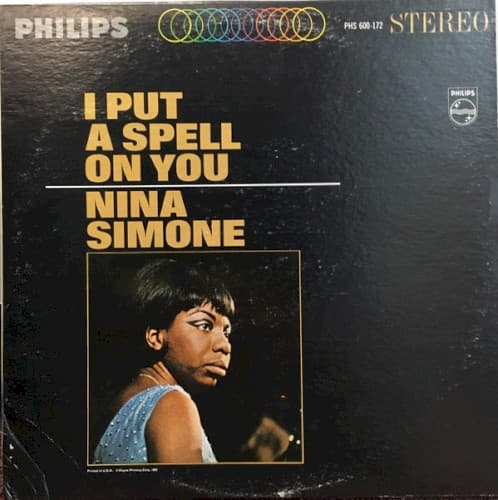
Nina Simone I Put a Spell on You — The Voice That Refused to Be Background Music
Nina Simone understood that a song is a weapon if you know where to apply pressure. On I Put a Spell on You, recorded in New York in 1964 and 1965 for Philips Records, she took material from the pop and theater worlds and rebuilt it as a series of declarations: some murmured, some shouted, all unignorable. The album reached number 99 on the Billboard 200 and number 18 in the UK, modest commercial returns for a record that remade the terms of what a jazz singer could do with a standard. Where her earlier work for Colpix leaned on piano and small groups, this session brought in arrangers Hal Mooney and Horace Ott to frame the voice with strings and horns, a move toward accessibility that never diluted the force of the performances.
The thesis is in the title track, a version of the Screamin' Jay Hawkins song that strips out the voodoo theatrics and replaces them with controlled menace. Simone does not shout the threat; she states it as fact, and the arrangement knows to stay out of the way. That approach—dramatic material, minimal gesture, maximum impact—carries through most of the album, with the voice always in command even when the orchestrations grow thick. The weaknesses are in the sequencing and the filler: two or three short tracks that feel like they were included to reach a runtime, and a closing stretch that loses momentum. But the peaks justify the whole project, and NPR's 2017 ranking at number three on their list of greatest albums made by women recognizes what the album accomplished: a redefinition of the jazz vocal album as a vehicle for interpretation so decisive it erases the memory of the original.
How the Arrangements Learned to Serve the Singer
The album works by giving Simone two kinds of frameworks: lush orchestrations that she can push against, and sparser settings that let the piano and voice do the work alone. Mooney and Ott arranged and conducted the sessions, and their charts know when to fill the space and when to leave it empty. On Feeling Good, a song from the British musical The Roar of the Greasepaint, the arrangement builds from a low simmer to a full orchestral surge, and Simone rides the crescendo with a belt that lands every emphasis on the beat. The string writing is thick but never syrupy, and the brass punches through at the right moments to give the voice something to lean into. On the title track, the arrangement does the opposite: a slow, minimal accompaniment that lets Simone control the tempo and the dynamics, the piano sparse and the rhythm section barely present. The contrast between these two approaches gives the album its range, from the intimate to the declarative.
The production, handled in New York studios, captures the voice with clarity and places it front and center in the mix. The piano is audible but not dominant, a deliberate choice that shifts the focus to the phrasing and the lyrics. The rhythm section, when present, stays in the background, providing pulse without calling attention to itself. Rudy Stevenson's guitar appears occasionally but never takes a solo, another sign that the arrangers understood the assignment: this is a singer's album, and everything else is support. The string sections are well-recorded, warm without being overwhelming, though on a few of the ballads they crowd the piano in the lower register and the mix loses some air.
The material ranges from French chanson (Ne me quitte pas, sung in French) to blues to theater songs, and Simone treats all of it with the same intensity. She does not swing the standards or soften the edges; she inhabits them and makes them sound like they were written for her voice. The one instrumental, Blues on Purpose, arrives in the middle of the tracklist without warning and feels like an intermission, a straight jazz performance that reminds the listener Simone is a formidable pianist and not just a vocalist. It is a strong track on its own but it disrupts the flow, and the album would have been more cohesive without it. The weakness is not in the playing but in the sequencing, a decision that breaks the spell the vocal tracks had been building.
Where the Album Peaks and Where It Sags
The album's momentum is frontloaded. The first stretch moves between moods—menace, defiance, longing, celebration—without losing the thread, and the pacing feels deliberate. The opening sets the tone, the next tracks sustain it with different textures, and the middle section delivers the climax. By the time the instrumental arrives, the album has earned a breather, but it feels like a detour rather than a continuation. The second half never recovers the intensity of the first, and the closing run feels like it is filling out the runtime rather than adding to the argument. The penultimate track, at under two minutes, is too short to develop an idea, and the finale ends the album on a shrug rather than a statement.
The sequencing also struggles with tonal shifts. Two performances in the middle are solid but they do not carry the dramatic weight of the surrounding material, and their placement creates a sag. The album would have been stronger as a ten-track sequence, cutting the two brief closers and tightening the arc. At thirty-three minutes the length is not excessive, but the last few tracks feel like afterthoughts, and the album loses the listener's attention just when it should be making a final impression.
A Singer at Full Power, Even When the Material Slips
I Put a Spell on You is Simone at the height of her interpretive powers, and the four or five best tracks rank among the strongest vocal performances in jazz. The album sits at the intersection of cabaret, pop and jazz, and it does not fit cleanly into any of those categories, a refusal to be categorized that was central to Simone's work throughout her career. This is not her most adventurous album musically—the arrangements are professional and tasteful rather than experimental—but it is one of her most consistent, and the batting average on the vocal tracks is high. The weaknesses are in the sequencing and the filler, not in the singing or the core material. Start with the title track, Feeling Good and Ne me quitte pas, three performances that show what the album does best. If those work, the rest of the album will justify the time.
This is the album for listeners who want to hear Simone in a pop setting without the edges sanded off, and for anyone interested in how a great interpreter can take familiar material and make it unrecognizable. It is not the place to start if you want to hear her piano playing or her most overtly political work; for that, turn to her live recordings from the late sixties. But as a studio statement about the power of the voice and the intelligence of phrasing, it holds up decades later, and the peak tracks still sound like nothing else. Apple Music's 2024 ranking at number 88 on their list of the greatest albums ever made is an overreach, but NPR's placement in the top tier of albums by women vocalists is earned. The album's influence on later singers who wanted to blur the line between jazz and pop is audible, and the performances remain a standard for control and conviction.
Track by track
Track Listing
I Put a Spell on You
StandoutSimone strips Screamin' Jay Hawkins's original of its camp and rebuilds it as a slow, controlled threat. The arrangement is minimal—piano, bass, light percussion—and the tempo is languid, giving her room to stretch phrases and land on certain words with deliberate weight. The vocal performance is all in the phrasing and the dynamics: she does not need to raise her voice to communicate menace, and the restraint makes the threat more credible. The piano punctuates rather than accompanies, and the rhythm section stays out of the way. This is the template for the album: dramatic material, minimal gesture, maximum impact. The track peaked at number 23 on the Hot Rhythm & Blues Singles chart, a commercial validation of the approach, and it remains one of the most distinctive vocal performances in her catalog.
Tomorrow Is My Turn
StandoutA defiant statement framed as a ballad, with Simone delivering the lyric as a promise rather than a hope. The arrangement brings in strings and a fuller rhythm section, and the production balances the orchestration so the voice remains front and center. The phrasing is patient, letting the lyric unfold without rushing, and the performance builds in intensity without ever shouting. The song's message—resilience in the face of setback—suits Simone's interpretive strengths, and she makes it sound like autobiography even though it is a cover. The string writing is lush but never cloying, and the arrangement knows when to pull back and let the voice carry the line alone.
Ne me quitte pas
StandoutSimone sings Jacques Brel's French chanson in the original language, a bold choice for an American jazz audience in 1965, and the performance is one of the album's emotional peaks. The arrangement is spare, mostly piano and strings, and the phrasing is patient, letting the language's natural rhythm guide the melody. The vocal performance is intimate, almost conversational, and the control required to sustain that intimacy over three and a half minutes without losing the listener's attention is considerable. The song's plea—stay with me—is delivered without desperation, and Simone's voice makes the lyric sound like a command rather than a request. The production captures the voice with clarity, and the string arrangement supports without overwhelming.
Marriage Is for Old Folks
SolidA lighthearted dismissal of convention, delivered with a wink and a shrug. The arrangement is mid-tempo and swinging, with a prominent rhythm section and a melody that bounces along without much drama. Simone's vocal is playful, a rare mode for her, and the performance is competent but not compelling. The song does not carry the weight of the surrounding material, and its placement in the tracklist creates a tonal shift that the album does not need. It is a solid performance of a slight song, and it passes without leaving much impression.
July Tree
SolidA short, brooding ballad with a melody that circles around a few notes and never resolves. The arrangement is minimal, mostly piano and voice, and the vocal performance is restrained, almost whispered in places. The song's subject—loss, memory, time passing—is standard ballad territory, and Simone does not bring much new to it. The phrasing is careful but the material does not give her much to work with, and the track feels like filler, included to pad the runtime rather than to advance the album's argument.
Gimme Some
SolidAn uptempo blues with a driving rhythm section and a vocal that leans into the song's demand for attention and respect. The arrangement is loose and swinging, and Simone's vocal is more relaxed than on the ballads, letting the band carry some of the energy. The performance is solid but not standout, and the song's message—give me what I am owed—is delivered with conviction but without the dramatic intensity that makes the album's best tracks memorable. It is a good track in a sequence of very good ones, and it does its job without calling attention to itself.
Feeling Good
StandoutThe album's most anthemic performance, a theater song from The Roar of the Greasepaint that Simone transforms into a declaration of liberation and self-possession. The arrangement builds from a quiet opening to a full orchestral climax, and Simone's vocal follows the same arc, starting restrained and ending with a belt that lands every emphasis on the downbeat. The string and brass writing is lush, almost cinematic, and the production places the voice at the front of the mix, ensuring that the lyric's message—freedom, renewal, the casting off of old burdens—comes through clearly. The performance became one of her signature songs, and it is easy to hear why: the control, the range, the sheer force of the delivery. This is the track that justified the move to a pop-oriented sound, and it remains one of the strongest vocal performances in the jazz-pop crossover catalog.
One September Day
SolidA reflective ballad with a wistful melody and a lyric about memory and lost time. The arrangement is strings-heavy, and the production leans into the warmth of the orchestration, creating a soft-focus atmosphere that suits the song's nostalgic tone. Simone's vocal is measured, with careful phrasing and a light touch on the high notes. The performance is professional and the arrangement is competent, but the song does not offer much that the earlier ballads did not already provide, and it feels like a retreat after the intensity of Feeling Good.
Blues on Purpose
SolidA straight jazz instrumental that breaks the vocal spell the album had been casting. Simone's piano is the lead voice here, and the performance is a hard-swinging blues with a walking bass line and light percussion. The playing is assured, with clean phrasing and a sense of swing that reminds the listener she is a formidable instrumentalist and not just a vocalist. The track is strong on its own terms but it disrupts the album's flow, arriving without warning and departing without consequence. It feels like an intermission, a chance for Simone to stretch out on the piano, but it does not belong in the sequence. The album would have been more cohesive without it, though the playing itself is excellent.
Beautiful Land
WeakAt under two minutes, this is too short to develop an idea or sustain a mood. The melody is pleasant and the arrangement is spare, but the track ends just as it is beginning, and the performance feels incomplete. It is not clear what the song is trying to accomplish or why it is on the album, and it passes without making an impression.
You’ve Got to Learn
SolidA midtempo track with a message-song lyric about resilience and self-reliance. The arrangement is fuller than the ballads, with a rhythm section and strings, and Simone's vocal is direct and emphatic. The performance is solid but the song's message is familiar, and the track does not add much to the album's argument. It is competent filler, neither weak enough to skip nor strong enough to remember.
Take Care of Business
WeakA brief, uptempo closer that ends the album on a shrug rather than a statement. The performance is loose and the arrangement is minimal, and the track feels like an afterthought, included to reach a runtime rather than to make a final impression. It is not a weak performance, but it is an inconsequential one, and the album deserved a stronger ending.