The Fragile Genius of West Coast Cool
Chet Baker arrived in early 1950s Los Angeles with a trumpet sound so delicate it seemed to contradict everything jazz had become. While bebop valorized speed and technical ferocity, Baker played with a vulnerability that felt almost reckless—notes barely pushed through the horn, hanging in the air like questions without answers. Born in Yale, Oklahoma in 1929 and raised in California, he entered the professional jazz world through the Gerry Mulligan Quartet in 1952, immediately distinguishing himself not through virtuosity but through emotional directness. His decision to sing—despite possessing limited vocal range and no formal training—proved equally radical, turning technical limitation into aesthetic signature.
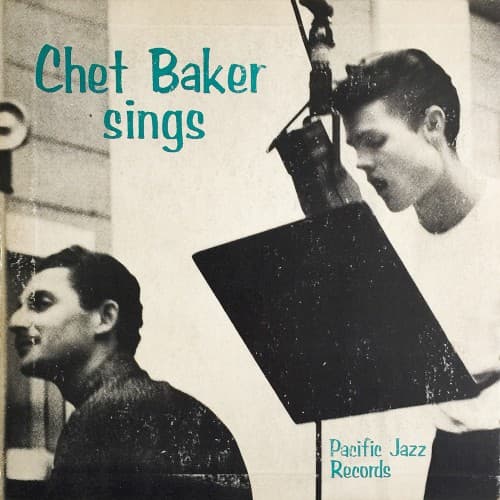
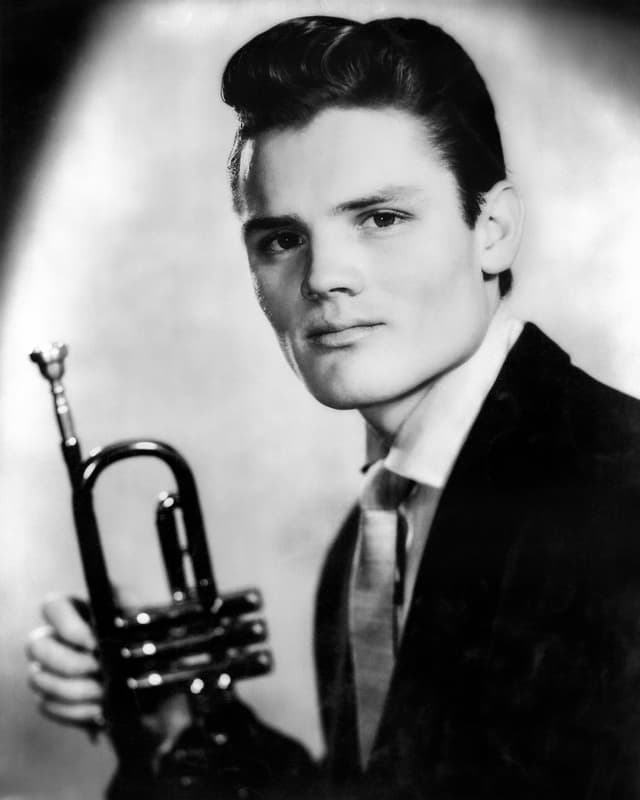
By 1954, Baker had become an unlikely star, his boyish looks and melancholic delivery making him jazz's first genuine pin-up. The album Chet Baker Sings captured this moment perfectly: intimate readings of standards where his vocal fragility mirrored his trumpet approach, creating a unified artistic identity that prioritized feeling over facility. Critics debated whether he possessed sufficient technical command to merit his fame, but audiences heard something undeniable—a performer willing to expose himself completely, risking failure with every phrase. That willingness would define both his artistic triumphs and personal catastrophes over the next three decades.
What made Baker essential wasn't innovation in the traditional sense. He didn't rewrite harmonic language or pioneer new rhythmic concepts. Instead, he demonstrated that restraint could be as powerful as complexity, that space mattered as much as notes, and that emotional honesty could carry a performance where technical prowess might overwhelm. His career would become a cautionary tale about addiction and squandered potential, yet the music he left behind—particularly those early Pacific Records sessions—remains a masterclass in how less can communicate infinitely more.
Minimalism as Emotional Architecture
Baker's trumpet playing operated on principles of extreme economy. Where Dizzy Gillespie constructed elaborate scalar runs and Clifford Brown deployed muscular phrasing, Baker often chose single sustained notes, bending pitch slightly to convey meanings that remained stubbornly verbal-resistant. His tone—thin, almost fragile, lacking the burnished warmth of conventional trumpet beauty—became instantly recognizable. He favored the middle register, rarely venturing into the instrument's stratospheric possibilities, and his improvisations unfolded with a logic that felt more conversational than architectural. Phrases breathed naturally, pausing where a singer might pause, never rushing to fill silence.
This approach aligned perfectly with the West Coast cool jazz aesthetic emerging from California in the early 1950s. The Gerry Mulligan Quartet sessions that launched Baker's career featured no piano, creating harmonic space that demanded melodic clarity. Baker thrived in this environment, his lines weaving around Mulligan's baritone saxophone with an intimacy that suggested chamber music more than traditional jazz combo interplay. Production choices reinforced the intimacy—close microphone placement, minimal reverb, arrangements that emphasized Baker's vulnerability rather than masking it.
As a vocalist, Baker extended these principles into territory few jazz singers explored. His limited range—roughly an octave and a half—meant he couldn't attempt the gymnastic displays of his contemporaries. Instead, he sang with almost conversational directness, phrasing slightly behind the beat, drawing out syllables to emphasize emotional content over lyrical clarity. The effect was hypnotic, particularly on ballads where his voice and trumpet could mirror each other across a single album. Critics who dismissed his singing as technically inadequate missed the point entirely: Baker had created a aesthetic where technical limitation became expressive resource, where the crack in the voice revealed more than polished perfection ever could.
From Pacific Sessions to European Exile: A Career in Fragments
Baker's professional breakthrough came quickly and almost accidentally. After brief stints in Army bands and with Charlie Parker, he joined Gerry Mulligan's new piano-less quartet in 1952. Their recordings for Pacific Jazz—tracks like "My Funny Valentine" that would become Baker signatures—announced a new sensibility in jazz, one that valued lyricism and space over bebop's relentless complexity. Within months, Baker's face appeared in DownBeat polls and magazine spreads, his matinee-idol looks attracting audiences far beyond jazz's typical demographic. By 1953, he'd formed his own quartet and begun the dual career as trumpeter and vocalist that would define his creative identity.
The period from 1953 to 1956 represents Baker's commercial and arguably creative peak. Albums for Pacific Records captured him leading quintets and quartets through standard repertoire and ballad-heavy programs, his singing and playing achieving a unified aesthetic vision. Chet Baker Sings (1954) demonstrated his vocal approach fully formed—understated, intimate readings that transformed familiar material through sheer emotional directness. He recorded prolifically, sometimes multiple sessions per week, building a discography that documented both his strengths and the limitations of his improvisational vocabulary. Live performances drew crowds who came as much to observe his looks as hear his music, a dynamic that both fueled his career and complicated his relationship with jazz's serious critical establishment.
Heroin addiction, which had shadowed Baker since his earliest professional years, began consuming his life by the late 1950s. A 1959 narcotics arrest in Italy landed him in prison and began a pattern of legal troubles that would plague him for decades. The 1960s saw Baker bouncing between American and European engagements, his playing deteriorating as addiction took physical toll. A 1966 beating in San Francisco—the result of a drug-related dispute—shattered his teeth and temporarily ended his trumpet career. The comeback required learning to play with dentures, a physical challenge that altered his embouchure and forced technical adjustments. Recordings from this period show a harder tone, less flexibility, though the essential melodic sensibility remained.
Baker spent most of the 1970s and 1980s in Europe, particularly Italy, France, and the Netherlands, where audiences proved more forgiving of his personal chaos. He recorded extensively for small European labels—the documentation from these years is vast and wildly inconsistent in quality. Some sessions captured brief moments of the old magic, particularly ballad performances where age and damage added gravitas to the vulnerability that had always defined his sound. Others revealed a player going through motions, technique too compromised for anything beyond skeletal melody statements. He toured constantly, the road providing both income and escape, performing in clubs where his legend mattered more than his current capabilities.
The 1980s brought unexpected late-career visibility. Bruce Weber's 1988 documentary Let's Get Lost introduced Baker to new audiences, romanticizing his dissolution in ways that made him fashionable again among art-house crowds. He recorded for established labels again, though by this point his playing had been reduced to whispered fragments of his earlier style. His death in May 1988—falling from an Amsterdam hotel window under circumstances that remain disputed—arrived just as this renewed attention peaked. Whether the fall was accident, suicide, or something darker remains unknown, a fittingly ambiguous end to a life lived in the margins.
The Seduction of Vulnerability in Jazz
Baker's influence operates on two distinct levels, one musical and one cultural, and the tension between them remains unresolved. Musically, he demonstrated that jazz trumpet could function with an entirely different set of priorities than those established by Louis Armstrong, Dizzy Gillespie, and Miles Davis. His approach—melodically oriented, texturally sparse, emotionally direct—opened space for players like Art Farmer and, later, Tom Harrell, who understood that restraint and vulnerability could carry as much weight as technical display. The cool jazz movement that dominated West Coast recording in the 1950s found its most commercially successful voice in Baker, even as purists dismissed the entire scene as technically lightweight.
Culturally, Baker became jazz's first tragic romantic in the rock-and-roll sense—beautiful, doomed, seemingly determined to destroy what he'd been given. His image influenced how jazz musicians thought about public persona, demonstrating that appearance and personal mythology could matter as much as musical content in building a career. This legacy cuts both ways: it expanded jazz's audience beyond traditional boundaries, but it also established a template for romanticizing addiction that has caused real damage. Subsequent generations have struggled to separate Baker's music from his dissolution, with some fans valuing the latter as much as the former—a dynamic Baker himself seemed to encourage in his final years.
Contemporary jazz singers, particularly those working in intimate, stripped-down contexts, remain in constant dialogue with Baker's vocal approach. His willingness to sing within severe technical limitations, using phrasing and emotional directness to compensate for limited range, established a template that artists from Elvis Costello to Melody Gardot have explored. The fragile, conversational vocal style he pioneered now feels like a genre unto itself, far removed from the virtuosic displays that defined most jazz singing in his era. Whether this constitutes lasting influence or mere stylistic borrowing remains debatable, but the sonic fingerprints are unmistakable whenever a singer approaches a ballad as confession rather than performance.