Style & Context
Influences
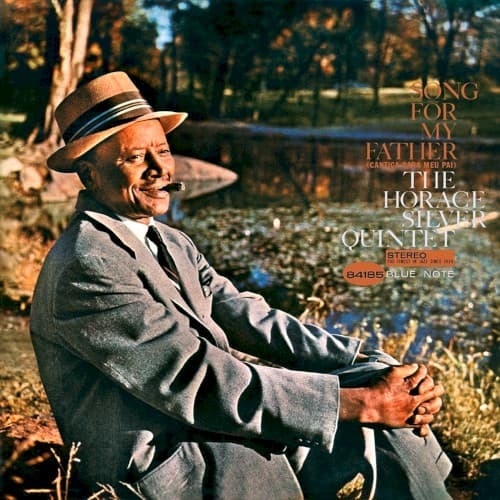
Life magazine portraiture, pastoral Americana, mid-century documentary photography
Location
The park setting removes Silver from Harlem or Philadelphia jazz districts, placing him in contemplative American countryside.
Visual Language
The naturalistic outdoor shoot breaks from Blue Note's typical studio portraits, emphasizing the album's personal, introspective character.
Symbols
Fedora and full suit outdoors
Silver maintains his dignity and professionalism even in nature, bridging the jazz club with pastoral reflection.
Pond reflection behind him
The still water mirrors the album's contemplative mood and backward glance toward Silver's Cape Verdean heritage.
Autumn trees and fallen leaves
The seasonal change evokes the passage of time and generational connections central to the title track's tribute.
Where Sound Meets Image
The outdoor tranquility mirrors the album's gentler moments—the lilting bossa nova of the title track and the reflective piano interludes. Silver's contemplative expression connects to 'Song for My Father,' a tribute written after his father's death that became his signature composition. The natural setting reinforces the organic, unhurried Latin rhythms that distinguish this album from Silver's earlier, more aggressive hard bop recordings. Even the golden lighting suggests the warm brass tones of the quintet's horn section.
This cover helped establish Blue Note's willingness to photograph musicians outside traditional jazz contexts, influencing later pastoral sessions like Lee Morgan's rural portraits. The image's dignity and introspection became a template for albums balancing innovation with tradition. Its success proved that jazz album art could evoke mood and memory as powerfully as action and energy, paving the way for more conceptual cover photography throughout the late sixties.