The Classically Trained Pianist Who Became the Voice of Black American Resistance
Nina Simone never wanted to be a jazz singer. She trained as a classical pianist, dreaming of becoming the first Black concert pianist to perform at Carnegie Hall in that tradition. When the Curtis Institute rejected her application — a decision she believed rooted in racism — the trajectory of American music shifted. What the classical world lost, jazz and soul gained: a vocalist whose instrument was rage, tenderness, intelligence, and defiance in equal measure. Born Eunice Kathleen Waymon in Tryon, North Carolina, she adopted the stage name Nina Simone to keep her club performances hidden from her disapproving minister mother. That dual identity — the gospel-raised prodigy and the nightclub performer — would define her entire career.
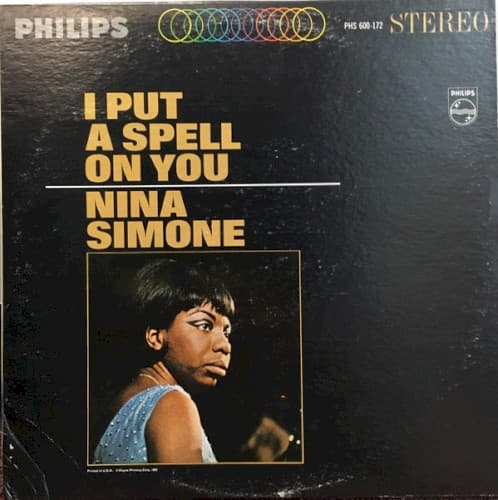
She emerged in the late 1950s as an anomaly. Her piano playing retained the percussive exactitude of her classical training, her phrasing ignored conventional jazz swing, and her repertoire spanned Gershwin, Bach, Billie Holiday, and protest songs with equal commitment. By the mid-1960s, as the civil rights movement intensified, Simone transformed into something beyond entertainer. She became a chronicler of Black rage and grief, her voice carrying the weight of four little girls bombed in Birmingham and the blood on Selma's Edmund Pettus Bridge. Albums like I Put a Spell on You captured her at the intersection of artistic ambition and political necessity, where every performance felt like testimony.
Where Classical Precision Met Untamed Emotional Fury
Simone's piano playing was her foundation, and it never sounded like anyone else in jazz. She approached the instrument with the discipline of a conservatory student — Bach fugues and Chopin nocturnes were as natural to her as the blues. Her left hand often provided dense, almost orchestral voicings while her right hand delivered melodic lines with crystalline clarity. This created a harmonic richness that separated her from the bebop and hard bop pianists of her era. She didn't comp like a jazz player. She built architecture.
Her voice defied easy categorization because it wasn't trying to fit anywhere. The contralto range gave her a grounded authority, but the texture shifted song to song — velvet smooth on ballads, then suddenly raw and almost spoken on protest material. She bent pitches not for ornamentation but for emphasis, landing hard on certain words to make you feel their weight. Vibrato came and went based on emotional need rather than technique. When she sang "Mississippi Goddam," the delivery was percussive, almost spit out. When she inhabited "I Put a Spell on You," her voice turned into seduction and threat.
Production on her best work remained stark. Simone needed space. Her Philips recordings from the 1960s often featured minimal accompaniment — bass, drums, sometimes light percussion — because anything more crowded the intensity she brought. The arrangements served the message, never overshadowing it. Her version of "Sinnerman" stretched past ten minutes not because of instrumental soloing but because the piano vamp and vocal repetition built into a spiritual reckoning. She understood dynamics the way classical musicians do, using silence and restraint to make the explosive moments land harder.
From Atlantic City Piano Bars to the Soundtrack of Revolution
Her break came accidentally. Hired to play piano at an Atlantic City nightclub in 1954, she was told she had to sing as well or lose the job. She complied reluctantly, and audiences responded to the novelty — a woman who played Chopin between sets and sang with the emotional directness of Billie Holiday but none of the mannerisms. By 1958, she recorded "I Loves You, Porgy" for Bethlehem Records. The single climbed the charts, and suddenly the woman who wanted to perform Rachmaninoff was a pop crossover act.
The early albums for Colpix and Philips showcased her eclecticism. Little Girl Blue from 1958 mixed standards with folk songs and originals. Nina Simone at Town Hall the following year demonstrated her live power — the Carnegie Hall she was denied became dozens of smaller venues where she commanded absolute attention. She moved between labels searching for creative control, a tension that would plague her entire career. Record companies wanted the ballad singer. She wanted to be an artist without commercial compromise.
I Put a Spell on You arrived in 1965, a turning point. The title track — a cover of Screamin' Jay Hawkins' voodoo blues — became her signature, but it was the inclusion of "Ne Me Quitte Pas" and her growing political material that signaled where she was headed. That same year she wrote "Mississippi Goddam" in an hour after the Birmingham church bombing. Radio stations snapped the record in half and sent it back. She didn't care. The civil rights movement needed anthems, and she delivered "To Be Young, Gifted and Black," "Four Women," "Backlash Blues." These weren't songs. They were indictments.
The late sixties took their toll. Simone's outspokenness made her a target. The IRS pursued her for back taxes. Her marriage to Andrew Stroud, who managed her career, turned abusive. She left the United States in 1970, beginning a self-imposed exile that lasted the rest of her life. She lived in Barbados, Liberia, Switzerland, finally settling in France. The European years produced inconsistent work — some brilliant live recordings, some unfocused studio albums. Without the anchor of the civil rights struggle, she seemed unmoored. Mental health issues, later suggested to be bipolar disorder, went largely untreated.
The 1980s and 90s brought rediscovery. A new generation found her through samples and reissues. Her version of "My Baby Just Cares for Me" became a surprise UK hit in 1987 after appearing in a perfume commercial. She toured sporadically, still capable of transcendent performances but often erratic and confrontational with audiences. The final album, A Single Woman in 1993, showed flashes of the old intensity, though her voice had weathered. She died in France in 2003 from breast cancer, never having reconciled with America or achieved the classical recognition she craved.
How Nina Simone Redefined What a Black Woman Artist Could Say and Be
Simone's influence operates on multiple levels. Musically, she proved that jazz could absorb anything — classical technique, show tunes, African rhythms, protest folk — and remain itself if the artist's vision was strong enough. Singers from Lauryn Hill to Alicia Keys cite her as the template for refusing to be categorized. Her piano style influenced generations of artists who understood that technique could serve emotion rather than replace it. Contemporary jazz vocalists like Samara Joy navigate different repertoire and political contexts, but they inherit the space Simone carved for Black women to be intellectually and artistically uncompromising.
Politically, she remains essential. "Mississippi Goddam" and "To Be Young, Gifted and Black" are as urgent now as in 1964. Every protest movement since has returned to her catalog for language and fury. She made it acceptable — necessary — for Black artists to reject the role of entertainer and become truth-tellers, even when it cost them commercially. Her refusal to smile, to make white audiences comfortable, to separate her art from her politics, set a standard that contemporary artists still measure themselves against.
The tragedy is that she never got what she wanted most. The classical world that rejected her never fully embraced her, even in retrospect. She spent her life angry about that exclusion, and rightfully so. But in being denied one path, she blazed another that no one else could have. The High Priestess of Soul, a title she accepted reluctantly, turned out to be far more than a stage name. It was a role she inhabited with complete conviction, giving voice to a generation's rage and hope. Her discography isn't just music history. It's American history, sung by someone who refused to let the country forget its sins or its possibilities.