How a College Jazz Band Redefined American Popular Music
The Dave Brubeck Quartet didn't just play jazz — they made it intellectually respectable at a moment when the music desperately needed crossover appeal. Formed in 1951 around pianist Dave Brubeck's compositional vision and alto saxophonist Paul Desmond's lyrical melodies, the group became the most commercially successful jazz ensemble of the 1950s without sacrificing artistic ambition. Their secret was deceptively simple: wedding complex rhythmic ideas to accessible melodies, creating music that satisfied both serious listeners and casual audiences.
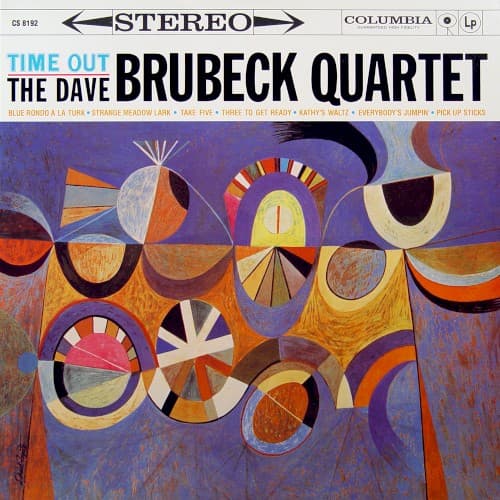
Brubeck's classical training under Darius Milhaud gave him a compositional framework outside the bebop orthodoxy that dominated postwar jazz. Where contemporaries like Charles Mingus and John Coltrane pushed harmonic boundaries, Brubeck explored metric ones. He wrote in 5/4, 9/8, and 11/4 — time signatures that had no business working in a nightclub setting — yet the quartet made them swing. Their 1959 album Time Out proved that experimental jazz could become a cultural phenomenon, spending two years on the Billboard charts and introducing millions to jazz through the backdoor of rhythmic novelty.
What often gets overlooked is how thoroughly West Coast the quartet sounded. They emerged from California's postwar jazz scene, carrying the region's preference for restraint over combustion, arrangement over spontaneity, and cerebral engagement over raw emotion. Desmond's tone — cool, dry, precise — became the quartet's melodic signature, balancing Brubeck's sometimes percussive piano attack. Drummer Joe Morello and bassist Eugene Wright (who joined in 1958) provided not just support but intellectual partnership, navigating metric shifts with ease while maintaining groove.
Rhythmic Architecture: Building Jazz Around Unconventional Time
The quartet's sonic identity rested on an unusual foundation: treating rhythm as compositional material rather than just accompaniment. Brubeck approached time signatures the way bebop pianists approached chord changes — as frameworks for invention. A piece in 5/4 wasn't a gimmick; it was a structural challenge that demanded new approaches to phrasing, swing feel, and improvisational development. Joe Morello's drumming became essential to this vision. His ability to subdivide complex meters while maintaining clarity allowed Brubeck to explore rhythms that would have collapsed under less precise execution.
Desmond's alto saxophone served as the quartet's emotional core. His sound — light without being thin, lyrical without sentimentality — contrasted sharply with the harder-edged approach of East Coast players. He favored long melodic lines that breathed across bar lines, creating phrases that felt vocal rather than instrumental. His solos on standards revealed how much could be expressed through subtraction: fewer notes, more space, deliberate placement. When paired with Brubeck's block-chord voicings and contrapuntal thinking, the result felt like chamber jazz — intimate yet architecturally complete.
The rhythm section philosophy differed fundamentally from bebop's propulsive energy. Eugene Wright's bass lines anchored without insisting, outlining harmonic movement while allowing Brubeck's left hand to roam. Morello played with orchestral sensitivity, using dynamics and timbre to shade the music rather than just marking time. During their extended compositions, the quartet could shift from delicate interplay to muscular swing and back without jarring transitions. Their version of accessible jazz wasn't dumbed-down — it was precision-engineered for clarity, letting complexity emerge through structure rather than density.
From Campus Concerts to Time Out: The Quartet's Unlikely Commercial Arc
Dave Brubeck formed his first quartet in 1951 with bassist Ron Crotty, drummer Lloyd Davis (later Herb Barman), and eventually Paul Desmond, who had played with Brubeck in Army bands during World War II. The early lineup played California college campuses — an unusual circuit at a time when jazz lived in nightclubs and concert halls. These campus gigs proved foundational: college audiences wanted music they could think about, not just dance to. Brubeck's compositions, already leaning toward formal experimentation, found receptive listeners who appreciated the intellectual dimension.
By 1954, the quartet's personnel solidified with Joe Morello on drums, bringing conservatory training and technical command that matched Brubeck's ambitions. The group signed with Columbia Records in 1955 — a major-label deal that signaled jazz's postwar legitimacy as an album-oriented art form. Their early Columbia releases like Brubeck Plays Brubeck and Jazz Goes to College established their commercial viability, but the music remained within conventional rhythmic boundaries. The breakthrough toward metric experimentation came gradually, with Brubeck testing audience tolerance through individual compositions before committing to an entire album of unusual time signatures.
That album arrived in 1959 as Time Out, recorded after the quartet's State Department-sponsored tour exposed them to global musical traditions. "Blue Rondo à la Turk" opened the record with a 9/8 pattern borrowed from Turkish street musicians, while "Take Five" — composed by Desmond in 5/4 — became the unexpected radio hit. The single's success bewildered even Columbia's marketing department. How did a jazz instrumental in an odd meter crack the Top 25? The answer lay in Desmond's unforgettable melody and Morello's groove, which made the 5/4 feel natural rather than academic. Time Out eventually went platinum, a commercial achievement nearly unthinkable for adventurous jazz.
The quartet followed with Time Further Out (1961), exploring 6/4, 5/4, and 3/4 within individual tracks, and Countdown: Time in Outer Space (1962), though neither matched Time Out's cultural penetration. By the mid-1960s, jazz was fracturing into avant-garde experimentation on one end and soul-jazz accessibility on the other. The quartet's middle path — sophisticated but not alienating — started feeling like a relic of an earlier consensus. When Brubeck dissolved the classic quartet in 1967 after a final tour, he cited exhaustion from relentless touring, but the timing also reflected jazz's changing landscape. The music Miles Davis was making on the path toward fusion and the spiritual intensity John Coltrane achieved in his final years represented jazz's new frontiers. The Dave Brubeck Quartet had opened doors that younger musicians were now charging through.
During their final years, the quartet maintained their performance schedule while Brubeck pursued compositional projects that extended beyond jazz club formats. Eugene Wright's presence as the quartet's bassist from 1958 onward also positioned the group within the civil rights struggle — Brubeck famously canceled Southern performances rather than accept segregated audiences, a moral stance that cost them financially but aligned with the era's emerging consciousness.
The Quartet That Made Jazz Safe for Complexity
The Dave Brubeck Quartet's influence operates on two levels: musical and cultural. Musically, they proved that formal experimentation could coexist with popular success, opening space for jazz that thought as much as it felt. Their rhythmic investigations anticipated the metric fluidity that became common in jazz-rock fusion and contemporary jazz. Listen to Weather Report's polyrhythmic layering or Herbie Hancock's later metric experiments, and you hear echoes of what Brubeck normalized — the idea that swing doesn't require 4/4.
Culturally, they brought jazz to audiences who might never have ventured into Birdland or the Village Vanguard. College students, suburban listeners, and international audiences discovered jazz through Time Out, often as their entry point before exploring deeper into the music's history. This educational function matters more than critics sometimes acknowledge. The quartet created jazz fans, building an audience infrastructure that supported the music's ecosystem even as bebop and hard bop defined its artistic cutting edge.
Yet their legacy also carries complications. To some ears, the quartet's music sounds overly polite, lacking the visceral risk that defined bebop or the spiritual intensity that marked Coltrane's work. Desmond's cool tone and Brubeck's compositional tidiness can feel buttoned-up compared to the raw expressionism happening elsewhere in late-1950s jazz. That critique has merit, but it misses what the quartet accomplished: making challenging ideas feel welcoming, proving that intellectual ambition and popular communication weren't mutually exclusive. In an art form that sometimes celebrates difficulty as virtue, The Dave Brubeck Quartet demonstrated that clarity has its own artistic integrity.