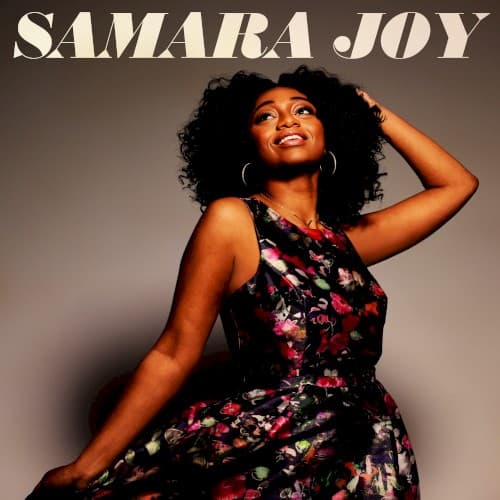
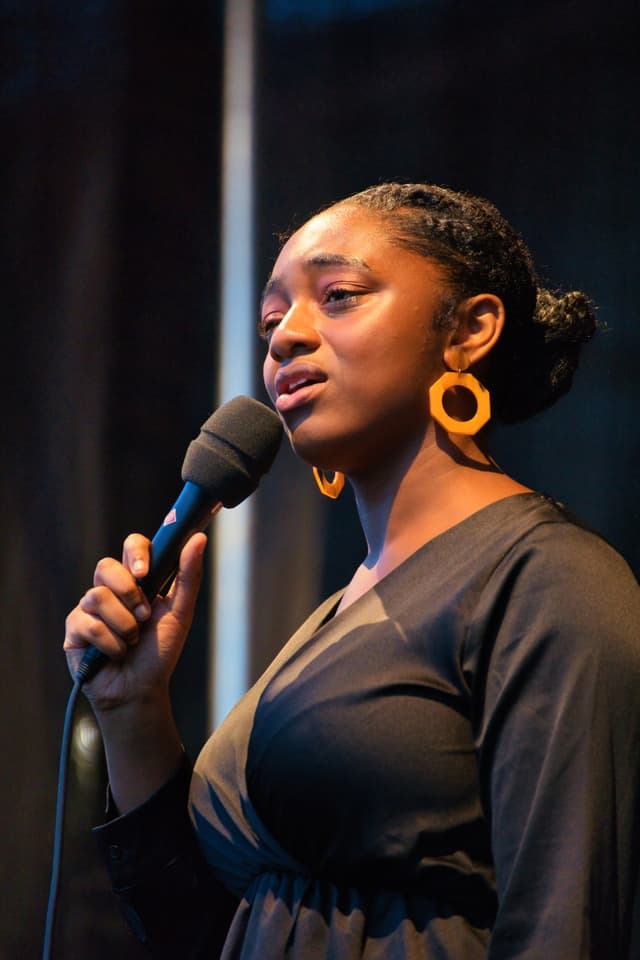
The Youngest Voice Reviving Vocal Jazz's Golden Age
Samara Joy emerged in the early 2020s as the most compelling traditional jazz vocalist of her generation, earning industry recognition before her mid-twenties that typically takes decades to achieve. Born into a musical family in the Bronx—her paternal grandparents were part of the celebrated Philadelphia-based gospel group The Savettes—Joy carries lineage but forged her own path through rigorous study at SUNY Purchase's Conservatory of Music. Her 2021 self-titled debut arrived with little fanfare beyond jazz education circles, yet within two years she had captured consecutive Grammy Awards and sold out prestigious venues from Jazz at Lincoln Center to the Kennedy Center.
What distinguishes Joy from her contemporaries isn't novelty but devotion to craft. She interprets the Great American Songbook and bebop-era standards with technical precision and emotional intelligence that recalls Sarah Vaughan's control and Betty Carter's inventiveness, yet her phrasing remains unmistakably her own. Her commercial breakthrough coincided with a broader cultural rediscovery of jazz fundamentals—audiences hungry for acoustic intimacy and lyrical sophistication found both in her performances. At an age when most singers are still developing their artistic identity, Joy had already established herself as both torchbearer and innovator within vocal jazz's continuum.
Bop-Informed Phrasing and the Art of Restraint
Joy's vocal approach balances technical command with emotional subtlety. Her contralto range—warm in the lower register, crystalline in the upper—allows her to navigate complex melodic lines without sacrificing lyrical clarity. She employs bebop phrasing instinctively, treating her voice as a horn player would, bending notes and subdividing rhythms with the fluency of a seasoned instrumentalist. This isn't mere stylistic affectation; it reflects deep study of Charlie Parker, Dizzy Gillespie, and the vocal interpretations of their contemporaries. Her scatting never feels gratuitous—it emerges organically when a lyric demands expansion or when trading phrases with her accompanists.
Her interpretive choices favor restraint over showmanship. Where contemporary jazz vocalists often lean toward dramatic dynamics and extended techniques, Joy finds power in understatement. She inhabits lyrics rather than decorating them, letting a song's inherent architecture guide her phrasing. On ballads, she sustains notes with unwavering pitch control, allowing subtle vibrato to color sustained tones without overwhelming them. Her swing feel is conversational rather than aggressive—she sits comfortably within the pocket her rhythm section establishes, pushing slightly ahead or pulling back as the lyric demands, but never imposing herself on the arrangement.
From Conservatory Stages to Grammy Recognition
Joy's musical education began in church rather than jazz clubs. Growing up surrounded by gospel music through her grandparents' legacy, she initially resisted jazz, finding greater connection in R&B and soul. That changed during her college years at SUNY Purchase, where exposure to Carmen McRae, Ella Fitzgerald, and Sarah Vaughan recordings revealed jazz's expressive possibilities. She immersed herself in the conservatory's rigorous program, absorbing not just vocal technique but the harmonic language and historical context that separate competent singers from compelling interpreters.
Her self-titled debut in 2021 was recorded and released independently, a student project that became a calling card. The album featured stripped-down arrangements—primarily voice, piano, bass, and drums—that foregrounded her interpretive abilities without studio embellishment. Standards like "Sweet Pumpkin" and "Stardust" received readings that balanced reverence with personality. The production quality and song selection suggested someone studying the tradition seriously, but the performances themselves revealed an artist ready to contribute to that tradition rather than merely replicate it. Critics within jazz education circles took notice, though mainstream attention remained limited.
The turning point came in 2022 with the release of her sophomore album "Linger Awhile" on Verve Records, marking her transition from independent artist to major-label signee. The album's selection of lesser-known standards alongside familiar material demonstrated growing curatorial confidence. Her interpretation of "Guess Who I Saw Today" balanced narrative clarity with emotional restraint, while her treatment of "Can't Get Out of This Mood" showcased rhythmic sophistication. The album reached number one on Billboard's Traditional Jazz Albums chart—a remarkable achievement for a vocalist barely beyond college graduation. More significantly, it earned her the Grammy Award for Best Jazz Vocal Album in 2023, making her one of the youngest recipients in the category's history.
That same Grammy ceremony brought a second award for Best New Artist—a rare crossover recognition that positioned her beyond jazz specialist circles. The win placed her alongside mainstream pop, rock, and hip-hop artists, introducing her work to audiences who might never browse the jazz section. Her acceptance speeches reflected her understanding of this responsibility: acknowledging the giants whose shoulders she stands on while articulating jazz's ongoing relevance to contemporary listeners. The recognition translated into booking opportunities beyond traditional jazz venues—festivals, television appearances, and headline concerts that typically require decades of slow-build credibility.
Her 2023-2024 touring schedule reflected this expanded profile. She performed with established jazz instrumentalists, appeared on national television programs, and maintained a presence in both jazz-specific venues and broader performing arts contexts. Rather than diluting her approach for mainstream accessibility, she remained committed to the traditional quartet and quintet formats that serve her material best. This consistency has become part of her appeal—she offers something genuinely different from algorithmically optimized vocal performances, and audiences respond to that authenticity.
Generational Bridge and the Future of Acoustic Jazz Vocal Performance
Joy's significance extends beyond her individual artistry to what she represents for jazz's generational continuity. In an era when most young musicians emerging from conservatory programs blend jazz with hip-hop, electronic production, or experimental techniques, her commitment to acoustic tradition initially seemed anachronistic. Instead, it has proven prescient—her success demonstrates sustained audience appetite for straight-ahead jazz when performed with conviction and skill. She has become a reference point for younger vocalists navigating the tension between innovation and tradition, proof that mastery of fundamentals can be both artistically fulfilling and commercially viable.
Her influence on jazz education is already tangible. Conservatory vocal programs now point to her career arc as a model—the importance of deep repertoire knowledge, the value of studying instrumental jazz alongside vocal technique, and the possibility of building an audience without compromising artistic vision. She has shifted conversations within jazz pedagogy about what constitutes a sustainable career path, demonstrating that traditional approaches can resonate with contemporary audiences when executed at the highest level. Her visibility has also expanded opportunities for other young jazz vocalists, creating industry momentum for acoustic vocal projects that might have struggled for attention just five years earlier.
Whether Joy will expand her repertoire into original composition, explore different production contexts, or continue refining her approach to standards remains an open question—and one that will define her long-term legacy. For now, she has secured her place as the most important traditional jazz vocalist to emerge in the 2020s, a distinction that carries both opportunity and expectation as her career continues to unfold.