The Alto Saxophonist Who Brought Soul to Hard Bop
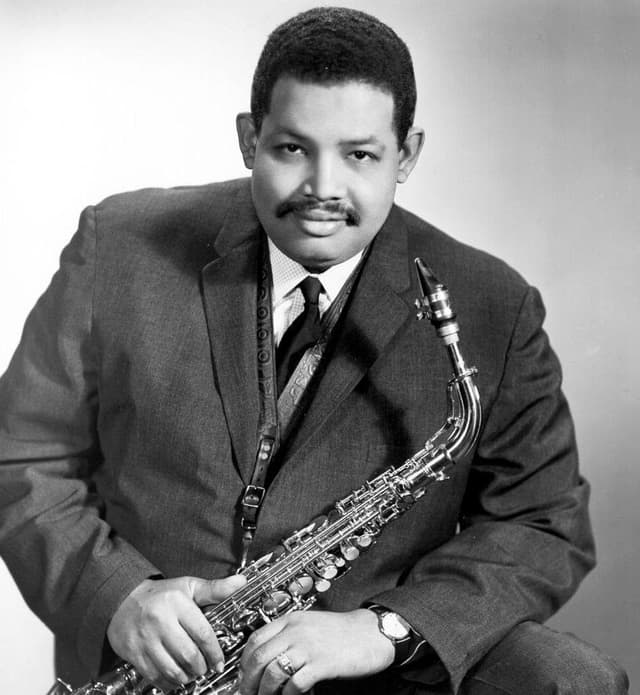
Julian Edwin "Cannonball" Adderley possessed an alto saxophone sound so warm and vocalized that it became instantly recognizable across three decades of jazz evolution. Born in Tampa, Florida in 1928, he arrived in New York during the mid-1950s hard bop explosion and immediately established himself as a frontline voice capable of matching the intensity of any bebop pioneer while maintaining accessibility that drew wider audiences to modern jazz. His nickname came from "cannibal"—a reference to his prodigious appetite—but the moniker became synonymous with a musical approach that devoured influences from Charlie Parker's bebop language, gospel church harmonies, and blues phrasing into something distinctly his own.
What separated Adderley from his alto saxophone contemporaries was his refusal to prioritize technical virtuosity over emotional communication. While he commanded formidable chops, his solos always told stories. He could navigate complex chord changes with Parker-derived fluency, then shift into bluesy melodic statements that connected with listeners who'd never heard a flatted fifth. This dual citizenship in both the jazz intelligentsia and popular consciousness made him a crucial bridge figure during jazz's most experimental period. He worked alongside Miles Davis during modal jazz's birth, led quintets that defined soul jazz's commercial and artistic peak, and remained creatively vital through fusion's early stirrings before his sudden death in 1975.
The Vocalized Alto: Cannonball's Signature Harmonic Language
Adderley's alto saxophone tone carried a rounded, almost vocal quality—fat in the lower register, sweet but never cloying in the middle, with just enough edge on top to cut through rhythm sections without aggression. He avoided the brittle brightness that characterized some bebop alto players, instead cultivating a sound that shared DNA with Johnny Hodges' Ellingtonian elegance while maintaining bebop's rhythmic urgency. His vibrato arrived sparingly, used for emphasis rather than ornamentation, and his articulation favored legato phrasing that made even rapid-fire runs feel conversational rather than athletic.
The blues sat at the center of everything Adderley played. Not the academic blues of learned patterns, but the internalized blues of Southern Black experience—bent notes, crushed grace notes, call-and-response gestures that nodded toward gospel shouting and field hollers. This grounding in African-American vernacular music gave his hard bop playing an earthiness that balanced the intellectual harmonic explorations happening around him. When he soloed over modal vamps or complex post-bop structures, melody remained paramount. He constructed improvisations like sermons: establishing a theme, developing it through variations, building to emotional climaxes, and resolving with clarity.
His rhythmic approach favored momentum over displacement. Where some modernists used metric modulation and polyrhythms to create tension, Adderley locked into the pocket and rode groove like a great R&B player. This made him the ideal foil for pianists like Bobby Timmons and Joe Zawinul, whose funky comping and vamp-based compositions needed a horn player who could deliver both sophistication and danceable swing. By the 1960s, his quintets incorporated electric instruments and fusion textures without abandoning the core principle: if the groove isn't moving bodies, something's wrong.
From Florida Educator to Hard Bop's Joyful Prophet
Adderley spent his early adult years as a high school band director in Fort Lauderdale, an unlikely origin for someone who would soon share bandstands with Miles Davis and John Coltrane. When he moved to New York in 1955 to pursue graduate studies, he sat in at the Café Bohemia and created such immediate buzz that club owners started billing him as "the new Bird." The comparison was both blessing and burden—his alto playing clearly descended from Charlie Parker's innovations, but Adderley's personality and musical sensibility pointed toward populism rather than tortured genius mythology. Within months, he signed with EmArcy Records and formed a quintet with his brother, cornetist Nat Adderley, beginning a musical partnership that would anchor his career.
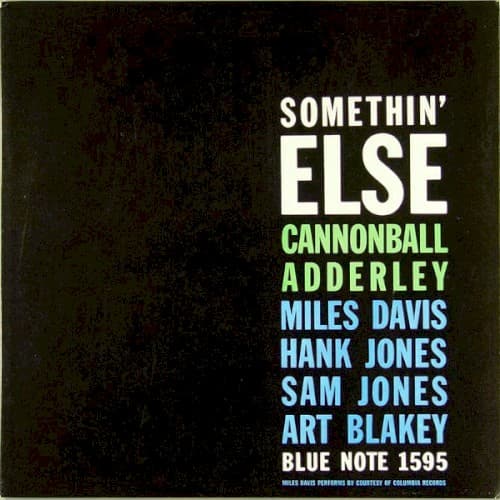
The 1958 sessions for Blue Note's Somethin' Else captured Adderley at a pivotal moment, leading a date that featured Miles Davis in a sideman role. The album showcased his ability to craft accessible post-bop that never dumbed down harmonic content—"Autumn Leaves" became a masterclass in melodic paraphrasing, while the title track's bluesy minor-key vamp pointed toward the soul jazz direction he'd explore throughout the 1960s. That same year, Miles recruited him for the sextet that would record Kind of Blue, recognizing that Adderley's lyrical, blues-drenched approach provided the perfect counterweight to Coltrane's searching intensity. On "Somethin' Else" (the Kind of Blue track, distinct from the album), Adderley delivered one of jazz's most quoted alto solos—a blues-soaked statement that found endless melody within a simple modal framework.
By 1959, Adderley reformed his own quintet and began the run that would define his legacy. Pianist Bobby Timmons brought "This Here" and "Dat Dere," funky gospel-inflected compositions that became jukebox hits and established the soul jazz template. When Austrian keyboardist Joe Zawinul joined in 1961, the group gained a composer-arranger who could synthesize gospel, blues, African rhythms, and European harmonic thinking. Zawinul's "Mercy, Mercy, Mercy" became a surprise pop crossover in 1967, reaching the Billboard Top 20 and demonstrating that adventurous jazz could still generate radio hits. Live recordings from this period—particularly The Cannonball Adderley Quintet in San Francisco—captured the group's church-meets-nightclub energy, with Adderley's spoken introductions and storytelling creating an inclusive atmosphere that welcomed jazz neophytes.
The late 1960s and early 1970s found Adderley navigating jazz's commercial crisis with characteristic adaptability. He embraced electric instruments, incorporated funk and rock rhythms, and recorded conceptual projects like Country Preacher (1969), which married soul jazz aesthetics to the burgeoning jazz-rock fusion movement. Some purists accused him of commercialism, but the music maintained artistic integrity—Country Preacher's live version of Zawinul's title track featured the same harmonic sophistication and improvisational depth as his 1950s work, just wrapped in contemporary production. He continued performing prolifically through 1975, maintaining the grueling touring schedule that had always been his preference. His death from a stroke at age 46 came suddenly, cutting short a career that had shown no signs of creative decline.
Adderley's discography spans over 60 albums as leader and countless sideman appearances, but certain releases define his aesthetic evolution: the EmArcy recordings document his arrival, Somethin' Else captures hard bop perfection, The Cannonball Adderley Quintet in San Francisco bottles live soul jazz magic, and Accent on Africa (1968) shows his engagement with modal and world music influences. Throughout, his alto saxophone remained the constant—a voice of joy, blues truth, and melodic generosity.
The Accessible Modernist: Adderley's Enduring Influence
Cannonball Adderley proved that jazz could be intellectually rigorous and emotionally immediate without contradiction. At a time when the avant-garde was pushing toward abstraction and hard bop was calcifying into formula, he carved out space for music that honored bebop's harmonic vocabulary while speaking in the vernacular of Black American popular music. This balancing act influenced generations of saxophonists who wanted to reach audiences without sacrificing substance—players like Kenny Garrett, Vincent Herring, and Antonio Hart all absorbed Adderley's lesson that melody and groove aren't concessions to commercialism but fundamental elements of jazz expression.
His role in soul jazz's development remains underappreciated outside specialist circles. While organist Jimmy Smith often receives credit for the subgenre's commercial breakthrough, Adderley's quintets with Timmons and Zawinul created the template for horn-led soul jazz—the funky minor-key vamps, gospel-inflected melodies, and call-and-response structures that would influence everyone from Ramsey Lewis to the Crusaders. "Mercy, Mercy, Mercy" demonstrated that a jazz composition could achieve pop success through intrinsic musicality rather than gimmickry, a lesson largely lost in subsequent decades as jazz retreated from popular engagement.
Beyond his recorded legacy, Adderlay functioned as jazz educator and ambassador. His spoken introductions on live albums demystified the music without condescending, explaining modal concepts or African rhythmic influences in language that welcomed curiosity. He brought jazz to college campuses and arts festivals, viewing audience development as part of his artistic mission. This commitment to accessibility without compromise—to playing music that satisfied both his bebop elders and listeners encountering jazz for the first time—defines his lasting significance. In an art form that often valorizes difficulty and exclusivity, Cannonball Adderley reminded everyone that the deepest blues can also make you dance.